Pawn Promotion in Chess: The Rules, Notation and Underpromotion
Nov 12, 2026 · The Editors
Pawn promotion in chess: what happens when a pawn reaches the last rank, which pieces it can become, where the new piece goes, how to write it in notation, and when to promote to a knight instead of a queen.
When a pawn reaches the far side of the board — the 8th rank for White, the 1st rank for Black — it must be promoted. In the same move, it is replaced by a queen, rook, bishop or knight of the same colour, on the square it reached. Almost every player chooses a queen.
The pawn promotion rules
- Promotion is compulsory. A pawn cannot stay a pawn on the last rank.
- You may choose a queen, rook, bishop or knight. You cannot choose a king or another pawn.
- The new piece goes on the promotion square, the square the pawn moved to.
- Your choice is not limited to pieces you have lost. You can have two queens, or more, at the same time.
- Promotion happens as part of the move. The new piece takes effect immediately, so it can give check, or even checkmate, straight away.
- A pawn can promote by moving straight forward or by capturing onto the last rank.
Where does the promoted piece go?
On the promotion square itself. If a white pawn moves from e7 to e8, the new queen stands on e8. It does not go back to its starting square.
What if you don't have a spare queen?
Most sets come with only one queen of each colour. In casual play, people use an upside-down rook, a coin, or a piece borrowed from another set. In rated tournament games, the rules say an upside-down rook counts as a rook; if you need a queen you do not have, stop the clock and ask the arbiter for one.
How to write pawn promotion in notation
In algebraic notation, write the move and then the new piece:
| Move | Meaning |
|---|---|
| e8=Q | Pawn moves to e8 and becomes a queen |
| e8Q | The same, without the equals sign |
| dxe8=N | Pawn on d7 captures on e8 and becomes a knight |
| b1=Q+ | Black pawn promotes on b1 with check |
| e8=Q# | Promotion with checkmate |
See chess notation for the full system.
Underpromotion: when not to choose a queen
Promoting to anything except a queen is called underpromotion. It is rare but sometimes right:
- Knight, when the knight gives check or checkmate that a queen cannot, because the knight moves in an L-shape a queen does not.
- Rook or bishop, to avoid stalemate: a new queen might leave the opponent's king with no legal move but not in check, which is a draw. See stalemate in chess.
Since a queen moves like a rook and bishop combined, choosing those is only ever about stalemate.
Why promotion matters
Promotion is why the endgame revolves around pawns. A single passed pawn — one with no enemy pawns in front of it or on the files next to it — can win a game if it reaches the last rank. Under the usual chess piece values, a promotion turns a 1-point pawn into a 9-point queen.
Rules that interact with promotion
- A pawn on its starting square can move two squares, and that is when en passant captures happen.
- A promoted rook cannot castle. Castling uses only the original rook; see castling rules.
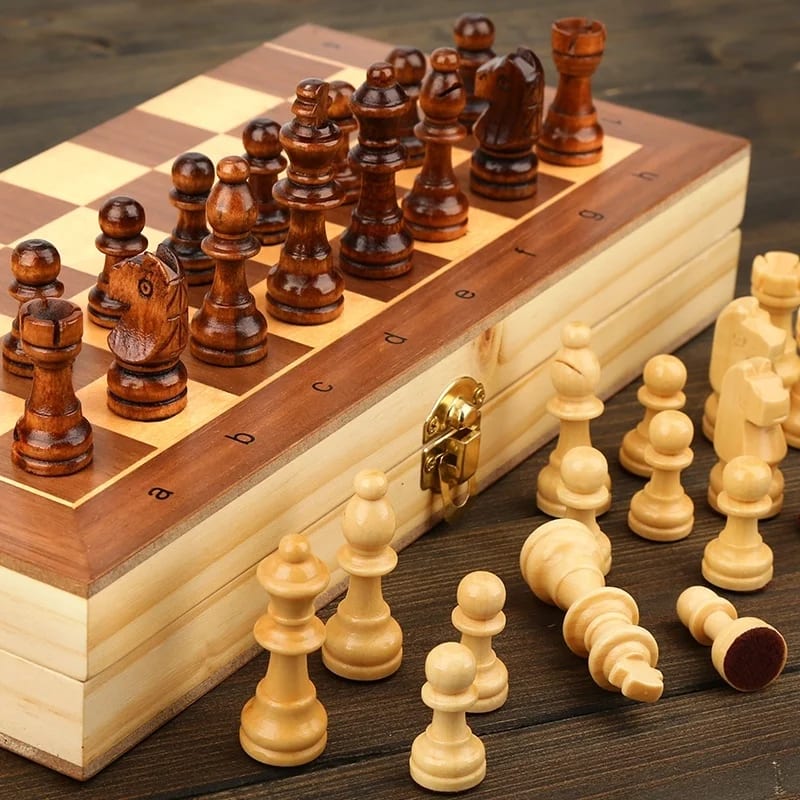
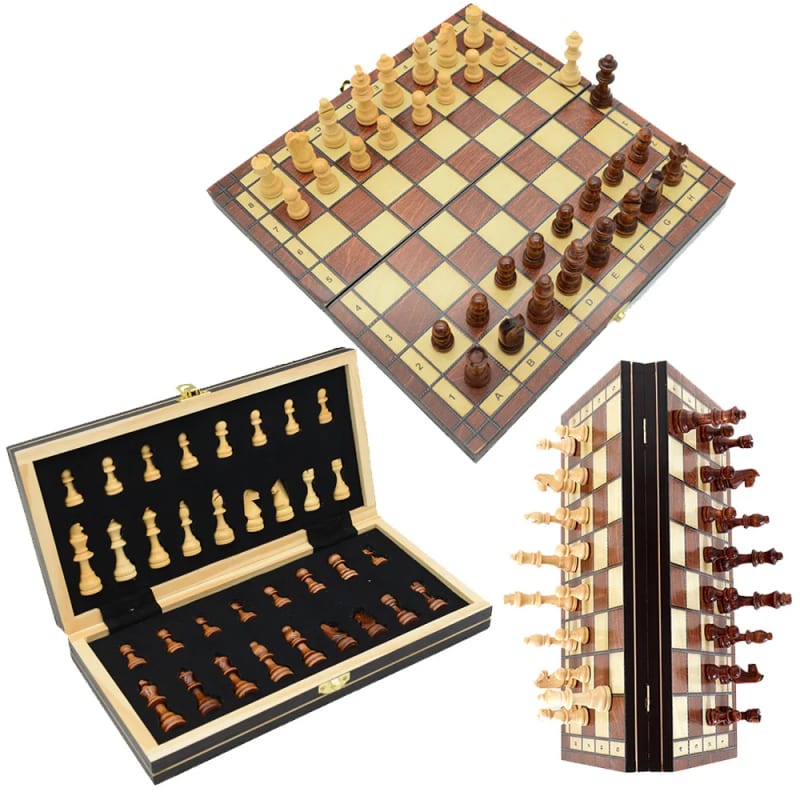
To practise endgames at home, a three-in-one chess, checkers and backgammon set or a magnetic folding chess set is all you need. For how each piece moves, see how do chess pieces move.
Frequently asked questions
Can you promote a pawn to a queen if you already have one?
Yes. Your choice is not limited to captured pieces, so you can have two or more queens on the board.
Where does the piece go when a pawn is promoted?
On the promotion square, the square on the last rank the pawn moved to.
Can a pawn promote to a king?
No. It must become a queen, rook, bishop or knight of its own colour.
Can pawn promotion be checkmate?
Yes. The new piece takes effect at once, so it can give check or checkmate on the same move.