En Passant in Chess: The Rule, the Meaning and Examples
Nov 11, 2026 · The Editors
En passant explained: what it means, exactly when a pawn can capture en passant, why the rule exists, how to write it in notation, and whether en passant is ever forced.
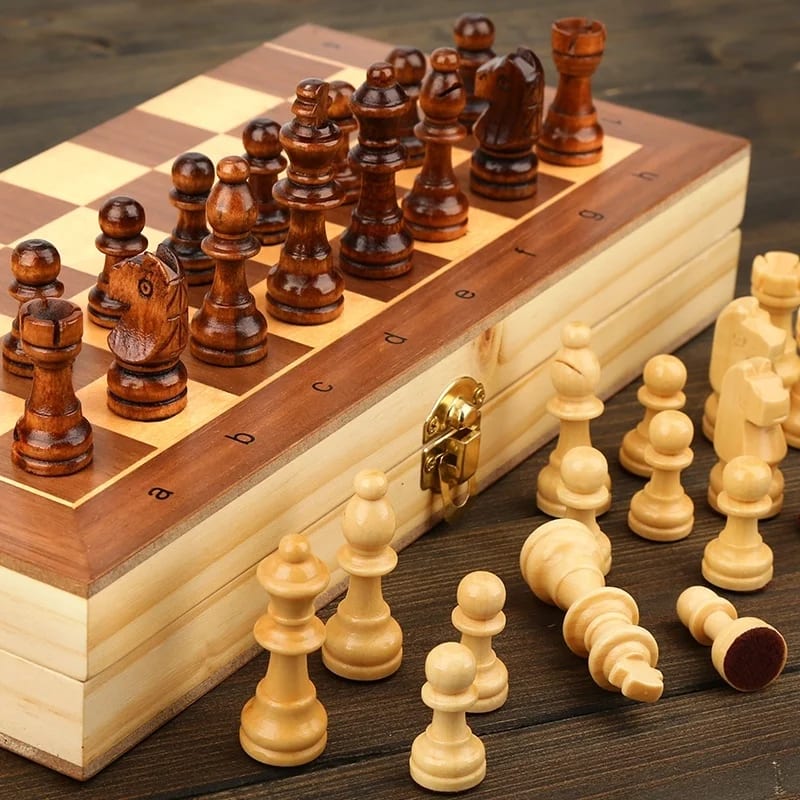
En passant ("in passing" in French) is a special pawn capture. When a pawn moves two squares forward from its starting square and lands beside an enemy pawn, that enemy pawn may capture it as if it had moved only one square — but only on the very next move. It is the only capture in chess where the capturing piece does not land on the captured piece's square.
The en passant rule, step by step
All four conditions must be true:
- Your pawn is on its fifth rank. For White, that is the 5th rank; for Black, the 4th.
- An enemy pawn on an adjacent file moves two squares from its starting square in one move.
- It lands directly beside your pawn.
- You capture immediately, on your very next move. If you make any other move, the chance is gone for good.
You capture by moving your pawn diagonally to the square the enemy pawn passed over, and remove the enemy pawn from the board.
En passant example
White has a pawn on e5. Black plays the pawn from d7 to d5, landing beside it.
- White can now capture en passant: the pawn on e5 moves to d6, and the black pawn on d5 is removed.
- If White plays anything else instead, the black pawn on d5 is safe from en passant forever.
The same applies the other way: a black pawn on d4 can capture a white pawn that moves e2 to e4, landing on e3.
Why the en passant rule exists
Pawns originally moved only one square at a time. When the two-square first move was introduced in Europe in the Middle Ages, to speed up the opening, it let a pawn slip past an enemy pawn that would otherwise have been able to capture it. En passant was added so the two-square move could not be used to dodge that capture. It became a standard rule in the following centuries.
How to write en passant in notation
In algebraic notation, write the capture as a normal pawn capture to the square the pawn lands on: exd6. Some players add e.p. — exd6 e.p. — to make it clear. Both are correct.
Is en passant forced?
No. Like any capture, en passant is optional. The only time you must play it is when it is your only legal move — for example, if it is the only way out of check. Some casual games and online variants make it compulsory as a joke, but that is not the official rule.
Common en passant mistakes
- Waiting a move. The capture must be made at once.
- Capturing a pawn that moved one square twice. En passant only applies to the two-square move.
- Using a piece other than a pawn. Only pawns can capture en passant, and only pawns can be captured that way.
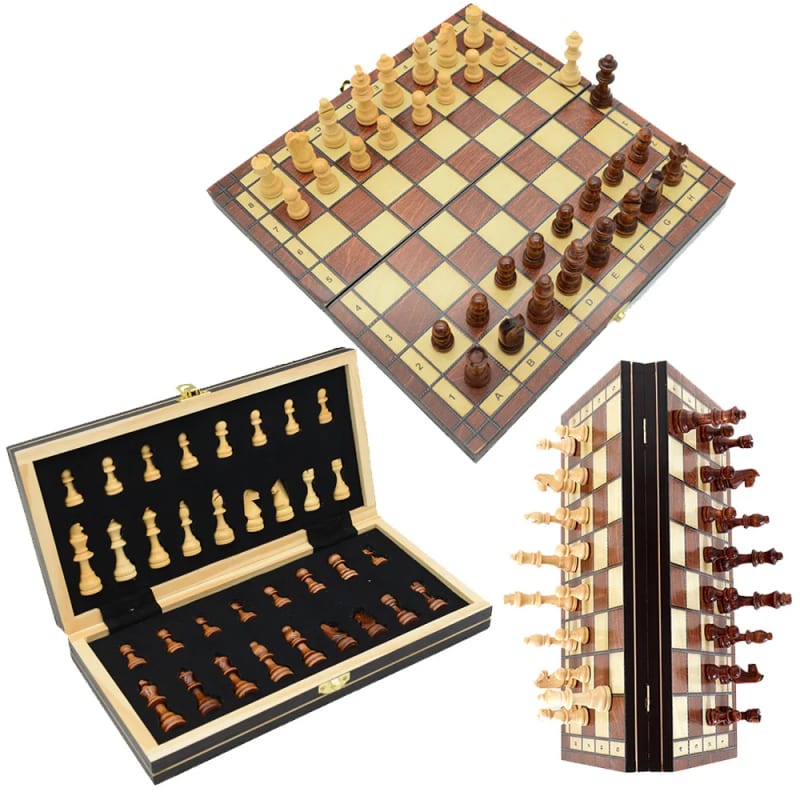
En passant is one of three special moves, along with castling and promotion. Our chess rules for beginners covers all three, and a magnetic folding chess set is the easiest way to set up the position and try it.
Frequently asked questions
What does en passant mean?
En passant is French for "in passing". It is a special pawn capture of a pawn that has just moved two squares past it.
When can you do en passant?
Only immediately after an enemy pawn moves two squares from its starting square and lands beside your pawn on your fifth rank.
Is en passant forced in chess?
No. It is optional, unless it is your only legal move.
How do you write en passant in chess notation?
Write it as a normal pawn capture, such as exd6, and optionally add "e.p.".