Chess Piece Values: Points Chart and What Each Piece Is Worth
Nov 11, 2026 · The Editors
Chess piece values explained: the standard points chart, why the king has no value, knight vs bishop, trading pieces, the bishop pair and when the numbers stop being true.
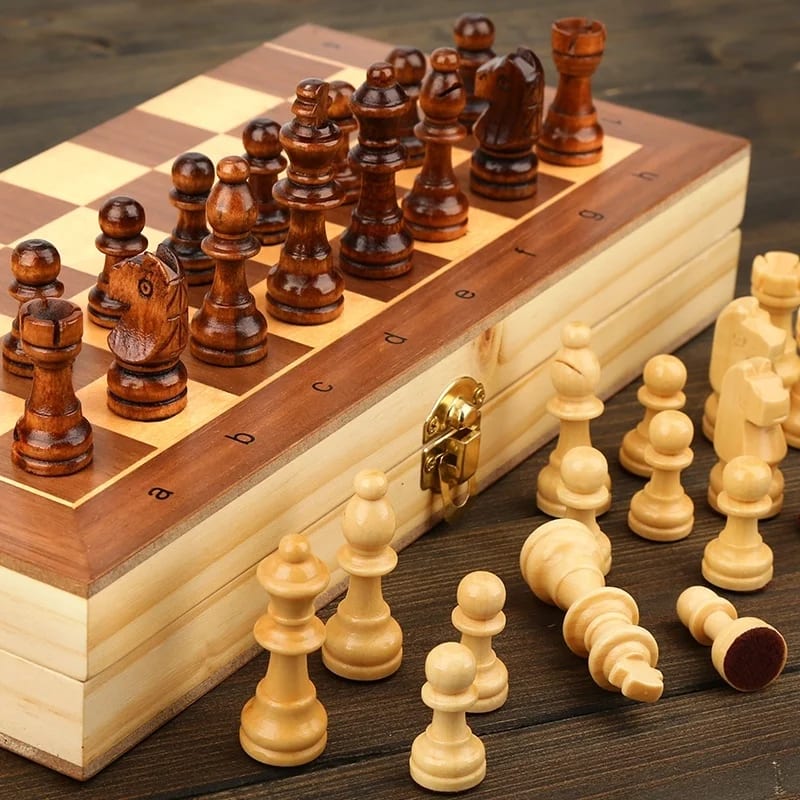
In chess, pieces are given point values so you can judge trades at a glance: pawn 1, knight 3, bishop 3, rook 5, queen 9. The king has no value, because losing it loses the game. These numbers are a guide, not a law — but they are the first thing every player learns about strategy.
Chess piece values chart
| Piece | Value (points) | Why |
|---|---|---|
| Pawn | 1 | Moves slowly, but can promote |
| Knight | 3 | Jumps, but short range |
| Bishop | 3 | Long range, one colour only |
| Rook | 5 | Controls whole ranks and files |
| Queen | 9 | Rook and bishop combined |
| King | — | Cannot be traded |
Many players give the bishop a little more, around 3¼, because it tends to be slightly stronger than a knight in open positions.
Why the king has no value
The game ends when the king is checkmated, so it is never exchanged. When people do give it a number, it is for its fighting strength in the endgame — often said to be worth about a minor piece — not for trading.
Knight vs bishop
The values say they are equal. In practice:
- Knights are better in closed positions with locked pawns, where their jumping matters and long diagonals are blocked.
- Bishops are better in open positions and endgames with pawns on both sides of the board.
- The bishop pair — keeping both bishops when your opponent has lost one — is usually worth about half a pawn extra, because together they cover both colours.
Using values to judge a trade
Add up what you give and what you get.
- Knight for bishop: 3 for 3, an even trade.
- Rook for a knight or bishop: you lose about 2 points. Winning a rook for a minor piece is called winning the exchange.
- Two minor pieces for a rook: 6 for 5 — usually good for the side with the two pieces, especially in the middlegame.
- Queen for a rook and a minor piece: 9 for 8, close to even.
- Three minor pieces for a queen: 9 for 9, but the pieces often coordinate better.
When the numbers stop being true
Values describe an average position. They change with the situation:
- A passed pawn near promotion can be worth more than a knight.
- A trapped or badly placed piece is worth less than its number.
- King safety beats material: sacrificing points to checkmate is always a good trade.
- In the endgame, rooks and pawns gain value; knights lose some.
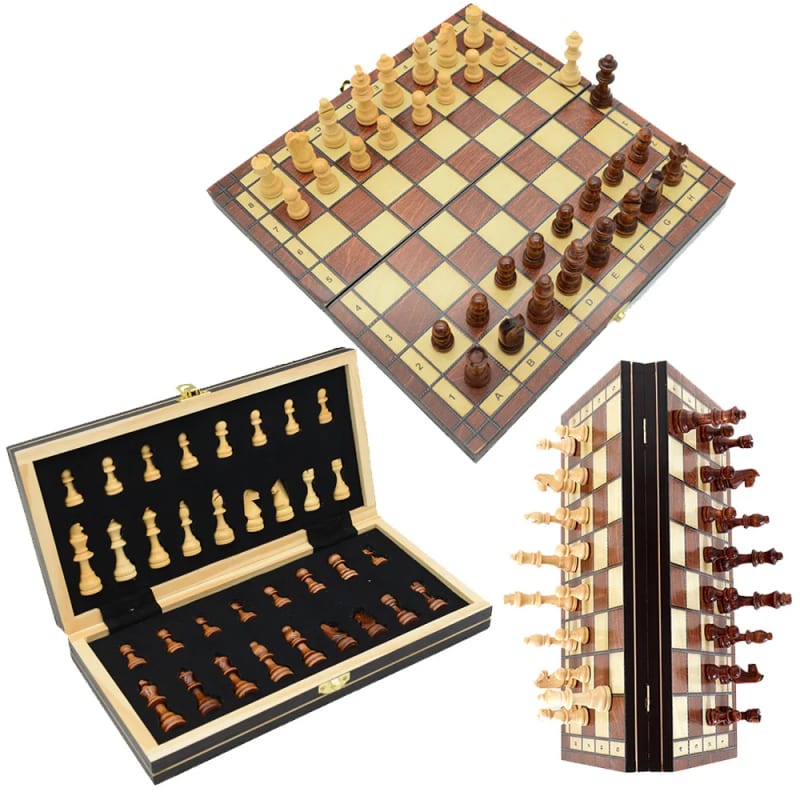
The best players use the values to check their thinking, not to replace it. If you are learning how each piece moves first, see how chess pieces move, and keep a magnetic folding chess set to hand to try trades out. Our chess rules for beginners explains promotion, which is what makes a pawn worth more than 1 near the end.
Frequently asked questions
How many points is each chess piece worth?
Pawn 1, knight 3, bishop 3, rook 5 and queen 9. The king has no point value.
Is a knight or bishop worth more?
They are both valued at 3 points. Bishops are usually slightly stronger in open positions and knights in closed ones.
How many points is the king worth in chess?
The king has no trading value because losing it ends the game. Its fighting strength in the endgame is sometimes put at about 3 or 4 points.
What is winning the exchange in chess?
Winning the exchange means trading a knight or bishop for an opponent's rook, a gain of about 2 points.