Grim Reaper Symbolism: Meaning, Origins and the Scythe
Nov 10, 2026 · The Editors
What the Grim Reaper means: where the hooded skeleton with a scythe came from, what the scythe, cloak and hourglass stand for, death figures in other cultures, and the reaper as a tattoo.
The Grim Reaper is the best-known picture of death in the Western world: a skeleton in a black hooded cloak, carrying a scythe, sometimes with an hourglass. He is not a devil or a monster. In most of the art that made him, he is simply the figure who comes for everyone, rich or poor — and that is what he means.
What the Grim Reaper means
At its simplest, the Grim Reaper is death personified: the end of life given a body so it can be seen and thought about. Around that core he carries a few clear meanings:
- Inevitability — no one avoids him.
- Equality — he takes kings and beggars alike.
- The harvest — life, like a crop, is gathered at its end.
- A reminder to live — the same idea as memento mori.
Where the Grim Reaper came from
The skeletal figure of Death became common in European art in the late Middle Ages, in the years after the Black Death of the 14th century, when death was everywhere. Murals and woodcuts of the Danse Macabre — the Dance of Death — showed skeletons leading popes, kings, merchants and peasants away together.
The scythe came from harvest imagery: death "reaps" people as a farmer reaps wheat. It also echoes the old figures of Saturn and Father Time, who carry a scythe or sickle. The English name Grim Reaper itself is much younger than the image; it became common in the 1800s.
The Grim Reaper's symbols
| Symbol | Meaning |
|---|---|
| Scythe | The harvest of souls; death cutting life short |
| Skeleton | What every body becomes; death stripped bare |
| Black hooded cloak | Mourning, mystery, the unknown |
| Hourglass | Time running out; each life has a measure |
| Skull | Mortality itself — see skull symbolism |
Death figures in other cultures
The hooded reaper is European. Other traditions picture death very differently:
- Ancient Greece: Thanatos, a winged young man, gentle rather than frightening.
- Hindu and Buddhist tradition: Yama, lord of death and judge of the dead.
- Brittany: the Ankou, who drives a cart to collect the souls of the dead.
- Mexico: Santa Muerte, a skeletal folk saint, distinct from the Day of the Dead's festive skulls.
The Grim Reaper and the Death tarot card
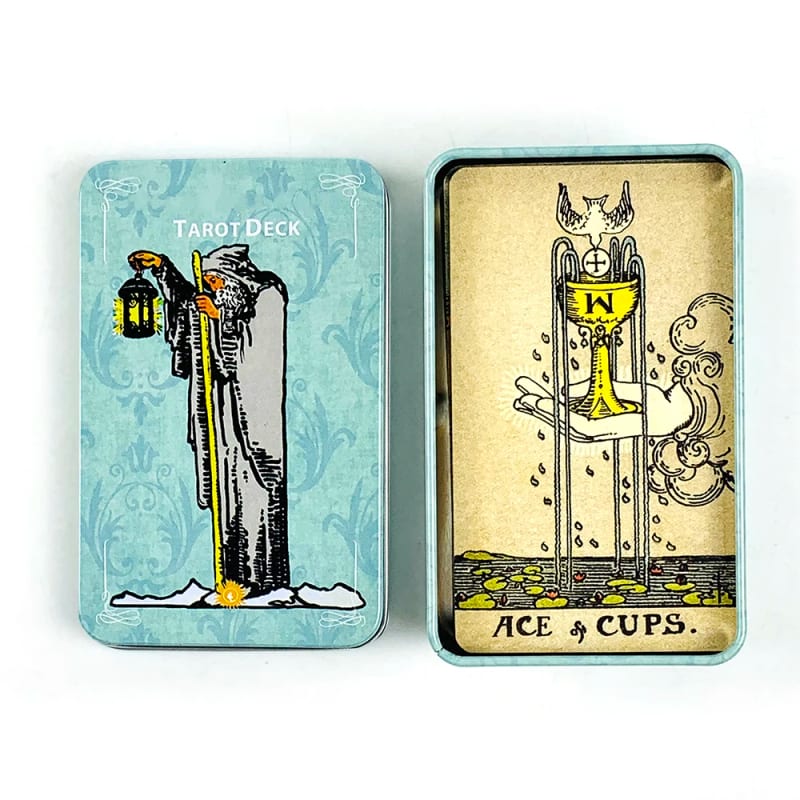
The Death card in tarot is a close cousin: in the classic 1909 deck, a skeleton in armour rides a white horse. Tarot readers almost never read it as literal death, but as an ending that makes room for something new. The reaper can carry the same meaning — the end of one season, not of everything.
Grim Reaper tattoo meaning
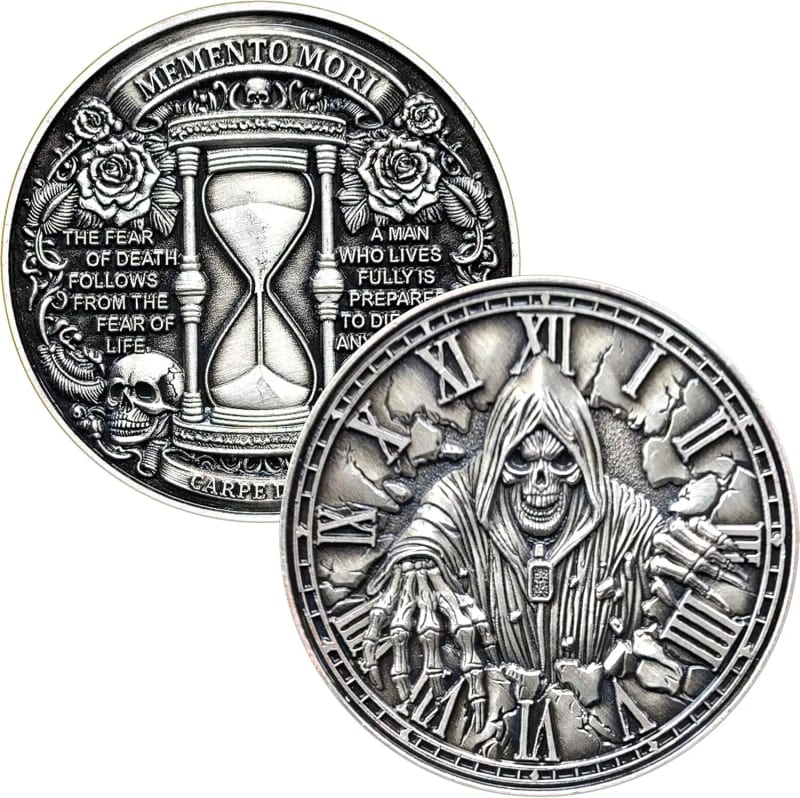
As a tattoo, the Grim Reaper usually means one of three things: defiance (living fully despite death), remembrance of someone who has died, or a memento mori — a daily reminder that time is short. Paired with an hourglass, roses or a clock, the message is usually the last.
A reaper you can carry
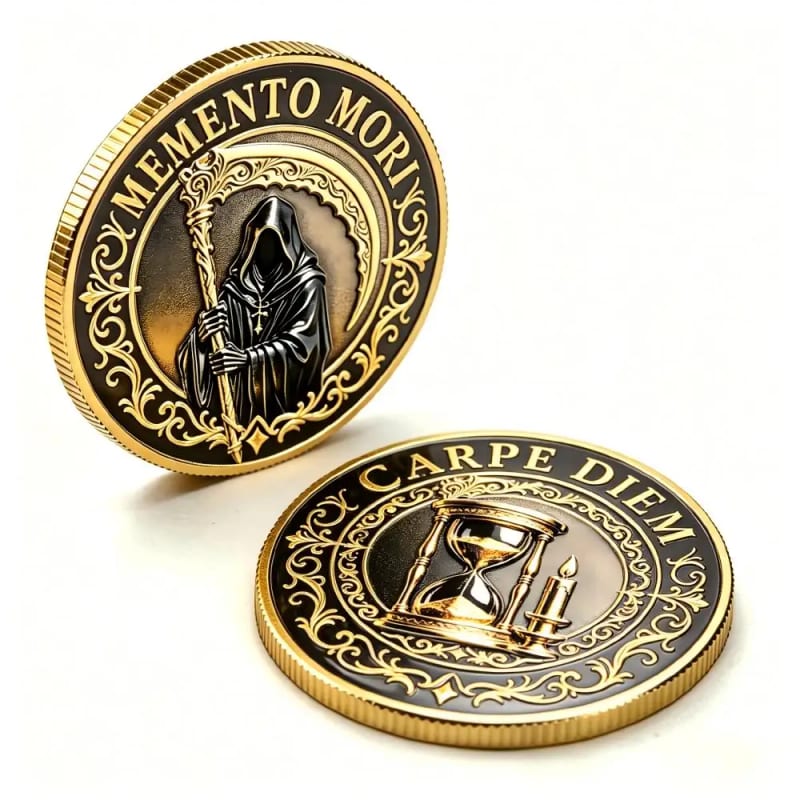
Many people who like the reaper's message want it close without wearing it. Our memento mori reaper coin puts the hooded reaper on one side and an hourglass under carpe diem on the other, sealed in a display case for a desk. For the history behind those words, see carpe diem meaning and vanitas paintings.
Mentioned above