Skull Symbolism: What the Skull Means in Art, Faith and Tattoos
Nov 9, 2026 · The Editors
Skull symbolism explained: mortality and memento mori, the skull in Christian art, vanitas paintings, the pirate skull and crossbones, the poison label, Day of the Dead sugar skulls, and skull tattoos.
The human skull is the most direct symbol of death there is. Everybody has one; nobody needs it explained. Yet across art, religion and folklore, the skull has meant much more than an ending — wisdom, equality, rebellion, warning and even celebration.
The skull as memento mori
The oldest and steadiest meaning is mortality. A skull says: this is what you will become. Medieval and Renaissance Europe used it constantly — on tombs, rings, coins and in paintings — as a memento mori, a reminder to live well because life is short. The point was never gloom. It was perspective: kings and beggars end up looking exactly the same. See the meaning of memento mori.
Skull symbolism in art
In 17th-century Dutch vanitas still lifes, a skull sits among books, jewellery, musical instruments and fading flowers. Everything on the table — learning, wealth, pleasure, beauty — is temporary. Hans Holbein's The Ambassadors (1533) hides a stretched, distorted skull across the floor; seen from the right angle, it snaps into shape. More in vanitas paintings: meaning and symbols.
Literature has its own famous skull. In Hamlet, the prince holds up the skull of the jester Yorick, a man he knew as a child, and the scene became shorthand for the thought that death comes to everyone.
Skull symbolism in Christianity
Golgotha, where the Gospels place the crucifixion, means "place of the skull". In many paintings of the crucifixion, a skull lies at the foot of the cross. A long tradition identifies it as the skull of Adam: Christ's death redeeming the first man's sin. Saints shown in prayer or study — St Jerome and Mary Magdalene among them — often have a skull beside them as a sign of meditation on death and the life to come.
The skull and crossbones
Two very different flags share this design.
- Pirates. The skull over crossed bones is the best-known version of the Jolly Roger. It told a ship's crew who they were dealing with — and that resistance would cost lives. See pirate flag meanings.
- Poison. From the 19th century, bottles of poison were marked with a skull and crossbones, and the symbol is still a hazard warning on dangerous chemicals.
Sugar skulls and the Day of the Dead
In Mexico, the Día de los Muertos (early November) honours the dead with altars, food, flowers and decorated skulls — calaveras — made of sugar or clay and often painted with the name of a loved one. Here the skull is affectionate, colourful and playful: death as part of the family's story rather than something to fear.
Skull symbolism, spiritual
Many modern readers see the skull as a symbol of transformation — the end of one stage and the start of another — and of the mind, since it houses the brain. In this sense a skull is closer to the Death tarot card than to a horror film: an ending that makes room for something new.
Skull tattoo meaning
A skull tattoo can mean any of the above, and what surrounds it usually tells you which:
| With | Usually means |
|---|---|
| Roses | love and death, beauty and loss |
| An hourglass or clock | time is short |
| Crossbones | rebellion, danger, the pirate spirit |
| Flowers and bright colours | Day of the Dead, remembrance |
| A crown | power that death still overrules |
| Dice or cards | luck, risk, living dangerously |
The skull on a deck of cards
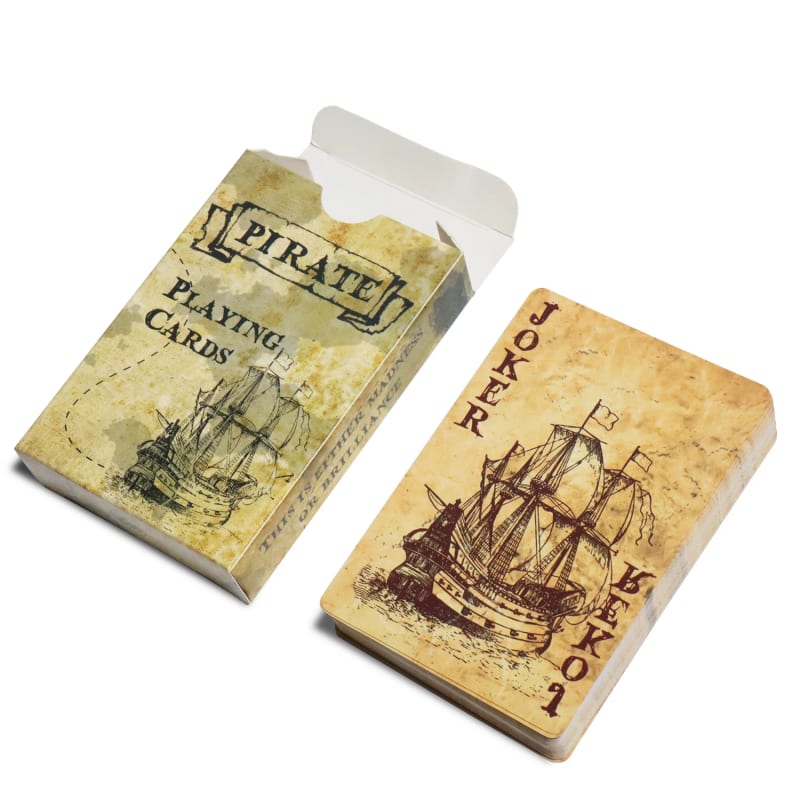
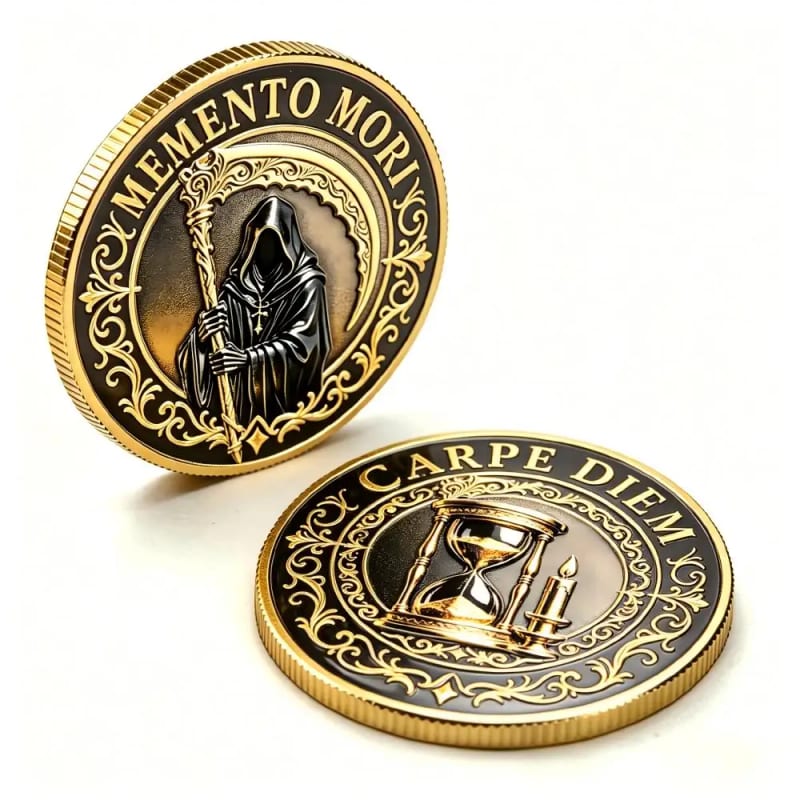
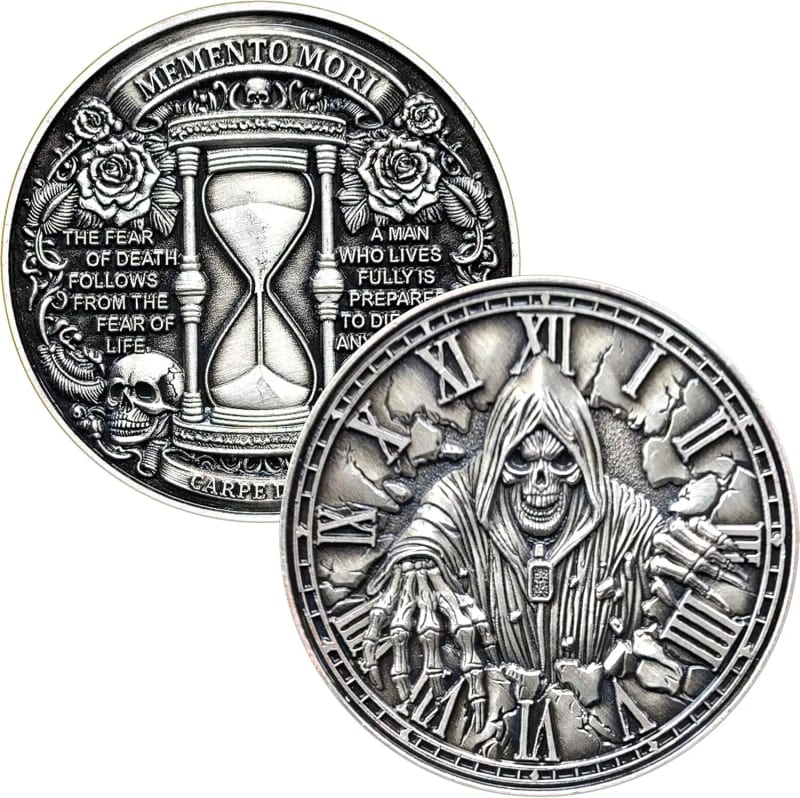
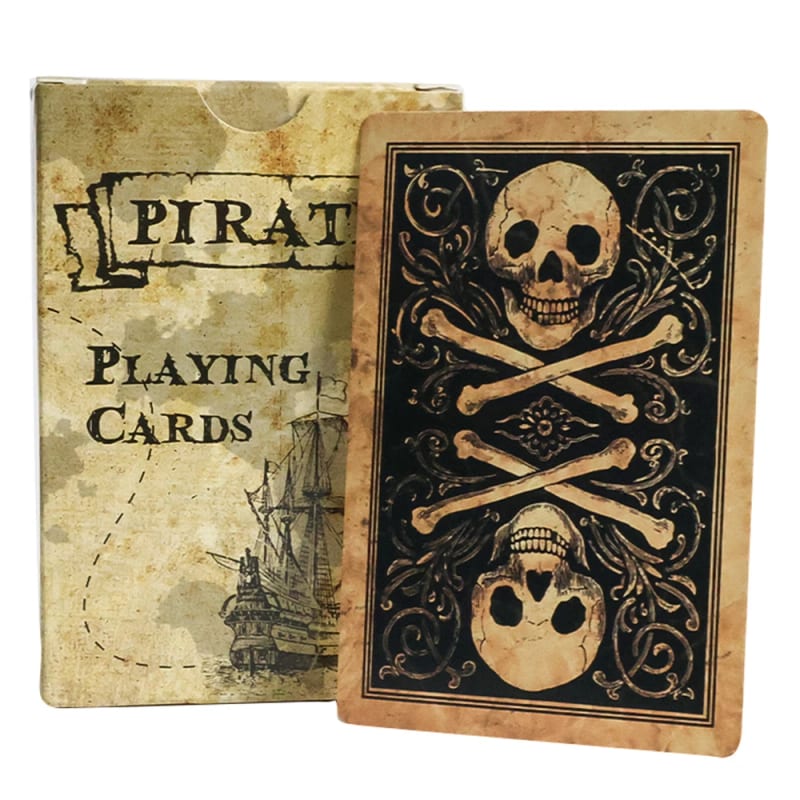
Skulls have long been a favourite of gamblers and card players — a wink at risk and luck. Our Pirate Skull playing cards carry a skull and crossbones on the back of every card, on stock aged to look salvaged, and the Pirate King deck has hand-drawn courts to match. For the meaning in your pocket, a memento mori coin puts the reaper and the hourglass in metal — see hourglass meaning.
Mentioned above