Carpe Diem Meaning: What 'Seize the Day' Really Says
Nov 4, 2026 · The Editors
Carpe diem in Latin and English, the poem by Horace it comes from, what it means — and how it pairs with memento mori.
Carpe diem is Latin for "seize the day". It is one of the most quoted phrases in the language, on tattoos, mugs and gym walls — and most people who use it have never seen the line it comes from, which says something a little gentler and a little sharper than the slogan.
Carpe diem meaning in English
Carpe is an instruction: "pluck", "pick", "seize". Diem is "the day". The usual translation, "seize the day", makes it sound like grabbing; the verb Horace chose is the one used for picking fruit. Pluck the day — take it while it is ripe, because it will not wait.
Where it comes from
The phrase is from a short poem by Horace, written around 23 BC, the eleventh poem of the first book of his Odes. A woman named Leuconoe has been asking fortune-tellers how long she and the poet have to live. Horace tells her to stop: nobody can know, so strain the wine, cut short long hopes, and while we are talking, envious time has already run away. Then the famous ending:
carpe diem, quam minimum credula postero
— "pluck the day, trusting as little as possible in tomorrow".
So the original is not "do something wild today". It is: stop trying to know the future, and enjoy what is in front of you.
Carpe diem and memento mori
The two phrases are natural partners, which is why they so often share a coin:
- Memento mori — remember you will die.
- Carpe diem — so pluck the day.
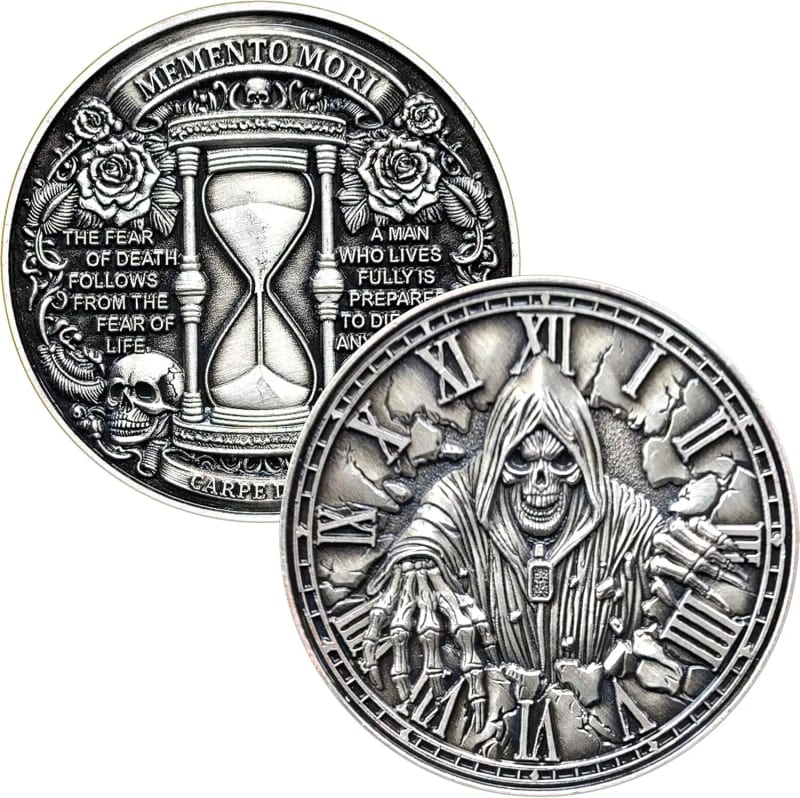
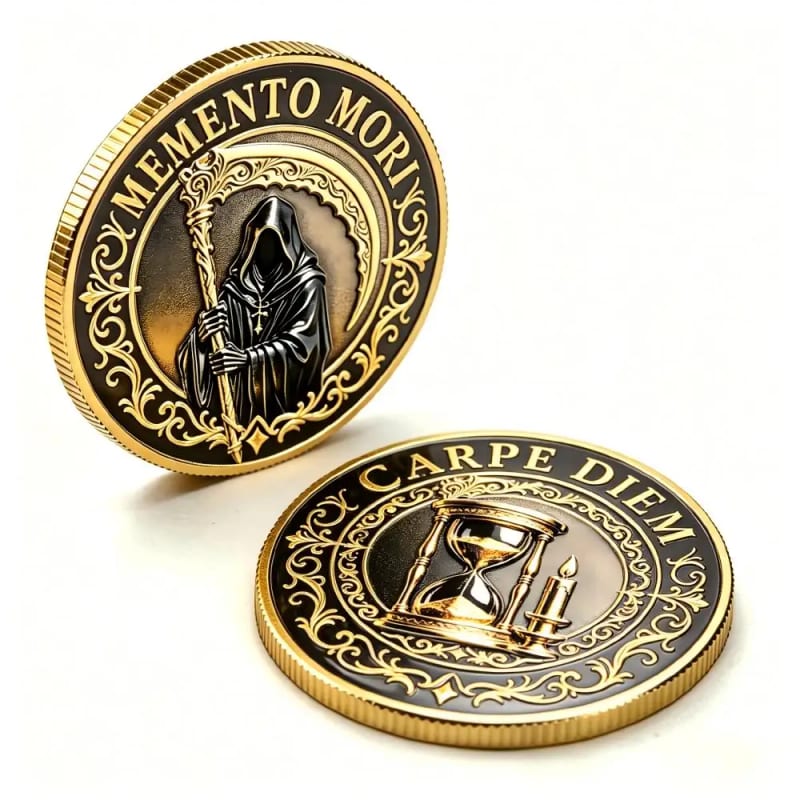
One is the reason, the other the response. Our gold coin carries them back to back: a hooded reaper under MEMENTO MORI on the front, an hourglass under CARPE DIEM on the reverse, in gold-tone and black enamel.
Carpe diem in English culture
The phrase passed into English poetry long before film. Robert Herrick's "Gather ye rosebuds while ye may" (1648) is carpe diem in English, and Andrew Marvell's "To His Coy Mistress" makes the same argument. For many people, though, it means the 1989 film Dead Poets Society, in which a teacher whispers it to his class over photographs of students long dead — which is memento mori and carpe diem in a single scene.
What it is not
Carpe diem is not a licence to be reckless. Horace was an Epicurean at heart, and to an Epicurean the good life is a calm one: friends, simple pleasures, no fear of what you cannot control. Pluck the day, not the whole orchard.
As a gift
A carpe diem coin suits a graduation, a retirement, a new start, or anyone who needs a nudge to stop waiting. Ours comes sealed in a clear display case, ready to stand on a desk — or to be taken out and carried, which is the point of it.
It is a commemorative piece with a gold-tone finish: it copies no currency and is not gold.
Mentioned above