Wooden Puzzles for Adults: The Main Types of Brain Teaser
Nov 9, 2026 · The Editors
The main kinds of wooden puzzle for adults — interlocking, packing, sequential, disentanglement, puzzle boxes and jigsaws — how hard each feels, and how to choose one that suits the person.
Wooden puzzles for adults are a different thing from the chunky shapes in a toy box. They are small, carefully cut objects that look simple, sit handsomely on a desk, and can take an evening — or a fortnight — to beat. They need no batteries, screens or instructions beyond "put it back together". Here are the main kinds, so you can pick the right one.
The main types of wooden brain teaser
| Type | The challenge | Good for |
|---|---|---|
| Interlocking (burr) | Rebuild a solid shape from notched pieces | Patient, hands-on thinkers |
| Packing (tray) | Fit every piece back into its frame | Visual, spatial thinkers |
| Sequential movement | Slide pieces through a set of moves to free one | Logical, step-by-step thinkers |
| Disentanglement | Free a ring or loop from a frame and cord | People who like "aha" moments |
| Puzzle box | Find the hidden way to open it | Anyone who loves a secret |
| Jigsaw | Build a picture from cut pieces | Calm, long sessions |
Interlocking puzzles
Notched sticks that lock into a cross, cube or ball with no glue. The Chinese form is the Kong Ming lock; in the West they are burr puzzles. Taking them apart is easy; rebuilding from a heap is the real test. They are among the most satisfying to hold because the finished shape is solid and smooth.
Packing puzzles
Tip the pieces out of a tray and put them back. It sounds trivial and is not: a hexagon puzzle of eleven pieces has a few arrangements that fit and a great many that leave one piece hanging over the edge. The impossible tray puzzle goes further — plain wood, no colours, and pieces that look as if they cannot possibly fit. Packing puzzles suit people who like to see the whole problem laid out in front of them.
Sequential movement and labyrinths
Here the pieces never leave the board; you move them through a set of positions until one comes free, rather like a sliding-block puzzle. The wooden labyrinth tray puzzle is one of these and is rated high difficulty. They reward people who enjoy working one step at a time and remembering where they have been.
Disentanglement
A cord, a ring and a wooden frame, as in the rope and ring puzzle: the ring has to come off without untying anything. These are the best wooden puzzles to pass around a table, because the solution is a handful of moves and someone always gets it first. The same thinking applies to metal wire puzzles.
Puzzle boxes and jigsaws
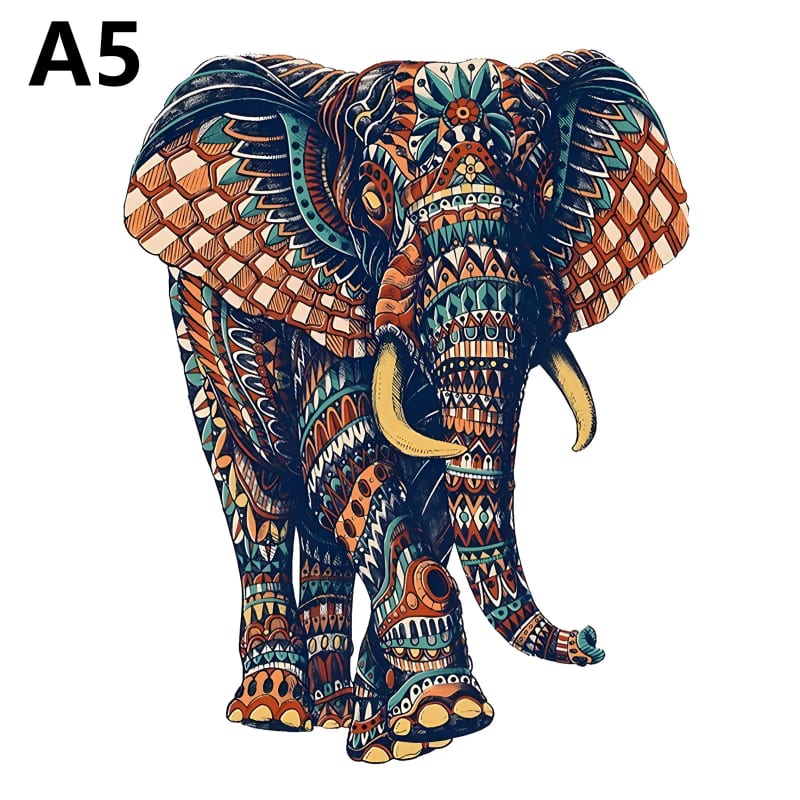
A puzzle box hides its opening and doubles as a place to hide a gift. A wooden jigsaw — especially one with irregular, animal-shaped pieces like our elephant jigsaw — is harder than cardboard because there are no straight edges to start from. See our jigsaw puzzle tips for how to tackle one.
Wooden puzzles for adults: solutions and hints
Most people want to solve these themselves, but a few rules help when you are stuck:
- Never force wood. A move that needs pressure is the wrong move.
- Photograph an interlocking puzzle before you take it apart.
- Lay pieces out in the order they came off, turned the same way.
- Step away for a day. A surprising number of puzzles fall open on the second attempt.
How to choose one
Match the puzzle to how the person thinks: a talker who likes company gets a rope and ring puzzle; a quiet, visual person gets a packing tray; a tinkerer gets an interlocking ball. If you are buying for someone who already owns a shelf of puzzles, see gifts for puzzle lovers.
Mentioned above
Products in this guide
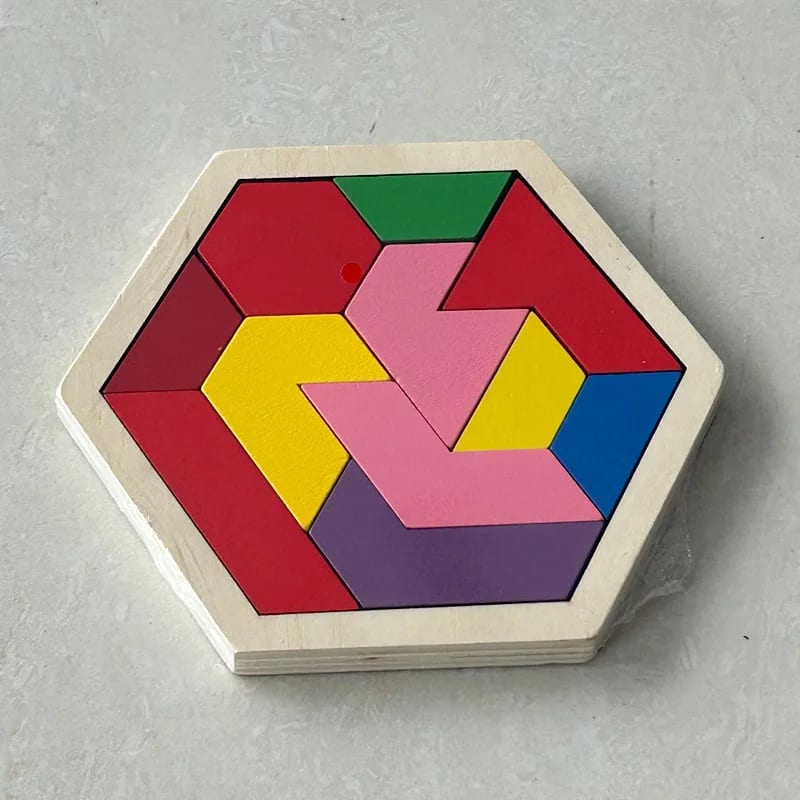
Hexagon Wooden Puzzle — 11 Pieces
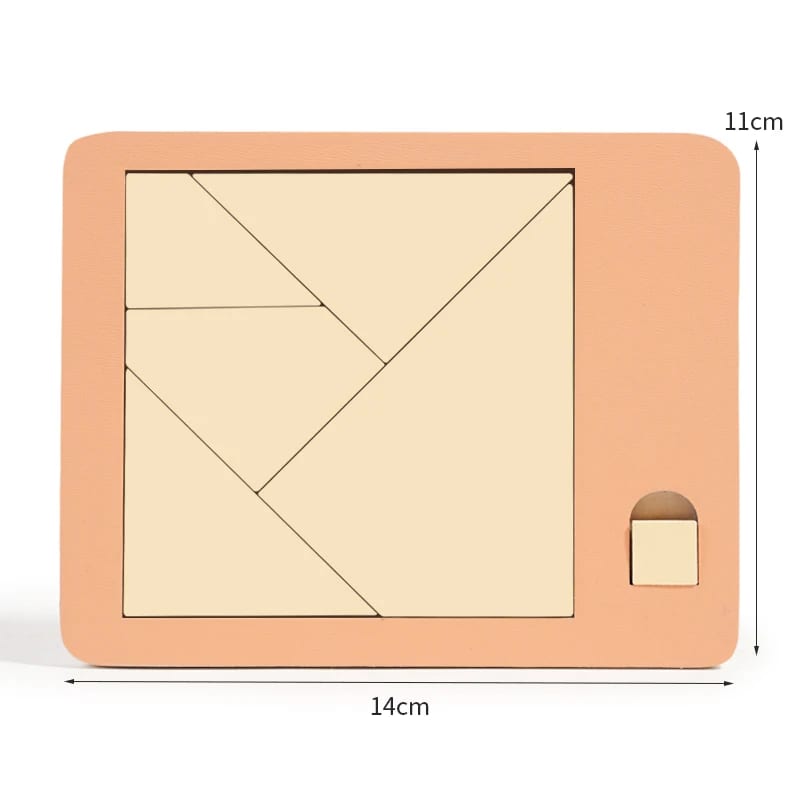
Impossible Wooden Tray Puzzle
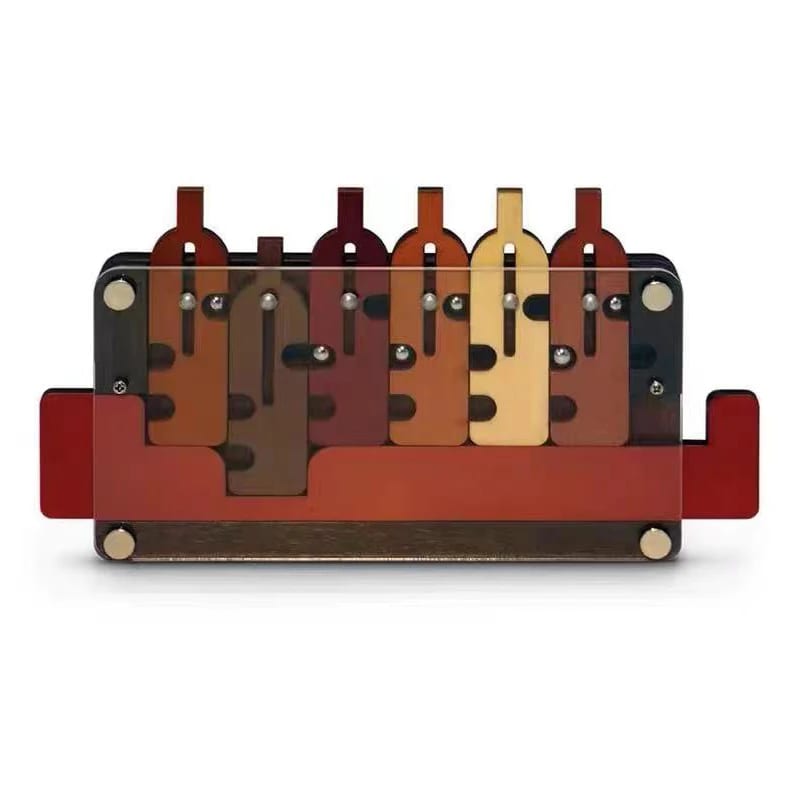
Waiter's Tray Labyrinth Puzzle — Wooden
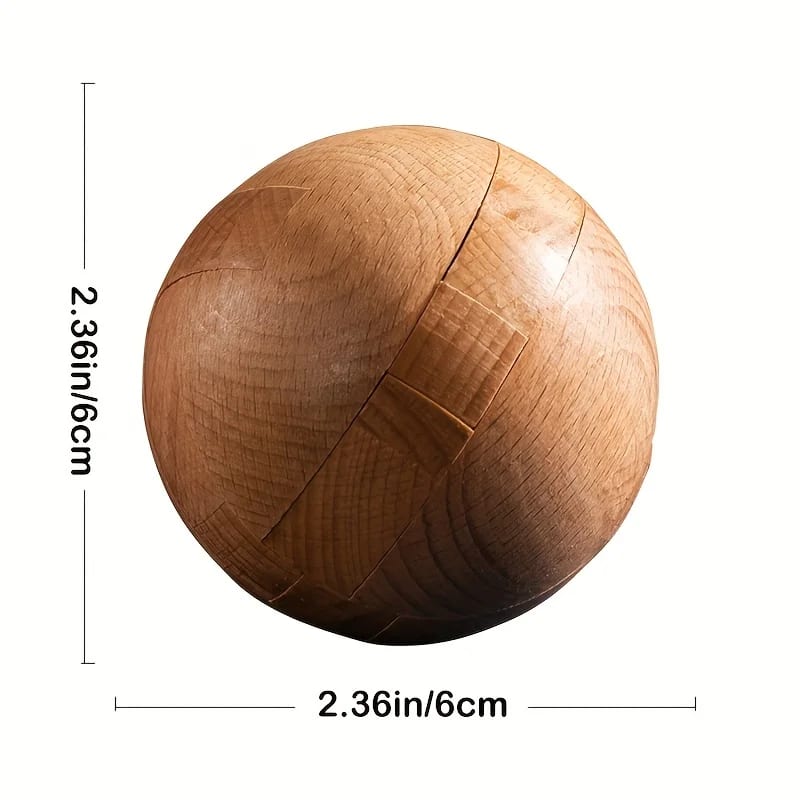
Wooden Kong Ming Lock — Puzzle Ball
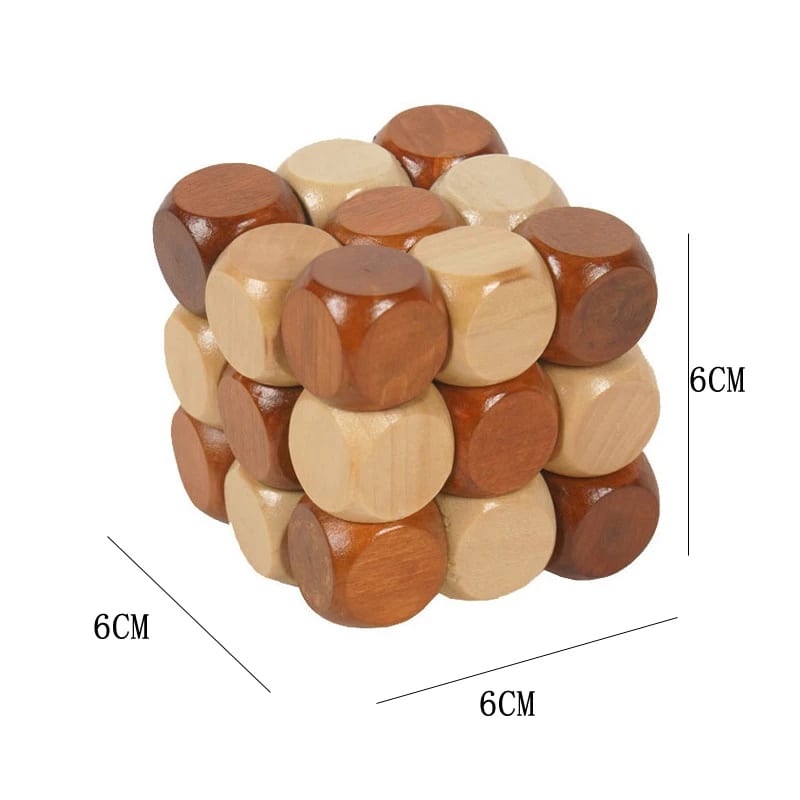
Wooden Puzzle Cube — Interlocking Burr
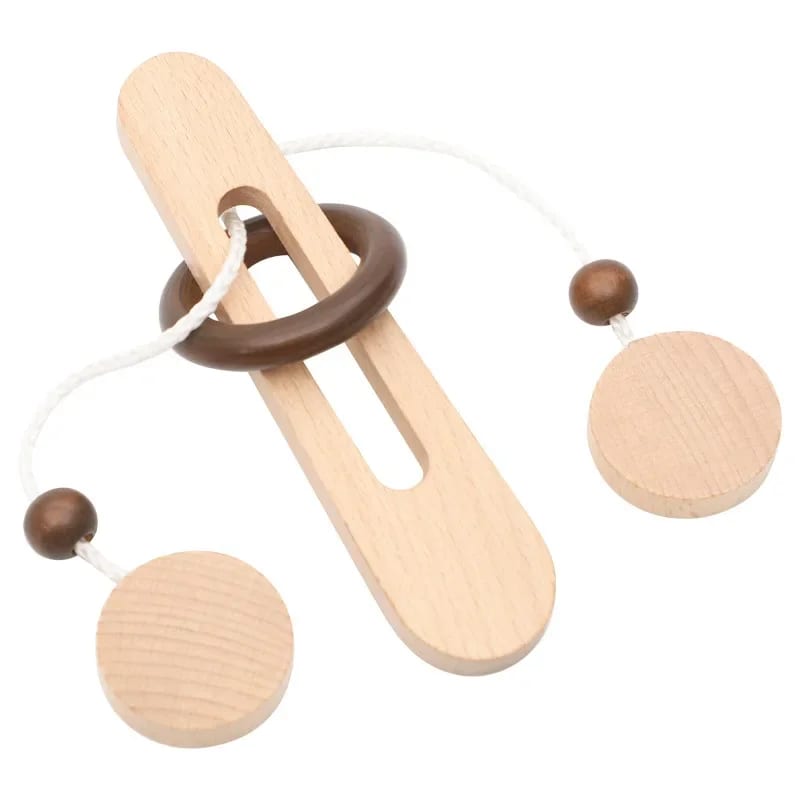
Rope and Ring Puzzle — Wooden
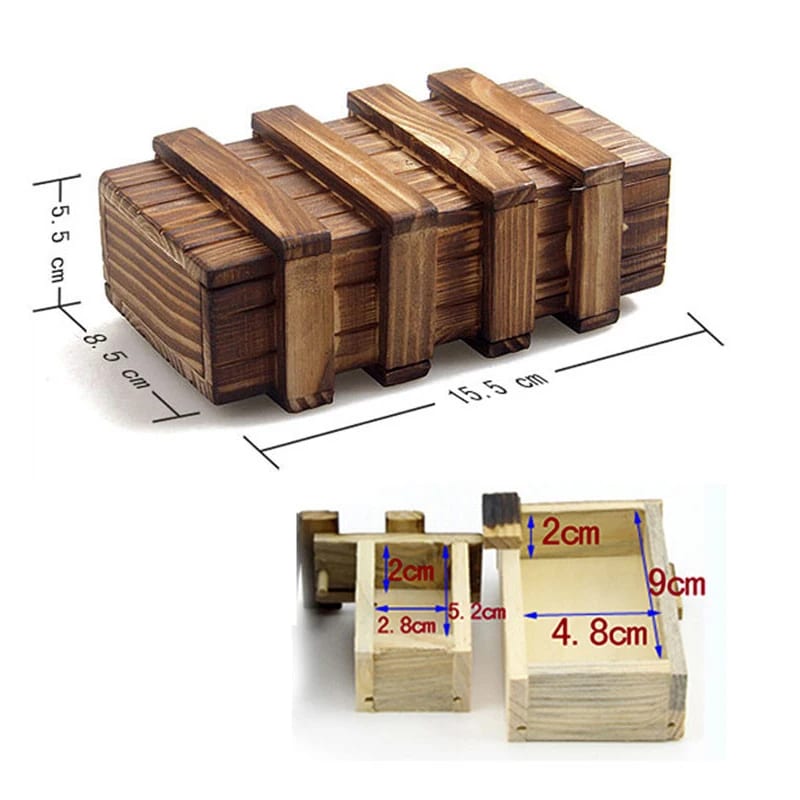
Wooden Puzzle Box with Secret Drawers