Wire Puzzles: How to Solve Metal Brain Teasers
Nov 9, 2026 · The Editors
How metal wire puzzles work, the main kinds (horseshoe, heart, ring and loop, Chinese rings), and the general method for solving them without bending anything or looking up the answer.
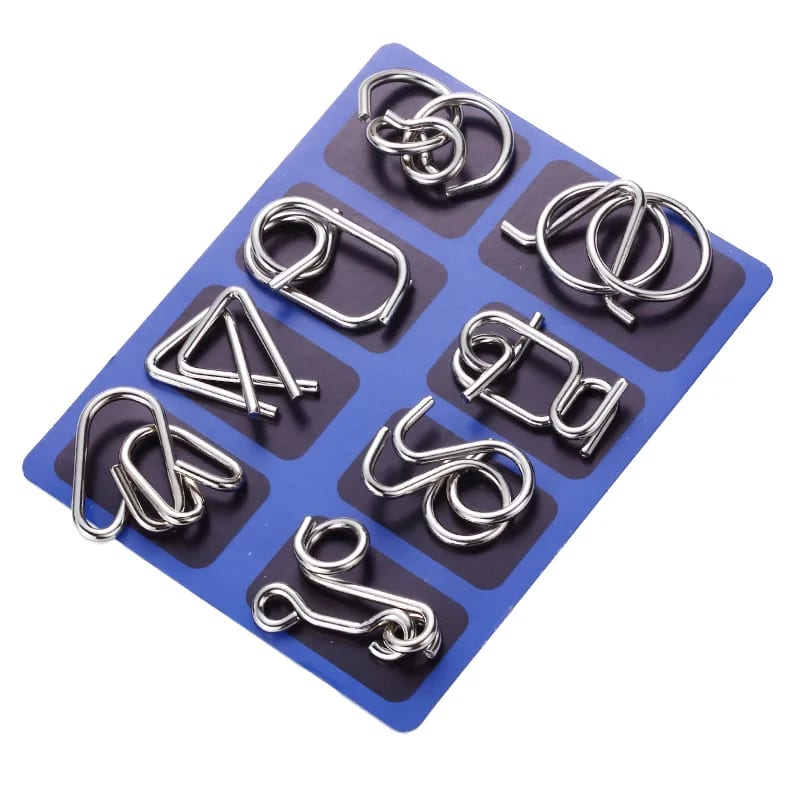
Metal wire puzzles — also called disentanglement puzzles or tavern puzzles — are bent wire shapes linked so they seem impossible to separate. Two horseshoes joined by chain links and a ring. Two interlocked hearts. A loop of wire trapped on a twisted frame. They fit in a pocket, need no table, and the good ones can stop a room of adults for an evening.
How a wire puzzle works
Every wire puzzle has the same honest secret: the pieces really can come apart without bending anything. The puzzle is a question of path. A ring or loop can pass through any gap that is big enough, and the solution is the one route — often through an opening you have been ignoring — where it never meets a gap that is too small.
That is why forcing never helps. If you need strength, you are on the wrong path.
The main kinds of wire puzzle
| Kind | What you see | The usual challenge |
|---|---|---|
| Ring and loop | A free ring caught on a wire frame | Find the route the ring can follow off |
| Two-piece (hearts, hooks, horseshoes) | Two shapes linked together | Turn them until the gaps line up |
| Chain and ring | Two pieces joined by a chain with a loose ring | Walk the ring through the chain |
| Chinese rings | A row of rings on a long loop | A repeating sequence that grows with every ring |
The Chinese rings puzzle (also called the baguenaudier) is the famous mathematical one. Each extra ring roughly doubles the number of moves needed, so a large set takes hundreds of moves, all following one simple rule. It was being written about in Europe by the 1500s, and the mathematics behind its moves is related to what computer scientists now call Gray code.
How to solve a wire puzzle
Searching "wire puzzle solutions" will give you answers, but most people enjoy the puzzle far more if they solve it with a method instead.
- Find the free piece. Usually one part — a ring, a loop, a link — is the thing that has to travel. Decide which.
- Trace the path with a finger. Follow the free piece's route along the wire and notice every gap it could pass through.
- Look for the same move twice. Many puzzles need the free piece to pass through one loop, round the frame, and back through a second loop the same way.
- Mirror the puzzle. Most wire puzzles are symmetrical. If a move works on one side, the next move is often the same move on the other side.
- Go slowly backwards. When a piece comes off, put it straight back on by reversing what you did. That locks in the solution for next time.
- Never bend. If the metal is under strain, stop and back up.
Wire puzzles for adults: easy to very hard
A set of mixed puzzles is the best way in, because you can start with an easy one and feel how the solving method works before tackling the stubborn ones. Our set of eight metal wire puzzles runs from easy to properly difficult, and each one fits in a pocket.
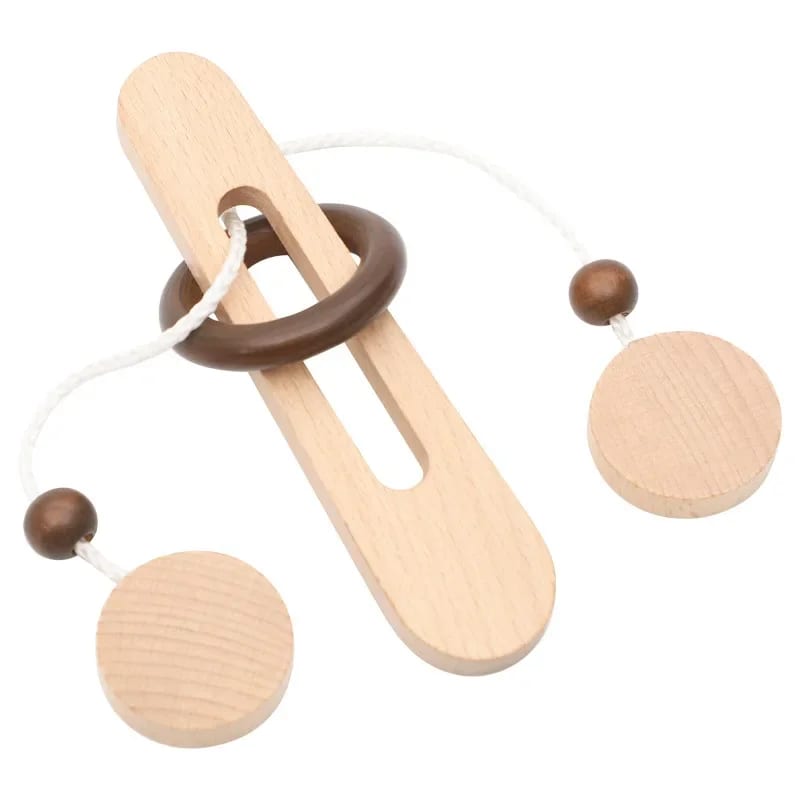
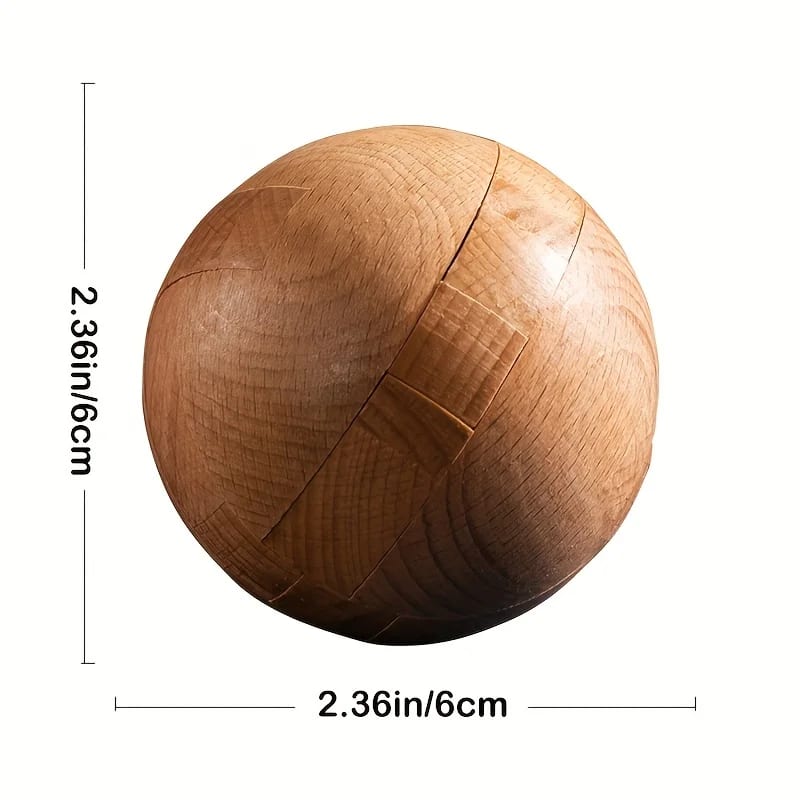
If you like disentanglement, the wooden rope and ring puzzle is the same idea with cord instead of wire — a good one to pass around a table. And when you want a puzzle that is about fitting pieces together rather than taking them apart, try a burr puzzle.
Why they keep their place on a desk
Wire puzzles never wear out. Once solved, they are re-assembled and handed to the next person, so the same puzzle carries on working for years. They are also nearly silent and need nothing but two hands, which makes them a quiet thing to fiddle with on a phone call. For more on choosing a puzzle for someone else, see gifts for puzzle lovers.