Jigsaw Puzzle Tips and Tricks for Beginners
Nov 9, 2026 · The Editors
Jigsaw puzzle tips that actually work: how to sort the pieces, what to do when there are no straight edges, how wooden jigsaws differ from cardboard, and how to set up a table for a long puzzle.
Jigsaws look like the simplest puzzle there is, and then you tip out a thousand pieces and stare at them. A few habits make the difference between a puzzle that sits half finished for a month and one you enjoy all the way to the last piece.
Jigsaw puzzle tips for beginners: the first half hour
- Turn every piece face up. It is dull, but it is the single biggest time saver. Do it while you chat or listen to something.
- Pull out the edges. On a standard cardboard puzzle, the straight-edged pieces make the frame, and the frame gives you the size of the picture.
- Sort by colour and texture, not just colour. Sky, water, grass and brickwork have different grains even when the colours are close.
- Keep the picture in view. Prop up the box lid where you can see it from your seat.
Then build the frame and work inwards from the areas with the strongest detail — writing, faces, sharp lines — before the large plain areas.
Tips and tricks for the hard parts
Sort plain areas by shape. In a big stretch of blue sky, sort pieces by their knobs and holes: two knobs opposite each other, four knobs, three holes and so on. When you need a particular shape, you look in one small pile instead of two hundred pieces.
Try pieces by position, not by eye. In plain areas, take one piece and try it in every gap around the edge of what you have built. It is faster than hunting for a match by sight.
Work in small sections. Build islands — a window, a boat, a face — separately, then place them in the frame.
Take breaks. People who have been stuck for an hour often find three pieces in a minute after a cup of tea.
Wooden vs cardboard jigsaws
| Cardboard | Wooden | |
|---|---|---|
| Pieces | Grid cut, similar shapes | Irregular, often with shaped "whimsy" pieces |
| Edges | Straight frame | Often no straight edges at all |
| Feel | Light, can bend | Solid, satisfying, lasts for years |
| Re-doing it | Wears with use | Holds up to many builds |
| Difficulty per piece | Lower | Higher — shapes give fewer clues |
Whimsy pieces are pieces cut in recognisable shapes — animals, birds, letters. They are the charm of a wooden jigsaw, and they also make it harder, because the usual "two knobs, two holes" rules no longer apply.
How to do a jigsaw with no straight edges
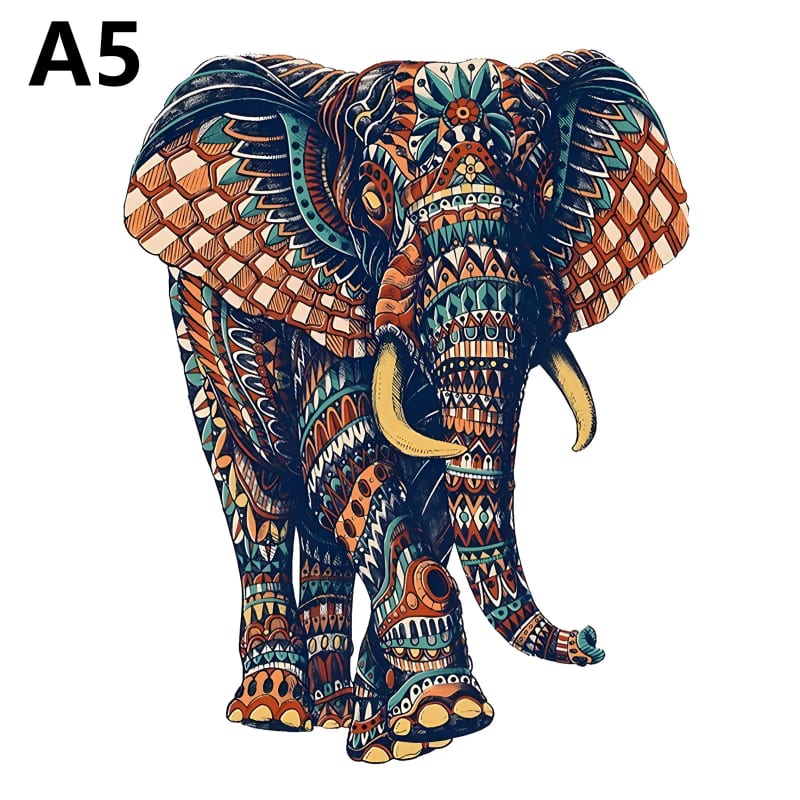
Many wooden puzzles, including our elephant wooden jigsaw, have irregular outlines, so the usual frame-first approach does not work. Instead:
- Start with the most distinctive area of the picture — on an elephant, the eye, the trunk or a bold patch of pattern.
- Pull out the whimsy pieces first and place them by the picture; they are easy to recognise.
- Work outwards from the centre, using colour bands to guide you.
Setting up a jigsaw table
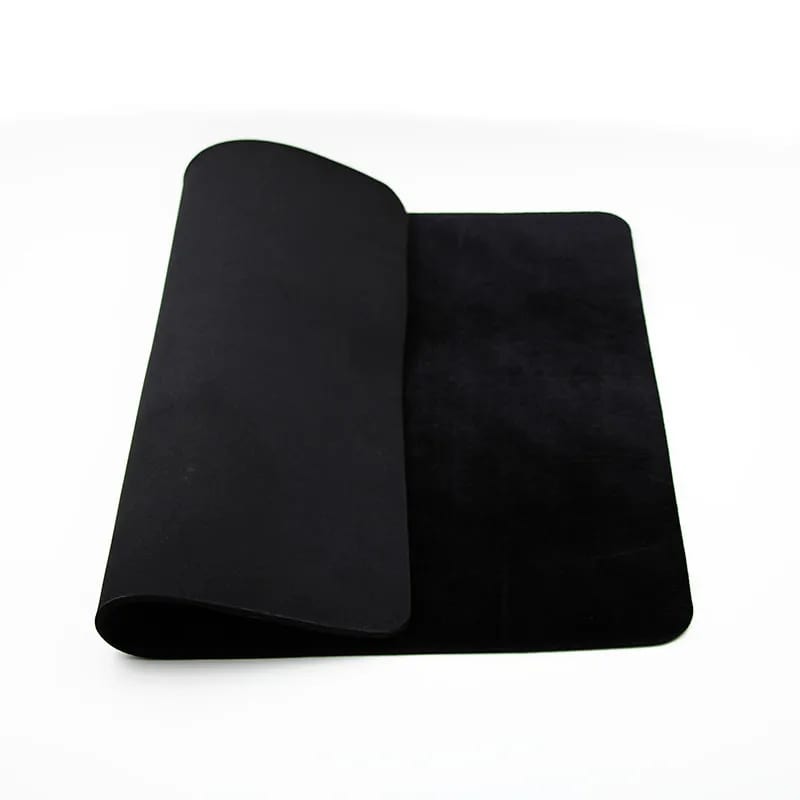
Good light matters more than anything — a lamp beside you, not behind. Work on a flat surface you can leave the puzzle on for days, or on a board or mat you can lift away when the table is needed. A soft felt mat, like a large close-up mat, stops pieces sliding and makes them easy to pick up.
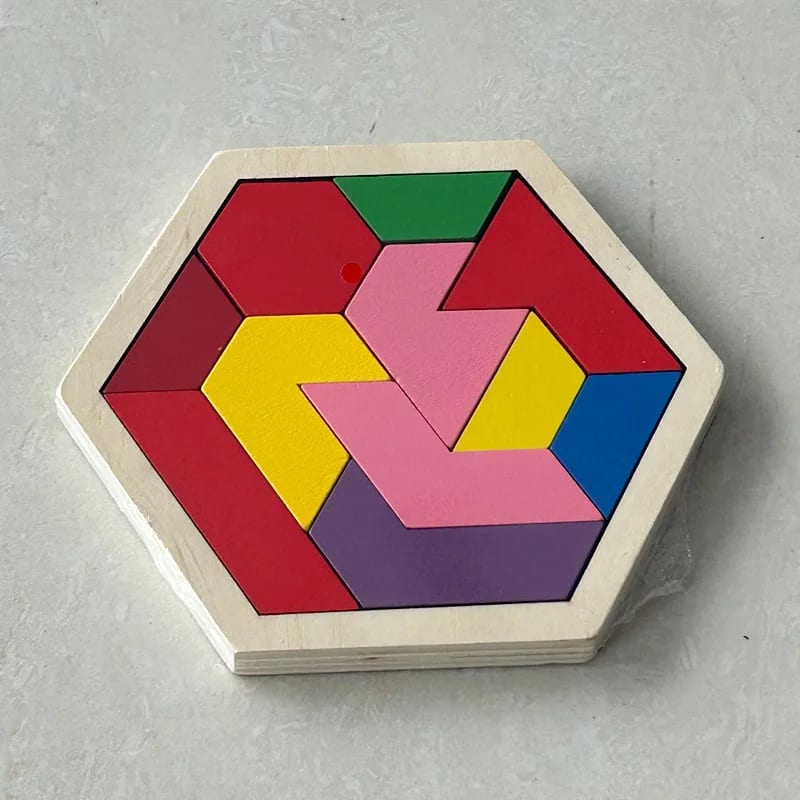
If you enjoy the slow build of a jigsaw, try a packing puzzle next — a hexagon tray puzzle is the same pleasure in miniature. More ideas in wooden puzzles for adults.