Burr Puzzle: What It Is and How to Solve a 6-Piece Burr
Nov 9, 2026 · The Editors
What a burr puzzle is, how solid and holey burrs differ, what a burr's 'level' means, and a step-by-step way to take apart and solve a six-piece burr without forcing it.
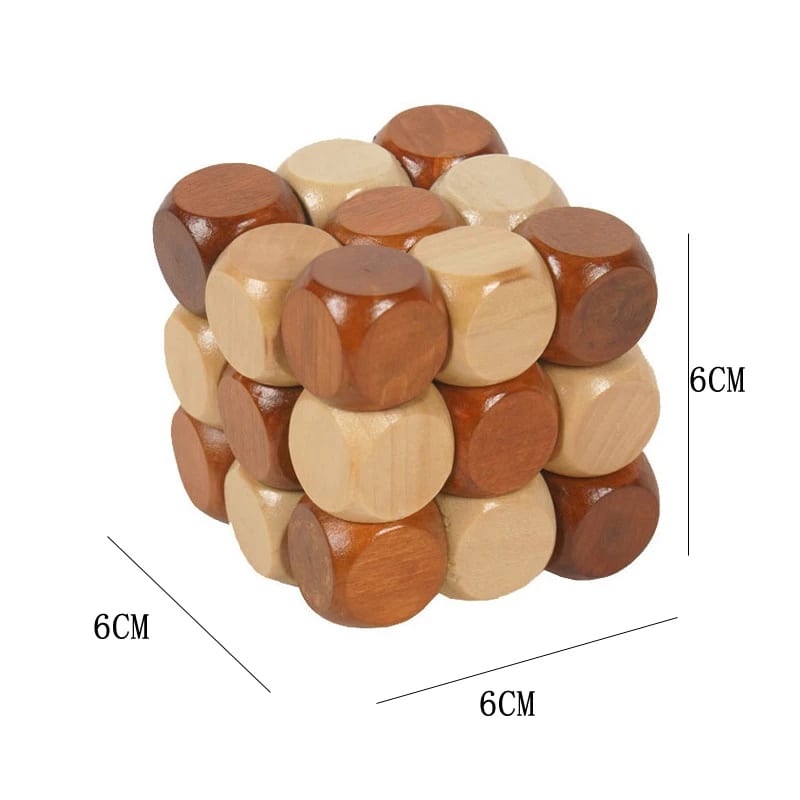
A burr puzzle is a set of notched wooden sticks that interlock into one solid shape, held by nothing but their own geometry. The classic is the six-piece burr: three pairs of sticks crossing at right angles, like the three axes of a graph. Finished, it is a tight, symmetrical knot of wood with no visible way in.
Where the name and the puzzle come from
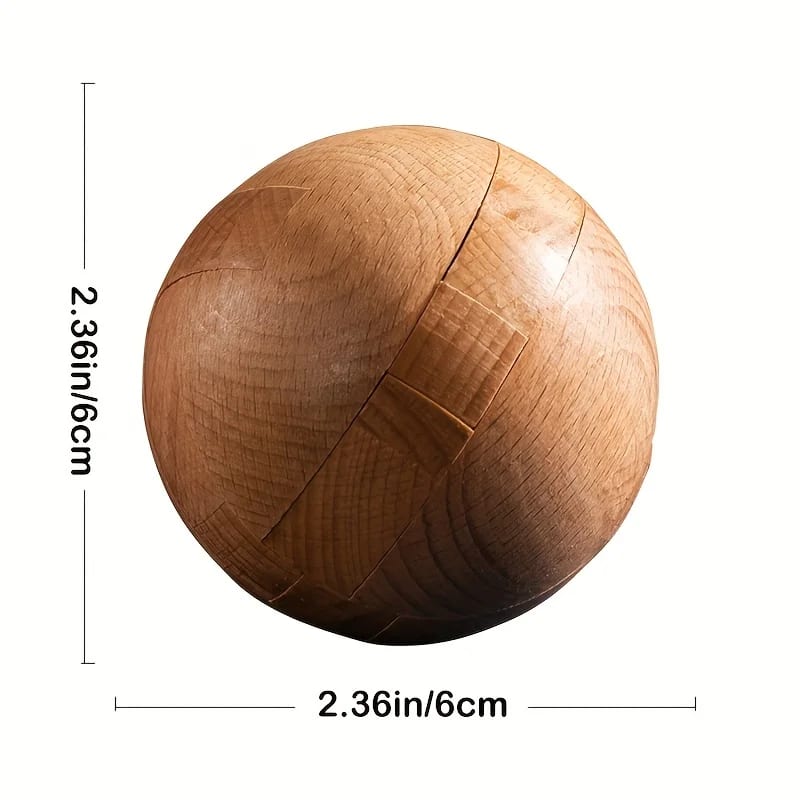
The name is usually said to come from the finished shape's resemblance to a seed burr. Interlocking puzzles of this kind have been made in China for centuries, where they are called the Kong Ming lock, and they appear in European toy catalogues by the early 1800s.
In the late twentieth century burrs became a serious subject. The American puzzle designer Bill Cutler used computers to analyse the six-piece burr exhaustively, and designers since have produced burrs that take dozens of moves before the first piece comes free.
Solid burrs and holey burrs
| Kind | What it means | Typical feel |
|---|---|---|
| Solid burr | No empty space inside when assembled | One key piece slides out, then everything follows |
| Holey burr | Hidden gaps inside the assembled puzzle | Pieces shuffle back and forth before any can leave |
Most burrs sold as gifts, including traditional Chinese ones, are solid burrs with a key piece. Holey burrs are the collector's step up.
What the "level" of a burr means
Solvers rate a burr by its level: the number of moves needed to remove the first piece. A solid burr with a key piece is level 1 — one slide and a piece is out. A level 5 burr needs five separate moves (pieces sliding in different directions) before anything comes free. Higher levels feel completely locked until you find the sequence.
How to solve a 6-piece burr puzzle
Search for "burr puzzle 6 piece solution" and you will find dozens of different answers, because there are many different sets of notches. The method below works on any of them.
Taking it apart
- Photograph it from three sides first, so you can always get back.
- Hold it loosely and press each stick along its length, one at a time. A piece that moves even a millimetre is your way in.
- Follow the movement. If one piece slides a little, check whether another can now slide that could not before. Write the moves down.
- Remove pieces one at a time, and lay them out in the order they came out, turned the way they sat.
Putting it back together
- Find the two pieces with the most wood left (fewest notches) — they usually go in first or last.
- Work in reverse order of disassembly, holding the growing core together.
- If the last piece will not go, one of the others is upside down or end for end. Compare its notches to the gap.
Solving from a heap. The true puzzle is reassembly with no notes. Sort the six pieces by how much wood is cut away, notice which notches mirror each other, and try pairing pieces that fit flat against each other first.
Tips for burr puzzles
Never force a burr. A well-made one slides; if it needs pressure, the move is wrong. Wood swells in damp weather, so a puzzle that was smooth in summer can stick in winter — be patient rather than reach for a hammer. And keep the pieces together in a bag when it is apart: a burr with one missing stick cannot be finished.
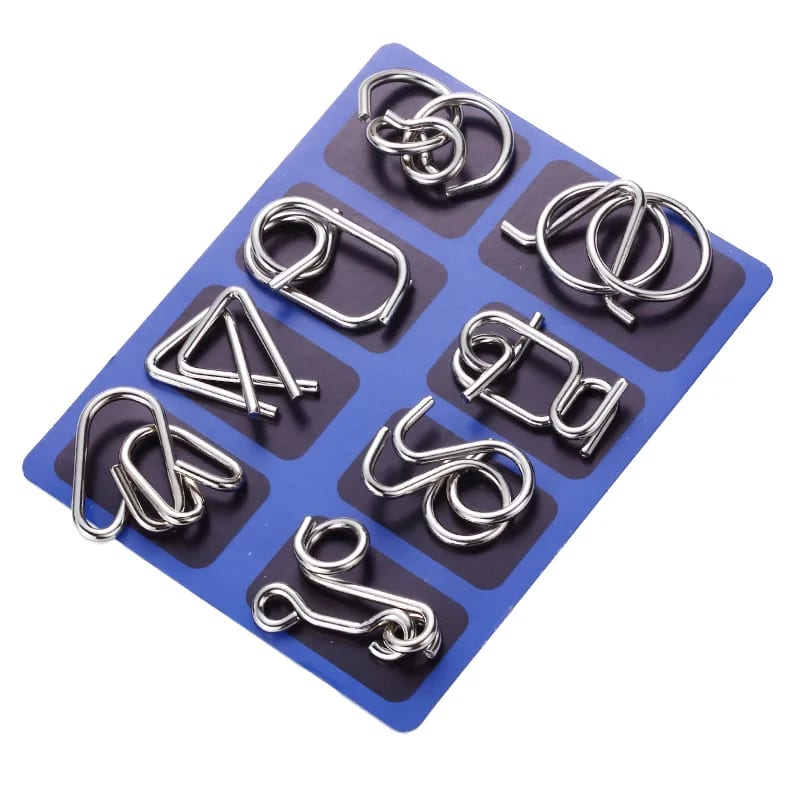
Our interlocking burr cube is a two-tone wooden burr that rewards exactly this kind of patience. If you like it, try a Kong Ming lock ball next, or a set of metal wire puzzles for a completely different kind of thinking.