Kong Ming Lock Puzzle: History and How to Solve One
Nov 9, 2026 · The Editors
What a Kong Ming lock (Luban lock) is, the legends behind its two names, how the interlocking wooden pieces hold together with no glue, and a reliable way to take one apart and put it back.
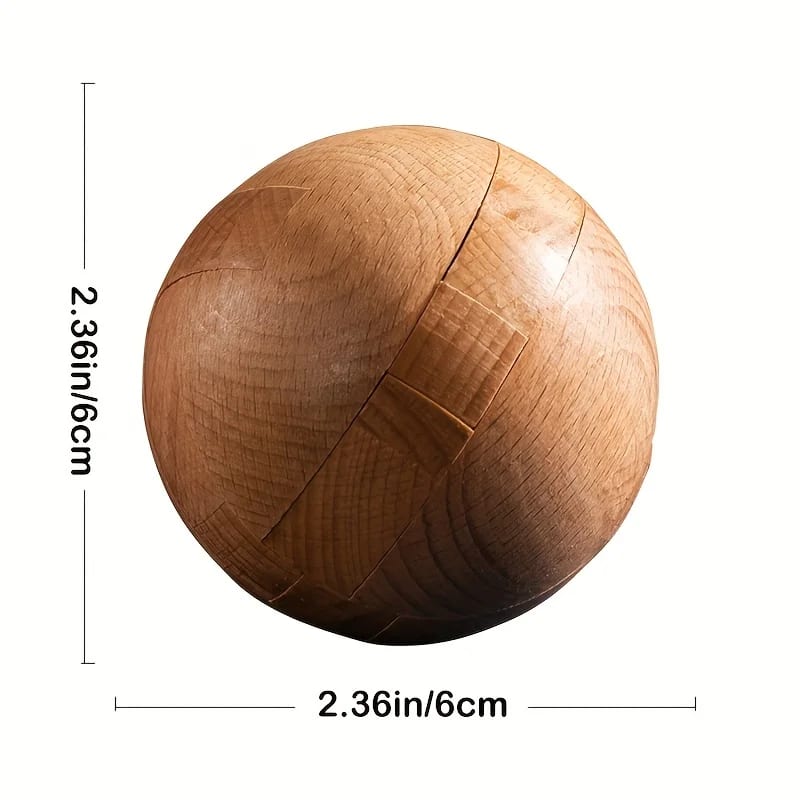
A Kong Ming lock is a Chinese interlocking puzzle: a handful of notched wooden sticks that hold each other in a solid shape — a cross, a cube or a ball — with no glue, nails or pins. In the West the same family is called burr puzzles. Taking one apart is the easy half; putting it back together is the puzzle.
Why it is called a Kong Ming lock (and a Luban lock)
The puzzle has two common Chinese names, and both are legends rather than recorded history.
Kong Ming lock (孔明锁) honours Zhuge Liang, the Three Kingdoms strategist whose courtesy name was Kongming. Stories credit him with clever devices, and the puzzle took his name as a byword for ingenuity.
Luban lock (鲁班锁) honours Lu Ban, the carpenter of the Spring and Autumn period who is revered as the patron of Chinese builders and woodworkers. That name points to where the idea really lives: Chinese joinery. Traditional timber buildings were held together by mortise-and-tenon joints (sunmao) that lock wood into wood without metal fasteners, and the puzzle is that craft in miniature.
No one knows who made the first one. What is certain is that the puzzle has been made and played with in China for a very long time, and it is still a common gift and classroom object there today.
How the pieces hold together
Each stick has notches cut so that it can only pass the others in one position. When the pieces are assembled, every notch is filled by another piece, so nothing can move — except, usually, one key piece that slides out. Once the key is out, the rest come free in a set order.
| Type | Pieces | What makes it hard |
|---|---|---|
| Classic six-piece cross | 6 | Every stick looks nearly the same |
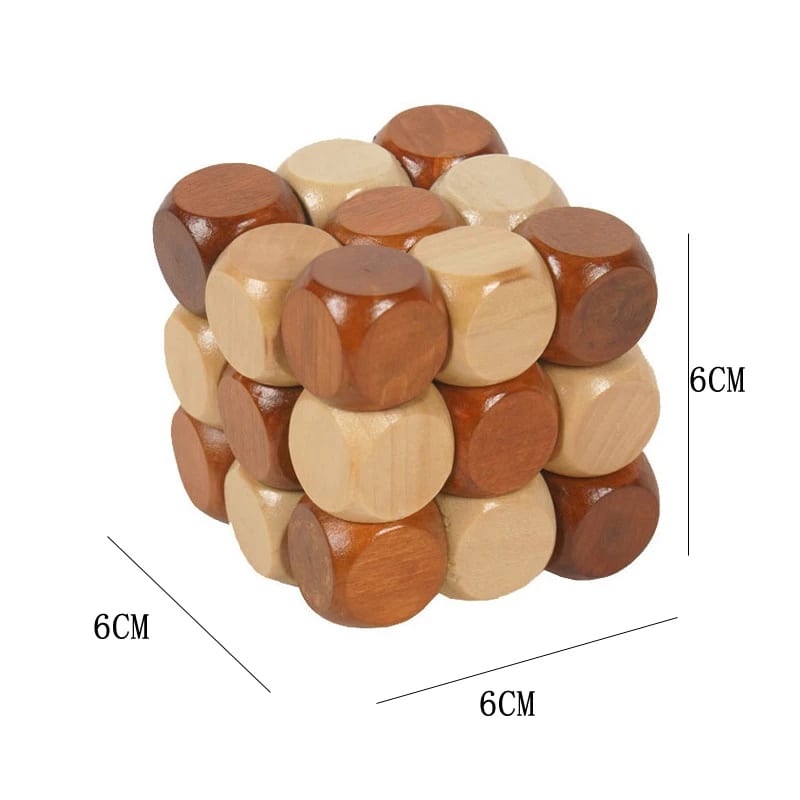
| Cube versions | 6–12 | Pieces must be turned the right way round |
| Ball versions | often 6–24 | Curved outsides hide which way pieces face |
The Kong Ming lock ball is the favourite desk version: the sticks are rounded on the outside so the finished puzzle is a smooth wooden sphere, with no clue to how it was put together.
How to solve a Kong Ming lock
There is no single "Kong Ming lock solution", because each design is cut differently. But the same method works on all of them.
- Before you start, photograph it from two or three sides. This is the cheat most experienced solvers use, and there is no shame in it.
- Find the key piece. Press gently on each stick in turn. One will slide, or two will slide together. Never force it — wood that is forced cracks.
- Take it apart slowly, one piece at a time, and lay each piece on the table in the order it came out, turned the same way it was in the puzzle.
- Reverse the order to rebuild. The last piece out is the first piece in. Hold the core pieces together with one hand while the next one slides in.
- If it will not close, one piece is turned end for end or upside down. Look at its notches against its neighbours' and flip it.
Once you can do it with the pieces laid out in order, mix them up and try again from a pile. That is the real puzzle, and it can take days.
Why it makes a good gift
A Kong Ming lock is small, quiet, beautiful when solved, and can be taken apart again whenever the owner wants a challenge. It sits on a desk as an object rather than a toy. Our wooden Kong Ming lock ball is smooth natural wood, and the interlocking burr cube is the same idea in two woods.
For the Western history of these puzzles and how solvers rate their difficulty, see burr puzzles. For other kinds of wooden brain teaser, see wooden puzzles for adults.