Suits in a Deck of Cards: Meaning, Order and Origin
Nov 9, 2026 · The Editors
The meaning of each suit in a deck of cards: where hearts, diamonds, clubs and spades came from, what the four suits are said to represent, how they rank in bridge and poker, and their meanings in fortune telling.
Hearts, diamonds, clubs and spades are so familiar that it is easy to forget how strange they are. Why a spade? Why does a "club" look like a clover? And do the four suits really stand for the four classes of medieval society? Here is what is known, and what is only a good story.
What are the suits in a deck of cards?
A standard deck has four suits of 13 cards each — Ace, 2 to 10, Jack, Queen and King — for 52 cards, plus jokers.
| Suit | Colour | Latin suit it replaced | German suit |
|---|---|---|---|
| Hearts ♥ | red | Cups | Hearts |
| Diamonds ♦ | red | Coins | Bells |
| Clubs ♣ | black | Batons (clubs) | Acorns |
| Spades ♠ | black | Swords | Leaves |
Where the four suits came from
Playing cards reached Europe in the late 1300s, probably through the Islamic world. The earliest European decks used the Latin suits — cups, coins, swords and batons — still used in Italian and Spanish cards and in the tarot.
German card makers in the 15th century invented their own: hearts, bells, acorns and leaves. Then, around 1480, French makers simplified things to four flat shapes in two colours. Hearts were kept, bells became diamonds (in French, carreaux, "tiles"), acorns became trefoils (trèfles) and leaves became pikes (piques). Simple shapes could be stencilled, which made cards much cheaper to print, and the French suits spread across most of the world. More in the history of playing cards.
The English names are a muddle of both systems. Spade comes from the Italian and Spanish spada, "sword"; club translates the Spanish basto, a baton — even though the symbol is the French clover.
What do the four suits represent?
The most popular explanation is that the suits stand for the four estates of medieval society:
- Hearts — the Church (from cups, the chalice)
- Diamonds — merchants (from coins)
- Clubs — peasants (from batons, a working stick)
- Spades — the nobility and the military (from swords)
It is a neat theory, and it fits the Latin suits well, but there is no record that the card makers intended it. Treat it as a later interpretation rather than the original design.
Other folk readings link the deck to the calendar: four suits for four seasons, 52 cards for 52 weeks, 13 cards per suit for the 13 weeks of a season. Add up every card's value (Jack 11, Queen 12, King 13) and you get 364 — 365 with a joker. Pleasing coincidences, but nobody has shown they were designed that way.
How the suits rank
In standard poker, suits have no rank: a flush in hearts and a flush in spades of the same cards tie. In bridge, suits rank from low to high: clubs, diamonds, hearts, spades. Many other games use the same order to break ties or decide who deals.
The Ace of Spades is traditionally printed large and ornate, a habit that goes back to the English tax stamp once printed on it — see ace of spades meaning.
Suit meanings in fortune telling
In cartomancy — reading playing cards like tarot — each suit has its own area of life:
| Suit | Area | Tarot suit |
|---|---|---|
| Hearts | love, family, emotions | Cups |
| Diamonds | money, work, practical matters | Pentacles |
| Clubs | ambition, growth, energy | Wands |
| Spades | challenges, conflict, truth | Swords |
If you read tarot, the correspondence makes a deck of playing cards a quick stand-in. See tarot card meanings for beginners.
A deck that shows off its suits
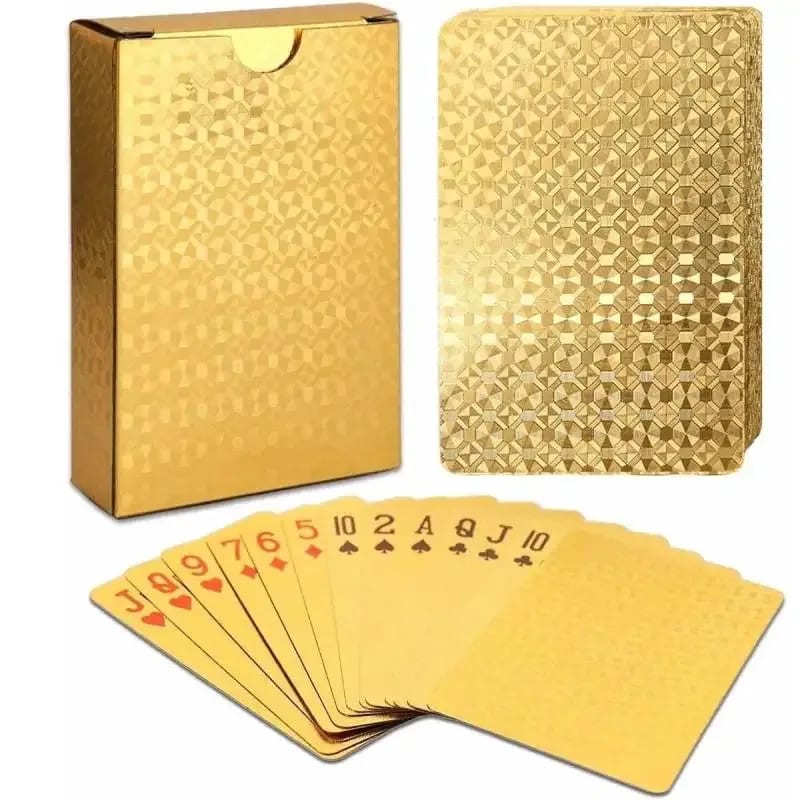
A foil deck makes the suits shine: our gold foil playing cards print every pip in gold over a plastic core, and the silver and holographic decks do the same in cooler tones. For the suits as characters, the Alice in Wonderland deck has the Queen of Hearts and her whole court.