Speed Cube Tips: How to Get Faster at Solving a 3×3
Nov 25, 2026 · The Editors
Practical speed cube tips for beginners and improvers: the methods to learn in order, finger tricks, look-ahead, cube setup, timing and how to practise without stalling.

The fastest way to get quicker at solving a 3×3 cube is to learn a faster method in stages, then practise turning without pausing. Most improvement comes from three things: better methods (moving from the beginner's layer method to CFOP), smoother finger tricks, and look-ahead, which means finding your next pieces while you are still turning.
If you cannot solve the cube yet, start with how to solve a 3×3 cube and come back. For competitions, events and terms, see what is speedcubing.
Speed cube tips for beginners
- Learn [cube notation](/journal/cube-notation) properly. Every algorithm and tutorial uses it.
- Solve the first layer on the bottom, not the top, so you can see the pieces you need next. It feels harder for a week and then becomes natural.
- Stop rotating the whole cube more than you need to. Each turn of the whole cube is time spent not solving.
- Do the same solve the same way. Consistency first, speed second.
Learn the methods in order
Most speedcubers move through the same steps. The method usually taught after the beginner's method is CFOP, named after its four stages:
| Stage | What it does | When to learn it |
|---|---|---|
| Cross | the four edges of the first layer | plan it all before you start turning |
| F2L (first two layers) | pairs a corner and an edge and inserts them together | the biggest single time saver |
| OLL | orients the last layer so the top is one colour | start with a short 2-look version |
| PLL | permutes the last layer into place | start with a short 2-look version |
Learn intuitive F2L first: understand how the pairs go in rather than memorising cases. Then add the 2-look OLL and PLL algorithms, a small set that finishes the last layer in two steps. Full OLL and PLL come later and are a large set of algorithms.
Finger tricks
Finger tricks are ways of turning the cube with fingertip flicks instead of wrist movements.
- U turns with the index finger flicking the top layer.
- R and L turns from the wrist, keeping your grip.
- Regrip less: choose algorithms that suit your hands.
Watch your hands on a slow solve. Every time you stop to change grip, that is a place to improve.
Look-ahead: the secret of fast solvers
Fast solvers rarely turn faster than improvers; they stop less. Look-ahead means tracking the next F2L pair while you are inserting the current one.
- Slow down until you can solve without any pause at all. Smooth beats fast.
- Practise slow solves where the rule is "never stop turning".
- Name the next pair out loud if it helps.
Set up your cube
A good cube makes everything easier. A magnetic cube snaps each layer into line so turns do not catch; see magnetic vs non-magnetic speed cube. Adjust the tension to suit how hard you turn (speed cube tension), add a little lube for smoothness (how to lube a speed cube), and keep it clean (how to clean a speed cube).
Time your solves
Use a cube timer or a free online timer, and track your average of 5 and average of 12 rather than single best times. In official competitions you get 15 seconds of inspection before each solve; practise using it to plan the whole cross.
How to practise
- Short daily sessions beat a long weekend one.
- Drill one thing at a time: a week of F2L-only practice, then a week of last-layer algorithms.
- Review your slowest stage and work on that.
- Learn one new algorithm at a time and use it until it is automatic.
The cube to practise with
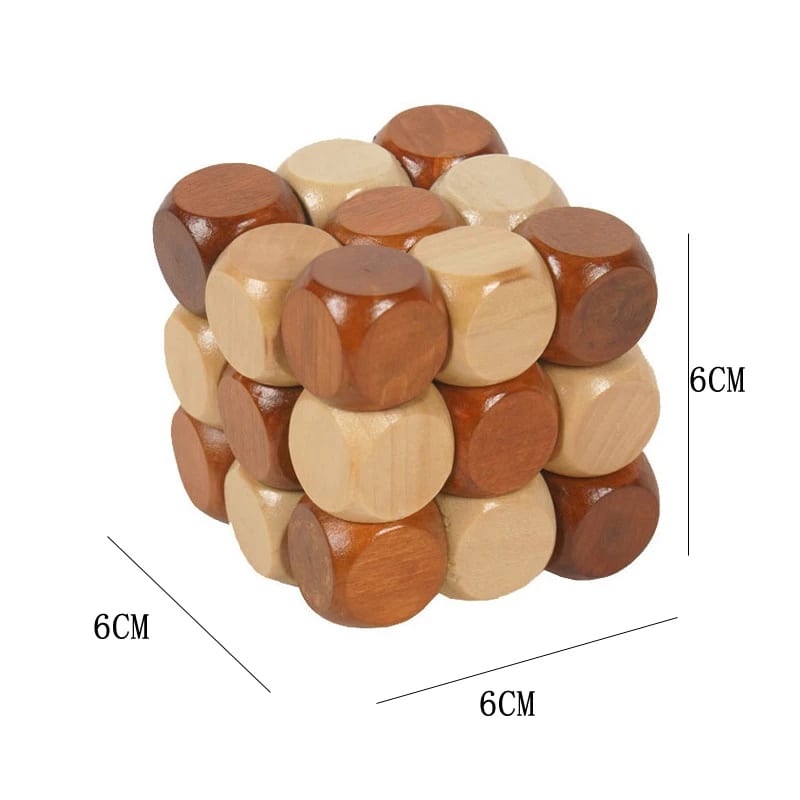
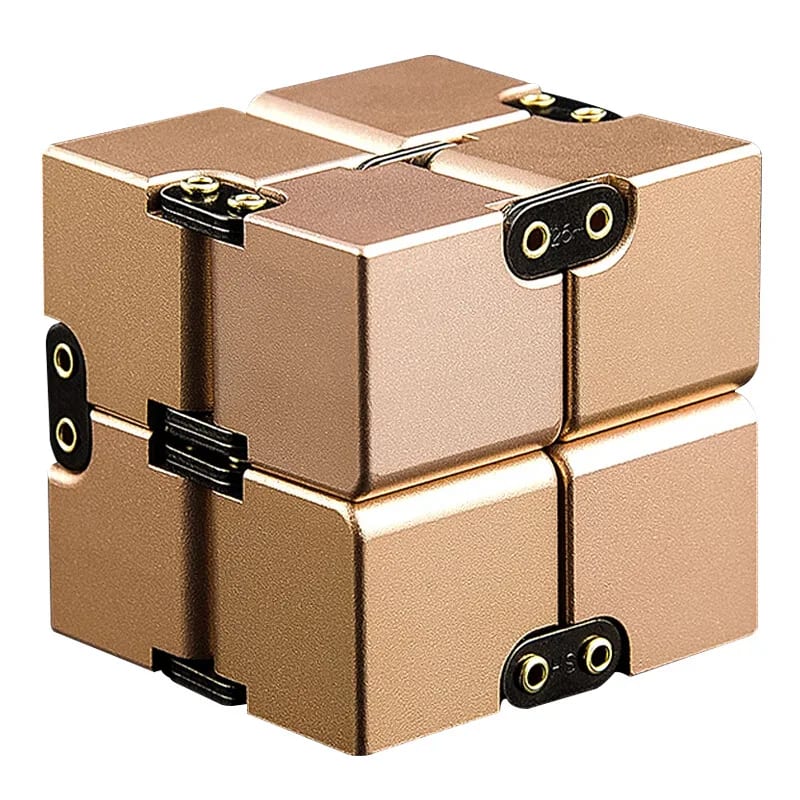
Our magnetic speed cube is a standard 3×3 with magnets that snap each layer into line and coloured plastic instead of stickers: the step up from a toy-shop cube, and the size every method is written for. For a change of pace, a wooden interlocking puzzle cube is a different kind of challenge, and the gold infinity cube is something for your hands between solves.
Frequently asked questions
How do you get faster at solving a cube?
Move from the beginner's method to CFOP in stages, learn finger tricks, and practise look-ahead so you stop pausing between steps.
What is CFOP?
The most popular speedsolving method: Cross, First Two Layers (F2L), Orientation of the Last Layer (OLL) and Permutation of the Last Layer (PLL).
How many algorithms do you need to be fast?
Fewer than people think. Intuitive F2L and 2-look OLL and PLL, a small set of algorithms, take most people a long way before full OLL and PLL are worth learning.
Does a magnetic cube make you faster?
It makes turning more stable and more accurate, which helps most people. Method and practice still matter far more.