Magnetic vs Non-Magnetic Speed Cube: Which Should You Get?
Nov 23, 2026 · The Editors
Magnetic vs non-magnetic speed cube: what the magnets actually do, how the feel differs, which suits a beginner, whether magnetic cubes are allowed in competition, and whether you can add magnets yourself.
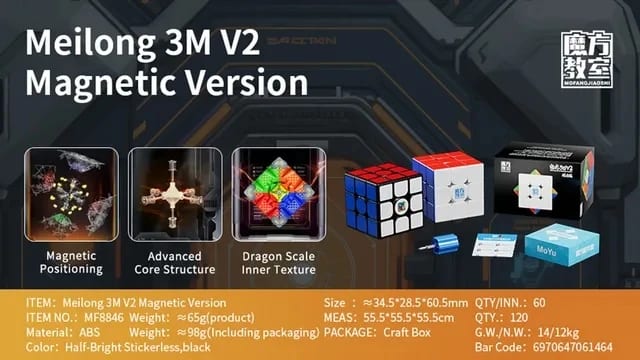
A magnetic speed cube has small magnets in its pieces that pull each layer into line as you turn it, so it stops cleanly where it should and does not catch halfway through a move. A non-magnetic cube turns more freely and is a little lighter, but it is easier to overshoot or leave a layer slightly out of line. For most people, beginners included, a magnetic cube is the better choice.
What the magnets actually do
Inside a magnetic cube, tiny magnets sit in the edge and corner pieces. When a layer nears a lined-up position, the magnets attract and pull it the last little way home, with a soft click you can feel. That gives three benefits:
- Stability. Layers stay aligned, so the next turn does not catch.
- Accuracy. You overshoot less, and fewer turns go a quarter too far.
- Control. The cube "tells" your fingers where each turn ends.
Magnetic vs non-magnetic at a glance
| Magnetic | Non-magnetic | |
|---|---|---|
| feel | snappy, positive stops | smooth, free, "flowy" |
| accuracy | fewer overshoots and catches | relies more on your fingers |
| weight | slightly heavier | slightly lighter |
| noise | a small click on each turn | usually quieter |
| best for | beginners and most solvers | solvers who prefer a free feel |
Which is better for a beginner?
Magnetic. When you are learning a method, most of your frustration comes from the cube locking up mid-algorithm or a layer slipping out of place. Magnets remove most of that, so you can focus on the moves. A magnetic 3×3 speed cube with coloured plastic rather than stickers is a good first serious cube. Then work through how to solve a 3×3 cube and learn the letters in cube notation.
Why some cubers still prefer non-magnetic
Some experienced solvers like the lighter, freer feel of a non-magnetic cube, especially for certain finger tricks, and some simply learned on one. It is a matter of taste rather than a rule. Many modern cubes also let you adjust magnet strength, so you can choose a gentle pull rather than a strong one.
Are magnetic cubes allowed in competitions?
Yes. Magnets inside the cube are allowed in official speedcubing competitions, and magnetic cubes are now very common among competitive solvers. See what is speedcubing for how competitions work.
Can you add magnets to a cube yourself?
It can be done, with small neodymium magnets glued into each piece, but it takes patience, the right magnet size and careful polarity, and a mistake can spoil the cube. For most people, buying a cube made magnetic is simpler and gives a better result.
Keeping any speed cube fast
Whatever you choose, a little lubricant makes a big difference; see how to lube a speed cube. And if you enjoy twisty puzzles, the wooden kind are a different kind of challenge: an interlocking burr cube comes apart and goes back together rather than turning. See burr puzzles.
Frequently asked questions
Is a magnetic speed cube better?
For most people, yes. The magnets keep layers aligned and stop the cube catching, which makes it more accurate and easier to learn on.
Are magnetic cubes good for beginners?
Yes. They are the usual recommendation for a first serious cube, because they cut out most of the lock-ups that frustrate new solvers.
Are magnetic cubes allowed in competitions?
Yes. Magnets inside the cube are allowed in official competitions, and most top solvers use magnetic cubes.
Do magnetic cubes make you faster?
They usually make you more accurate, with fewer overshoots and catches, and accuracy is what lets you turn faster with confidence.