Insufficient Material in Chess: When It's a Draw (and Timeout vs Insufficient Material)
Nov 15, 2026 · The Editors
Insufficient material in chess: which piece combinations cannot checkmate and are drawn, the two-knight exception, and what happens when you run out of time but your opponent cannot mate.
Insufficient material is a draw in chess because neither player has enough pieces left to deliver checkmate by any legal sequence of moves. The classic cases are king against king, king and bishop against king, and king and knight against king. The game ends as a draw the moment that position appears.
Which positions are insufficient material?
Under the official rules, the game is drawn when no sequence of legal moves could lead to checkmate (a "dead position"). In practice, these are the material combinations that cannot mate:
| White | Black | Result |
|---|---|---|
| King | King | draw |
| King + bishop | King | draw |
| King + knight | King | draw |
| King + bishop | King + bishop (bishops on the same colour) | draw |
With any pawn, rook or queen still on the board, there is enough material, because a pawn can promote and a rook or queen can force mate. See pawn promotion.
The two-knight exception
King and two knights against a lone king is not automatically a draw, because a checkmate position exists — the defender can blunder into it. But the stronger side cannot force it against correct defence. So the game continues, and usually ends as a draw by agreement, by the 50-move rule or threefold repetition.
Other positions that look like draws but are not automatic:
- King and bishop against king and knight — mate is possible with help, so play continues.
- King and bishop against king and bishop on opposite colours — also possible in theory.
Timeout vs insufficient material
This is the most searched question about the rule. If your flag falls but your opponent has insufficient material to mate, the game is a draw, not a loss.
- Under FIDE rules, a player who runs out of time loses — unless the opponent cannot checkmate by any legal sequence of moves, in which case the game is drawn.
- Under US Chess rules, a time forfeit is likewise a draw if the opponent has only a lone king, king and bishop, or king and knight (and some other cases spelled out in the rulebook).
- Online sites apply their own versions. Some award a win on time if any checkmate is possible, so a player with king and knight against king and pawn may win on time. Check the site's rules.
So with a lone king, you can never win on time — your opponent's clock running out gives you a draw.
Insufficient material vs stalemate
Both are draws, but they are different rules. Stalemate happens when the side to move has no legal move and is not in check, with any amount of material. Insufficient material is about not having enough pieces to mate at all. See stalemate in chess.
Why it matters in practice
- If you are losing on the board but your opponent's material is down to a lone minor piece, you are safe: trade or win their last pawn, and it is a draw.
- If you are winning, keep a pawn or your rook. Trading down into king and bishop against king throws the win away.
- In time scrambles, know the rule before the flag falls — claim the draw rather than resigning.
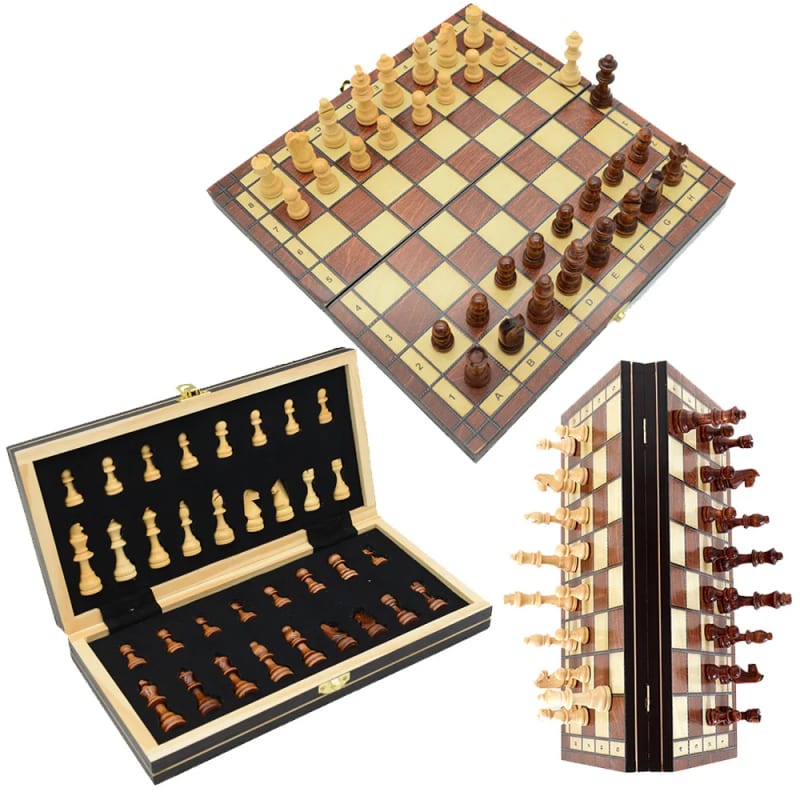
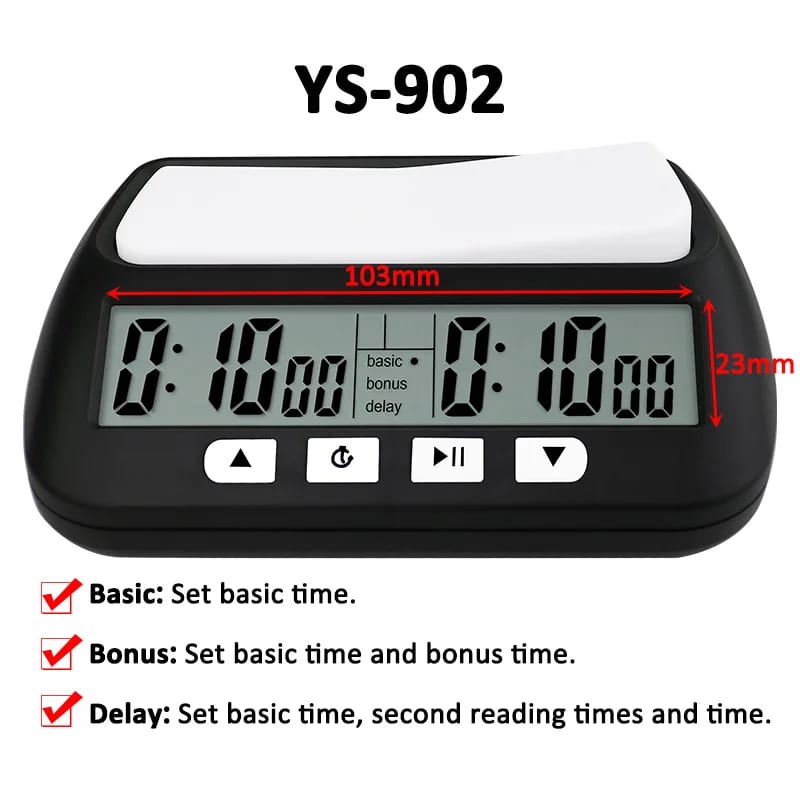
A digital chess clock makes timing rules matter at home as much as in a club; set one up on a magnetic folding chess set and practise endgames. For the minimum mating pieces, see how to checkmate with king and rook and how to checkmate with queen and king.
Frequently asked questions
What counts as insufficient material in chess?
King against king, king and bishop against king, king and knight against king, and king and bishop against king and bishop with both bishops on the same colour.
Is king and two knights against king a draw?
It cannot be forced, so it is usually drawn, but it is not automatic because a checkmate is possible if the defender blunders.
What happens if you run out of time but your opponent has insufficient material?
The game is a draw, not a loss, because your opponent could not have checkmated you.
Is insufficient material the same as stalemate?
No. Stalemate is when the player to move has no legal move and is not in check; insufficient material is when neither side has enough pieces to checkmate.