The 50 Move Rule in Chess: How It Works, With Examples
Nov 23, 2026 · The Editors
The 50 move rule in chess: a draw can be claimed after 50 moves by each side with no capture and no pawn move. How to count, how to claim, the 75 move rule and the exceptions.
The 50 move rule says a player can claim a draw if the last 50 moves by each player (100 moves in total, counting both sides) have been played with no capture and no pawn move. It stops a game going on forever when one side cannot make progress.
How the 50 move rule works
Two things reset the count to zero:
- Any capture, by either side.
- Any pawn move, by either side, including a pawn promotion.
Everything else, king moves, piece moves, checks and castling, adds to the count. When each player has made 50 moves in a row without a capture or a pawn move, either player may claim a draw.
A "move" here means one move by each player: White's move and Black's reply together count as one. So the rule covers 100 half-moves.
How to claim a draw under the 50 move rule
In over-the-board play under FIDE rules, the draw is not automatic at 50 moves. A player must claim it:
- On your turn, stop the clock and tell the arbiter you are claiming a draw under the 50 move rule.
- The arbiter checks the score sheets.
- If the claim is correct, the game is drawn.
You can also claim by writing your intended move on the score sheet if that move will complete the 50. In casual games there is no arbiter, so both players should agree on the count. Keeping score in chess notation is the only reliable way.
The 75 move rule
Since 2014, FIDE has also had a 75 move rule: if 75 moves by each player pass with no capture and no pawn move, the game is drawn automatically, with no claim needed, unless the last move gave checkmate. It exists so a game cannot drag on simply because neither player claims.
50 move rule examples
The rule matters most in endgames where one side has a small material edge.
| Endgame | Can it be won? | Why the rule matters |
|---|---|---|
| King and queen vs king | Yes, easily | Mate comes well inside 50 moves |
| King and rook vs king | Yes | Takes longer, but well inside 50 with good technique |
| King, bishop and knight vs king | Yes, with exact play | Possible within the 50 moves, but many club players fail to find the mate in time |
| King and rook vs king and bishop | Usually a draw | The stronger side often plays on in hope; the defender claims at 50 |
The first two are covered step by step in checkmate with queen and king and checkmate with king and rook.
50 move rule exceptions
Today there are no exceptions in FIDE rules: the count is 50 for every position. In the 1980s FIDE briefly allowed longer counts for a few endgames that computer analysis had shown needed more than 50 moves to win, but those extensions were dropped, and the single 50-move limit has applied since the early 1990s.
Two details catch people out:
- Checkmate wins. If the 50th move delivers checkmate, the checkmate stands.
- Check does not reset the count. Checks are ordinary moves for the count.
The 50 move rule and other draws
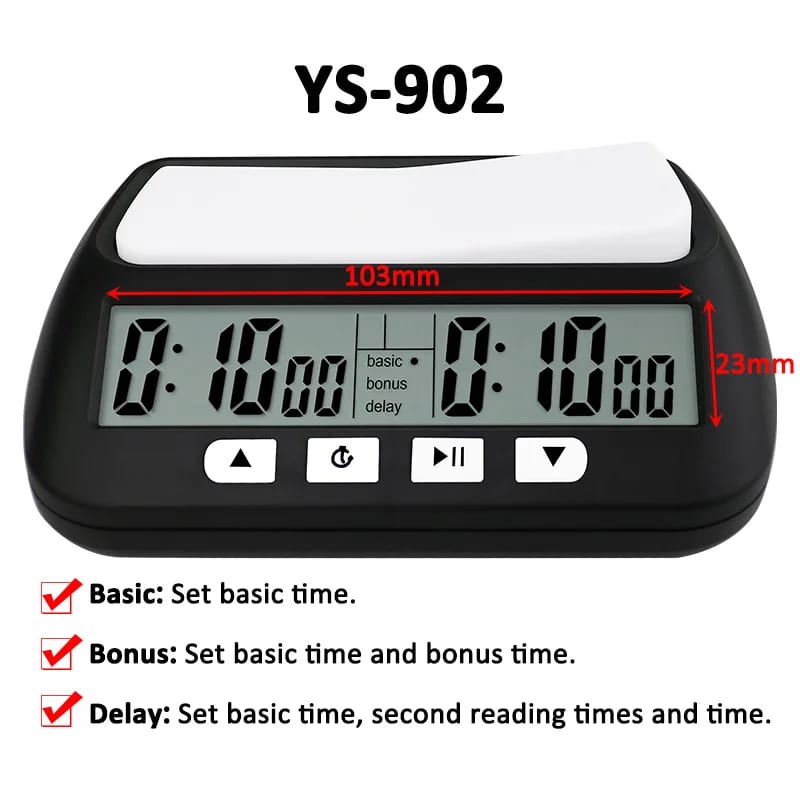
The 50 move rule is one of several ways a chess game is drawn. The others are stalemate, threefold repetition, insufficient material and agreement. In timed games a digital chess clock keeps the time side of things honest.
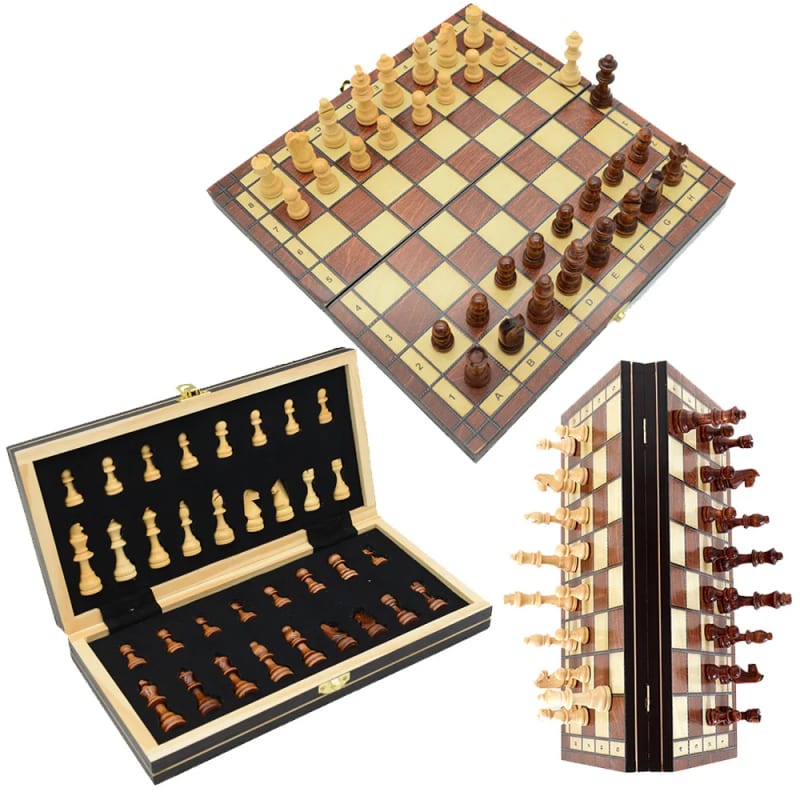
For a board that keeps the position safe while you count, our magnetic folding chess set holds every piece in place.
Frequently asked questions
What is the 50 move rule in chess?
A player can claim a draw if 50 moves by each side have passed without a capture or a pawn move.
Is the 50 move rule automatic?
No. A player must claim it. Under FIDE rules the game is drawn automatically only after 75 moves by each side.
Does check reset the 50 move rule?
No. Only a capture or a pawn move resets the count.
What resets the 50 move count?
Any capture or any pawn move by either player, including a pawn promotion.