Tempus Fugit Meaning: Time Flies, in Latin and on Clocks
Nov 24, 2026 · The Editors
Tempus fugit is Latin for 'time flies'. Where it comes from in Virgil, how to pronounce it, why it appears on clocks and sundials, and its companion mottos.

Tempus fugit is Latin for "time flies", or more literally, "time flees". It is a reminder that time passes quickly and cannot be got back, which is why the phrase has been painted on clocks, carved on sundials and engraved on watches for centuries.
Tempus fugit meaning in English
- tempus — time
- fugit — flees, runs away (from fugere, to flee)
Together: time is fleeing. English usually renders it "time flies", and the expression "time flies" is often traced to this Latin.
The tone can go two ways. Said with a smile, it is "where did the year go?" Read on a sundial in a churchyard, it is closer to a warning: use your time well, because it is running out.
Where it comes from: Virgil
The phrase comes from the Roman poet Virgil, in Book 3 of the Georgics, a poem about farming written around 29 BC. The full line is sed fugit interea, fugit irreparabile tempus: "but meanwhile it flees, time flees beyond recall". Virgil was talking about farm work: there is a short season for everything, so do not waste it. Later readers shortened the line to its two most famous words.
How do you pronounce tempus fugit?
In English, most people say TEM-pus FYOO-jit. In classical Latin it would be closer to TEM-poos FOO-git, with a hard g. Either is understood.
Tempus fugit on clocks and sundials
The motto became a favourite on timepieces because it states the obvious and the profound at once:
- Sundials carried Latin mottos about time and mortality, and tempus fugit is one of the classics.
- Longcase (grandfather) clocks often have it painted on the dial or the arch.
- Pocket watches were sometimes engraved with it inside the case, a private reminder each time the lid opened. See pocket watch engraving ideas.
Clock collectors sometimes call a clock with this motto a "tempus fugit clock".
Related Latin mottos
Tempus fugit belongs to a family of sayings about time and life:
| Motto | Meaning |
|---|---|
| Memento mori | Remember that you will die |
| Memento vivere | Remember to live |
| Carpe diem | Seize the day |
| Tempus edax rerum | Time, devourer of all things (Ovid) |
| Ars longa, vita brevis | Art is long, life is short |
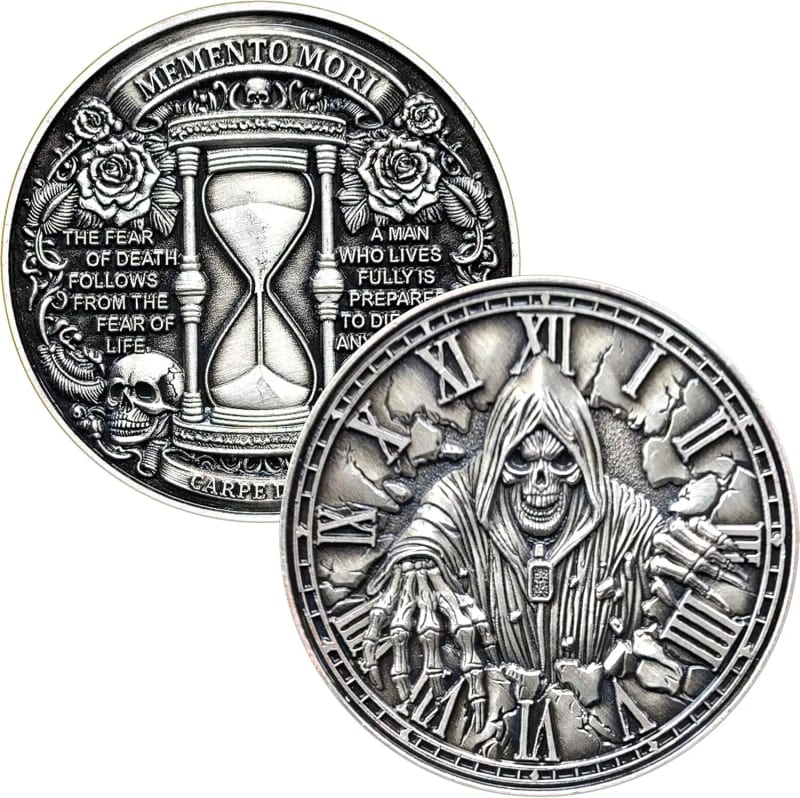
Each has its own page here: memento mori, memento vivere and carpe diem. The hourglass is the picture that goes with all of them.
Tempus fugit tattoo meaning
As a tattoo, tempus fugit is often paired with a clock, a pocket watch or an hourglass, sometimes with roses. It usually means live now, or remembers someone whose time ran out too soon. See pocket watch tattoo meaning.
A gift that carries the idea
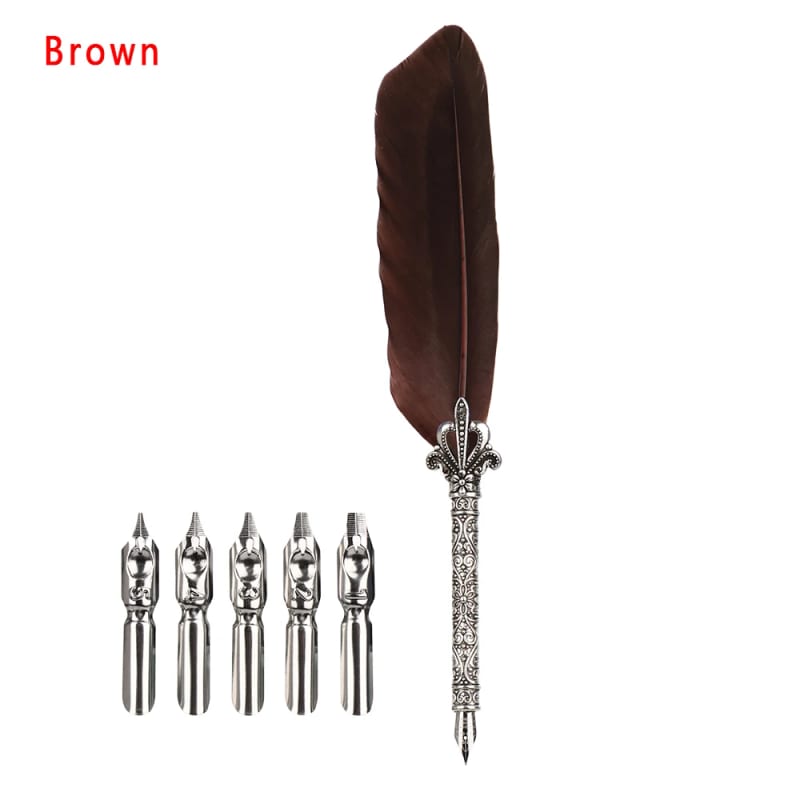
A pocket watch with Roman numerals is the obvious companion to the motto, and the inside of the lid is the traditional place for it. Our memento mori coin with an hourglass carries the same thought in the pocket. For writing it out by hand, a feather quill pen suits a Latin motto; see how to write with a quill pen.
Frequently asked questions
What does tempus fugit mean?
"Time flies" or, more literally, "time flees". It is a reminder that time passes quickly and cannot be recovered.
What language is tempus fugit?
Latin. It comes from a line in Virgil's Georgics.
Why is tempus fugit written on clocks?
Because it suits them: a clock shows time passing, and the motto reminds the reader to use that time well.
What is the full quote of tempus fugit?
Sed fugit interea, fugit irreparabile tempus: "but meanwhile it flees, time flees beyond recall".