History of the Magic Wand: From Ancient Egypt to the Stage
Nov 12, 2026 · The Editors
The history and origin of the magic wand: Egyptian ivory wands, Circe and Hermes in Greek myth, the rods of the Bible, grimoires and ceremonial magic, and how the black wand with white tips became the stage magician's symbol.
The magic wand is one of the oldest symbols of power in the world. Its history runs from ivory "magic wands" in ancient Egypt, through the wands of Circe and Hermes in Greek myth and the rods of the Bible, to the short black wand with bright tips that stage magicians made famous in the 1800s.
Ancient Egypt: the first "magic wands"
The earliest objects archaeologists call magic wands are curved blades of hippopotamus ivory from Egypt's Middle Kingdom, around 4,000 years ago. They are carved with protective creatures — lions, crocodiles, the household god Bes, the hippo goddess Taweret — and many are worn at one end as if they were drawn on the ground. Scholars think they were used to protect mothers and newborn children, perhaps by tracing a protective circle.
Greek myth: Circe and Hermes
In Homer's Odyssey, the enchantress Circe strikes Odysseus's men with her wand (rhabdos) and turns them into pigs. Hermes, the messenger god, carries a golden staff that can put people to sleep or wake them. In both stories the wand is a pointer for power: it marks who the magic is aimed at.
Rods in the Bible
In the book of Exodus, Aaron's rod turns into a serpent before Pharaoh, and Moses stretches out his rod to part the sea. These are rods of authority given by God, not wands used by sorcerers, but they fixed the image of a staff through which power flows.
Grimoires and ceremonial magic
Medieval and Renaissance books of ritual magic, called grimoires, often told the would-be magician how to make a wand: which wood, cut on which day, inscribed with which names. The wand became a tool of the learned magician, alongside the circle, the sword and the robe.
The stage magician's wand
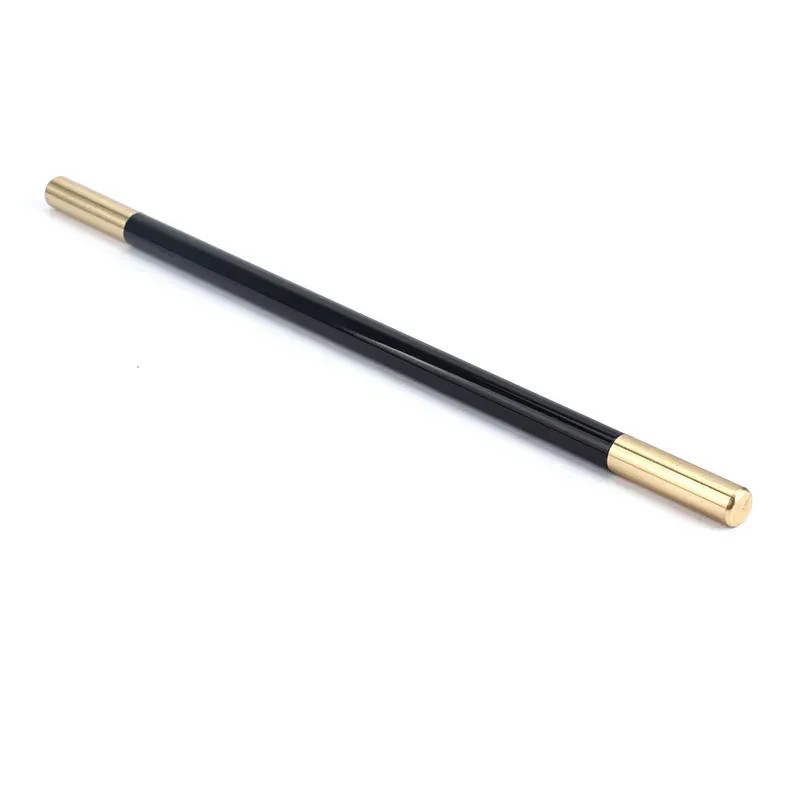
By the 1700s and 1800s, travelling conjurors and then theatre magicians had adopted the wand as part of their costume. Its form settled into the one we know: a short black rod with white or metal tips. It appears on countless 19th- and early 20th-century magic posters, beside the top hat and tailcoat.
Why do magicians use wands?
On stage, the wand is theatre. It:
- Marks the moment the magic happens — a tap, a wave, and the change.
- Points the audience's eyes where the performer wants them.
- Gives the hands something to do between effects.
- Signals "magician" the instant it appears.
How it is used inside any particular trick is part of the performer's craft, and we leave that to them. For the bigger story of stage magic, see famous magicians in history.
Magic words and the wand
The wave of the wand traditionally comes with a magic word. The most famous are abracadabra and hocus pocus, both with long histories of their own.
A wand for the shelf or the show
Our magician's wand is the classic poster design: gloss black metal with a brass cap at each end, with real weight in the hand. It suits a performer's case, or a shelf beside a deck of cards. For classic props that go with it, see the linking rings and the cups and balls.
Frequently asked questions
Where did the magic wand come from?
The earliest objects called magic wands are carved ivory blades from ancient Egypt, about 4,000 years old. Wands also appear in Greek myth, with Circe and Hermes.
Why do magicians use magic wands?
As theatre: the wand marks the moment of magic, directs attention, and signals "magician" at a glance.
Why are magic wands black with white tips?
That design became the stage standard in the 1800s, when it appeared on magic posters alongside the top hat. The contrast makes the wand easy to see from a distance.
Who had a wand in Greek mythology?
Circe, who used her wand to turn Odysseus's men into pigs, and Hermes, whose staff could put people to sleep.