Hocus Pocus Meaning: Origin of the Magic Words
Nov 12, 2026 · The Editors
Hocus pocus meaning and origin: the 17th-century conjuror who called himself Hocus Pocus, the 'hoc est corpus' theory, how the phrase came to mean trickery, and whether 'hoax' comes from it.
Hocus pocus has two meanings: the magic words a conjuror says while performing a trick, and, in everyday English, trickery or meaningless talk meant to deceive ("the contract was full of legal hocus pocus"). The phrase comes from 17th-century England, where travelling conjurors used it as a stage name and a mock-Latin incantation.
Hocus pocus meaning in English
| Use | Meaning | Example |
|---|---|---|
| Magic words | A conjuror's incantation | "Hocus pocus — and the coin is gone." |
| Noun | Trickery, deception | "The accounts were pure hocus pocus." |
| Noun | Meaningless jargon | "It sounded like scientific hocus pocus." |
In slang it is almost always mildly scornful: something presented as clever that is really sleight of hand, in the figurative sense.
The origin: a conjuror called Hocus Pocus
The phrase appears in English in the early 1600s. In his 1656 book A Candle in the Dark, the writer Thomas Ady describes a juggler — the word then meant a conjuror — in the time of King James I who called himself "the King's Majesty's most excellent Hocus Pocus", because he used those words while performing.
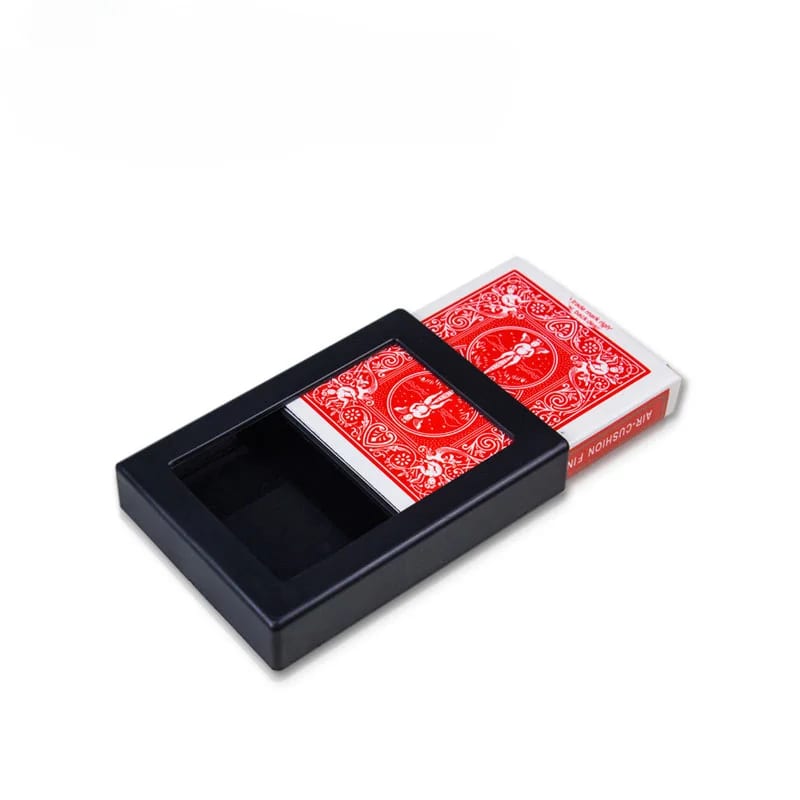
In 1634 an early English book on conjuring was published under the title Hocus Pocus Junior: The Anatomy of Legerdemain, which shows how closely the phrase was already tied to the craft. Performers of the period worked at fairs and in taverns, often with small props such as cups and balls, coins and cards.
The "hoc est corpus" theory
In 1694, the Archbishop of Canterbury, John Tillotson, suggested that "hocus pocus" was a mocking corruption of "hoc est corpus" — "this is the body" — the words spoken by the priest at the consecration in the Latin Mass. The idea was a Protestant jibe at Catholic ritual, and it has been repeated ever since. Most language historians treat it as an unproven guess: the phrase may equally be plain mock-Latin nonsense, made to sound learned.
Did "hoax" come from hocus pocus?
Probably. By the 1600s "hocus" was used on its own as a verb meaning to trick or cheat, and later to drug someone's drink. Many dictionaries suggest that "hoax", which appears in the late 1700s, is a shortened form of "hocus". The link is likely but not proven.
Hocus pocus and other magic words
Hocus pocus belongs to a family of stage incantations: abracadabra, which is far older and was once written as a charm against illness; "presto", from the Italian for "quickly"; and "sim sala bim", popularised by a 20th-century stage magician. They all do the same job in a performance: they mark the moment the magic happens, usually with a wave of the wand.
The props of the old conjurors
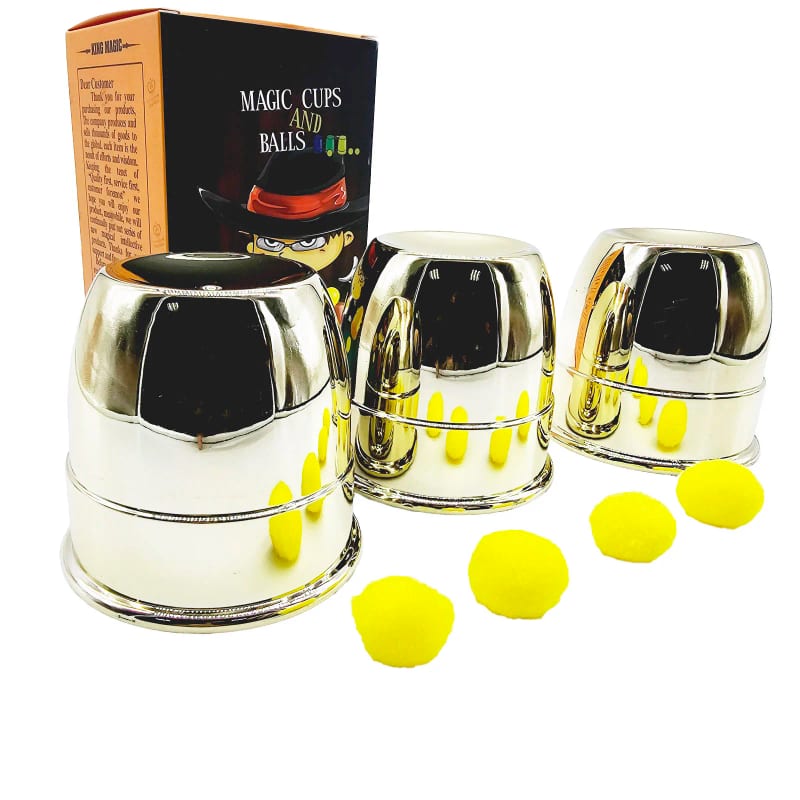
The cups and balls are among the oldest tricks still performed, and a staple of the fair-ground conjurors who made "hocus pocus" famous. Our chrome cups and balls continue that line; read about the effect on our cups and balls page. For the people who carried the tradition onto the stage, see famous magicians in history.
Frequently asked questions
What does hocus pocus mean?
It is a conjuror's magic words, and in everyday English it means trickery or meaningless talk designed to deceive.
Where does hocus pocus come from?
17th-century England, where a conjuror in the reign of James I called himself Hocus Pocus and used the words while performing.
Does hocus pocus come from "hoc est corpus"?
That theory was put forward in 1694 as a jibe at the Latin Mass. It is often repeated but not proven.
Is "hoax" related to hocus pocus?
Probably. "Hoax" is thought to be a shortened form of "hocus", which meant to trick or cheat.