Abracadabra Meaning: Origin, History and Magic Words
Nov 10, 2026 · The Editors
What abracadabra means and where it came from: a Roman healing charm against fever, the theories about its Aramaic and Hebrew roots, how it became a stage magician's word, and other magic words.
Abracadabra is the best-known magic word in the world. Today it means "watch this — something is about to happen", said by a magician just before the surprise. But for most of its history it was not a stage word at all. It was a healing charm, written on amulets to drive out fever.
The first record: a Roman cure for fever
The earliest known use of the word is in the Liber Medicinalis, a Latin medical poem by Serenus Sammonicus, a physician of the early 3rd century AD. He told readers suffering from fever to write the word on a piece of parchment in a special shape: the full word on the first line, then the same word with one letter fewer on each line below — ABRACADABRA, ABRACADABR, ABRACADAB, and so on down to a single A — forming a downward-pointing triangle.
The idea was that as the word shrank, so would the illness. The amulet was worn around the neck.
Abracadabra meaning in Aramaic and Hebrew
Where the word itself came from is uncertain, and several theories circulate:
- Aramaic: a phrase often given as avra kehdabra, "I create as I speak". This is the most popular explanation online, but scholars treat it as unproven.
- Hebrew: a reading as ab, ben, ruach ("father, son, spirit"), or as linked to the Hebrew for "blessing".
- Abraxas: a name used in Gnostic writings of the same era, sometimes found on amulets, which may be related.
No ancient source explains the word, so the honest answer is that its first meaning is lost. Be wary of any page that gives a single "true" translation.
From plague charm to stage word
The amulet kept its reputation for centuries. Daniel Defoe's A Journal of the Plague Year (1722) describes Londoners during the plague of 1665 wearing papers marked with the word, in its triangle, hoping to ward off infection.
As belief in charms faded, the word moved to entertainment. By the 19th and 20th centuries, stage magicians used it as a spoken flourish, and it became a joke word for any "magic" solution. In 1982 it gave the title to a hit song by the Steve Miller Band, and it has been reused by songwriters since.
Other magic words and what they mean
| Word | Origin |
|---|---|
| Abracadabra | Roman-era healing charm; root unknown |
| Hocus pocus | Mock-Latin from the early 1600s; a theory from the 1690s, never proven, links it to the Latin of the Mass |
| Presto | Italian for "quickly" |
| Open sesame | From the tale of Ali Baba in the Arabian Nights collection |
Why magicians still say it
A magic word gives the audience a beat to look: a signal that the moment has arrived. It also tells everyone the performer is playing a part, which is half the fun. Most modern magicians use their own patter instead, but abracadabra is still the word everyone recognises. Magic's methods stay secret; the words were always meant to be shared.
A first trick to say it over
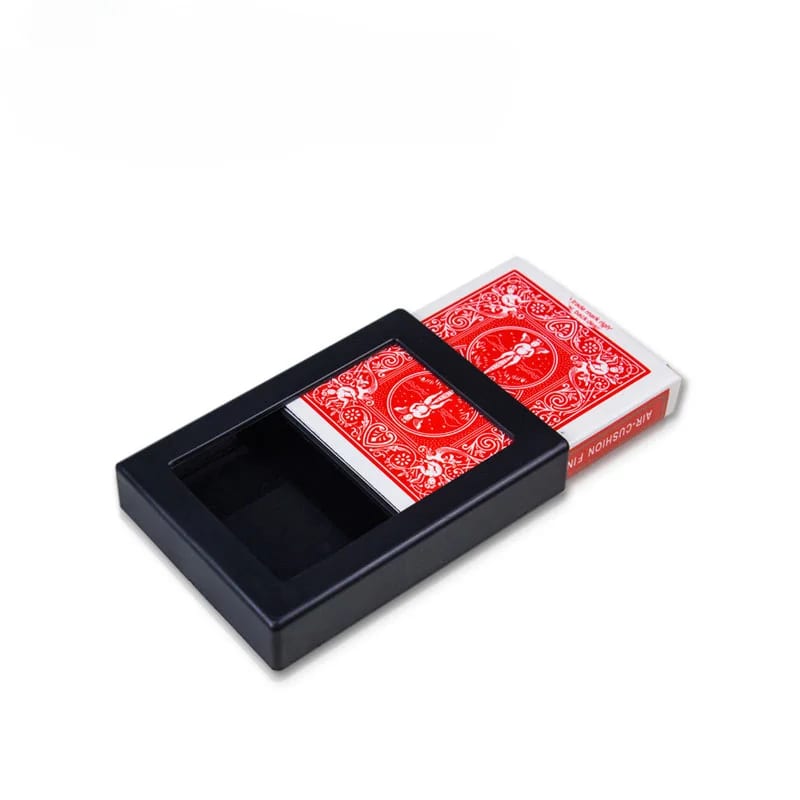
If you want to try it yourself, a simple prop such as the vanishing card box gives you a moment that deserves a magic word — see the card box effect. Our guide to the best magic tricks for beginners suggests where to start, and famous magicians in history covers the performers who made magic words famous.