Go Board Sizes: 19x19, 13x13 and 9x9 Explained
Nov 13, 2026 · The Editors
Go board sizes explained: the full 19x19 board, 13x13 and 9x9 for beginners, intersections and star points on each, the real dimensions of a traditional board, and which size to start on.
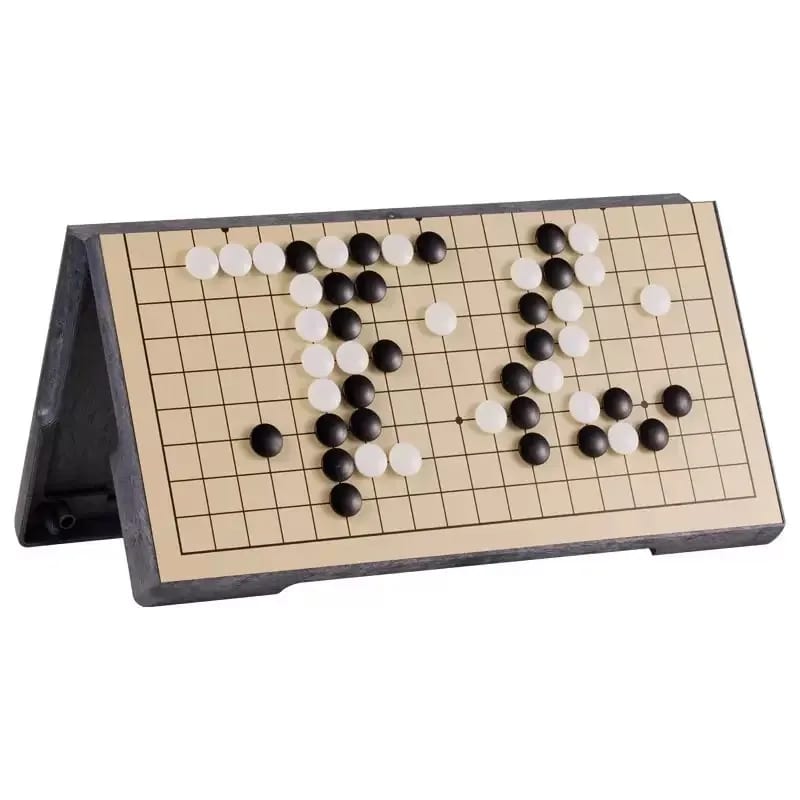
The standard go board is 19x19 lines, giving 361 points to play on. Two smaller sizes are widely used: 13x13 and 9x9, which are ideal for beginners and quick games. The rules are the same on every size.
Go board sizes compared
| Size | Intersections | Star points | Typical use |
|---|---|---|---|
| 9x9 | 81 | 5 (some boards 4) | Learning, quick games |
| 13x13 | 169 | 5 | Stepping stone, short games |
| 19x19 | 361 | 9 | The full game, tournaments |
Stones are played on the intersections, not in the squares. The star points (hoshi in Japanese) are small dots that help players find their place on the board; on a 19x19 board they sit on the fourth line from each edge and in the centre.
Why 19x19?
The 19x19 board has been standard for well over a thousand years; older boards of 17x17 are known from early Chinese finds. At 19x19 the board balances the corners, edges and centre: territory along the edges and in the corners is easier to secure, and the centre is where fights spill out. On smaller boards, almost every move touches a fight.
Go board dimensions in cm and inches
A traditional 19x19 board is not quite square. It is slightly longer from player to player than from side to side — roughly 45 cm by 42 cm (about 18 by 16.5 inches) on a Japanese board. The lines are spaced a little further apart in one direction, so that from a seated player's angle the grid looks square.
The spacing is set by the stones: a full-size stone is a little over 2 cm across, and the gap between lines leaves just enough room for stones to sit side by side. Folding boards and travel sets are often smaller, and come with smaller stones to match.
Which go board size for beginners?
Start on 9x9. A game takes ten or fifteen minutes, you see the result of every mistake quickly, and you learn the essentials — capturing, life and death, and counting territory — without being lost on a big board.
Then move up:
- 9x9: your first twenty or thirty games.
- 13x13: when you can capture and count reliably, and want to learn about corners and edges.
- 19x19: when 13x13 games start to feel cramped.
Many players keep coming back to 9x9 for fast games even when they mostly play the full board.
How many stones do you need?
A full set for 19x19 traditionally has 181 black and 180 white stones — enough to fill every point. In practice games rarely use more than about two hundred stones in total, and smaller boards need far fewer.
Getting started
A folding board with stones and bowls is all you need. Learn the rules on a small board, then read go game rules for beginners and go strategy for beginners. For how go compares with the game most people know, see go vs chess.
Frequently asked questions
What is the standard go board size?
19x19 lines, giving 361 intersections. 13x13 and 9x9 boards are also common.
What size go board should a beginner use?
9x9. Games are short and you learn the basics of capturing and counting quickly, before moving to 13x13 and then 19x19.
How big is a go board in inches?
A traditional 19x19 board is roughly 18 by 16.5 inches, slightly longer than it is wide. Travel and folding boards are often smaller.
Is a go board square?
Nearly, but a traditional board is slightly longer from player to player, so that the grid looks square from a seated position.