Chinese Lucky Numbers: Meanings, Combinations and Unlucky 4
Nov 10, 2026 · The Editors
Chinese lucky numbers and why they are lucky: 8, 6, 9 and 2, why 4 is avoided, number combinations like 168, 520 and 1314, and lucky amounts for wedding and New Year gifts.
In Chinese culture, numbers are lucky or unlucky mostly because of what they sound like. Chinese has many words that sound alike, so a number that sounds like "prosper" or "long-lasting" becomes a good omen, and one that sounds like "death" is avoided. That is why phone numbers, flats, wedding dates and gift amounts are often chosen with care.
The lucky numbers
| Number | Mandarin | Sounds like | Meaning |
|---|---|---|---|
| 8 | bā | fā (發), to prosper | Wealth and success — the luckiest number |
| 6 | liù | liú (流), to flow | Things going smoothly |
| 9 | jiǔ | jiǔ (久), long-lasting | Long life, lasting love |
| 2 | èr | — | Good things come in pairs |
Eight is the favourite. Its sound is close to the word for getting rich, especially in Cantonese, and the Beijing Olympics famously opened on 8 August 2008 at 8:08 in the evening.
Six is linked to the saying 六六大顺, "everything goes smoothly". Nine is popular for weddings and anniversaries, because it promises a love that lasts. Two reflects the saying 好事成双, "good things come in pairs", which is why gifts are often given in pairs.
The unlucky number 4
Four (sì) sounds very like the word for death (sǐ). Many buildings in China, Hong Kong and Taiwan skip the fourth floor, or every floor with a four in it, and people avoid giving four of anything. Fourteen is avoided too, because it can be heard as "will die".
Some numbers are mixed. Seven is linked to the seventh lunar month, the Ghost Month, but is fine in other contexts. Five echoes the five elements but can sound like the word for "not". Meanings also differ between Mandarin, Cantonese and other dialects, so customs vary from place to place.
Chinese lucky number combinations
Strings of digits can be read as phrases:
| Number | Read as | Meaning |
|---|---|---|
| 168 | yī liù bā ≈ yí lù fā | Prosper all the way |
| 518 | wǔ yī bā ≈ wǒ yào fā | I will prosper |
| 888 | bā bā bā | Triple prosperity |
| 520 | wǔ èr líng ≈ wǒ ài nǐ | I love you |
| 1314 | yī sān yī sì ≈ yì shēng yí shì | For a lifetime |
| 250 | èr bǎi wǔ | An insult: a fool |
Because 520 sounds like "I love you", 20 May has become an unofficial day for couples in China. And 250 is worth knowing for the opposite reason: never give 250 of anything.
Lucky numbers for wedding gifts
Money for a wedding is traditionally given in a red envelope. Common customs:
- Choose an even amount — weddings are about pairs.
- Include 8s, 6s or 9s where you can.
- Avoid 4 in any amount.
- In some regions, odd amounts are associated with funerals, so avoid them for weddings.
The same thinking applies at Chinese New Year: new notes, even amounts, and no fours.
Chinese lucky numbers and the zodiac
Each of the twelve zodiac animals is also given its own lucky numbers in Chinese astrology. Those lists vary by source, so treat them as folklore rather than fixed rules. The sound-based meanings above are the ones you will find almost everywhere.
Lucky gifts that go with the numbers
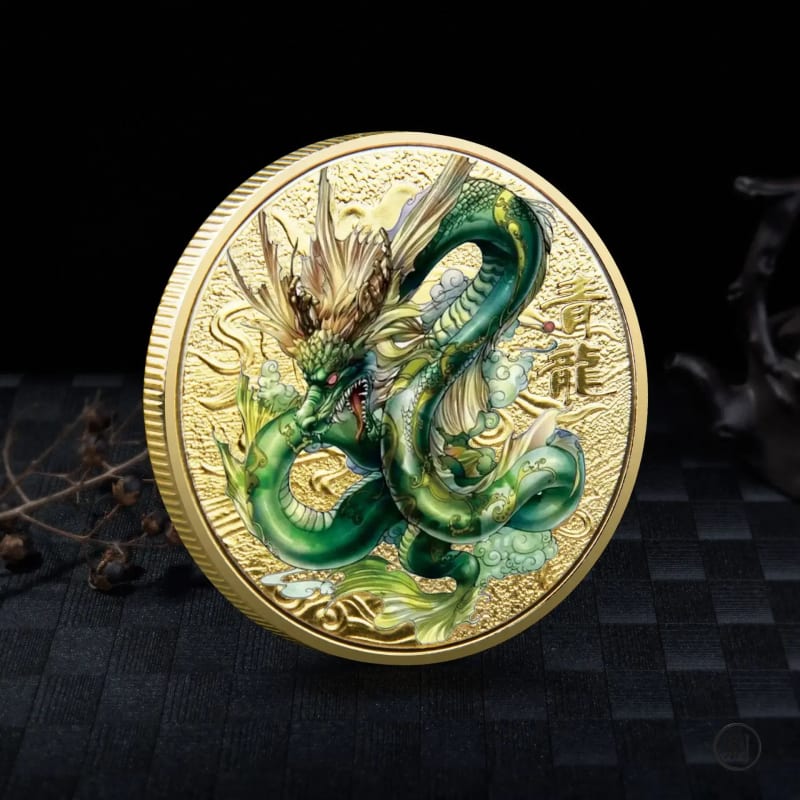
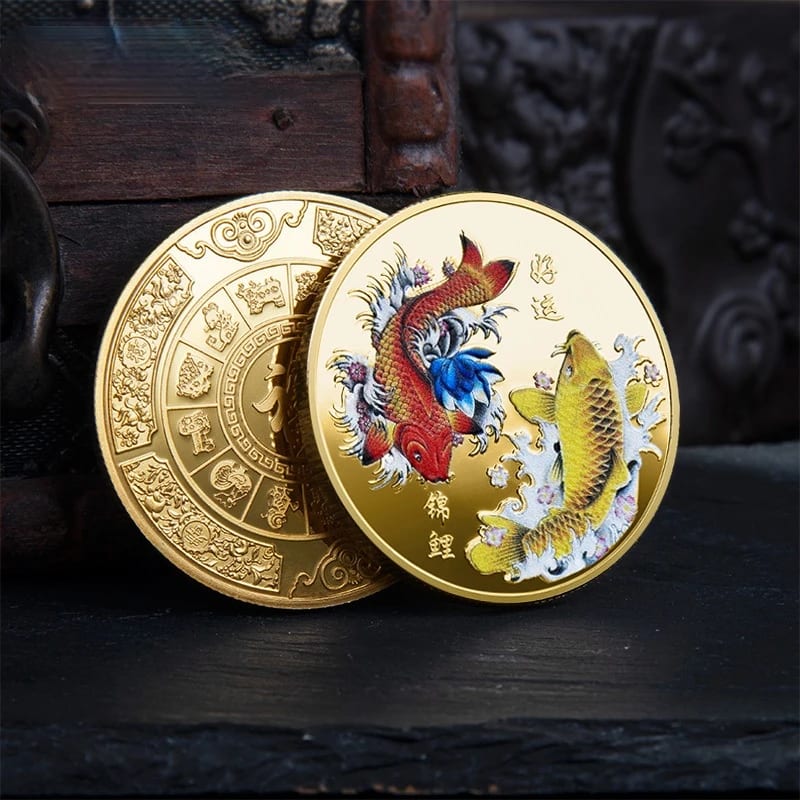
A good-luck coin is a natural partner for a red envelope or a New Year table. Our enamelled koi coin carries the koi, a symbol of perseverance and good fortune — see koi fish meaning — and the Azure Dragon coin the dragon of the east. Give them in pairs, of course. For more on coins and their meanings, see feng shui coins.