Feng Shui Coins Meaning: Chinese Coins With a Hole, Explained
Nov 4, 2026 · The Editors
Why Chinese coins have a square hole, what three, five, eight and nine coins stand for in feng shui, the red string, and where people keep them.
The round coin with a square hole is one of the most recognisable symbols of good fortune in Chinese culture. In feng shui it is a symbol of wealth and luck; strung on red cord, it hangs over doors, sits in wallets and is tucked beside cash registers. Here is where the coin comes from, and what the traditions around it mean.
Why Chinese coins have a hole
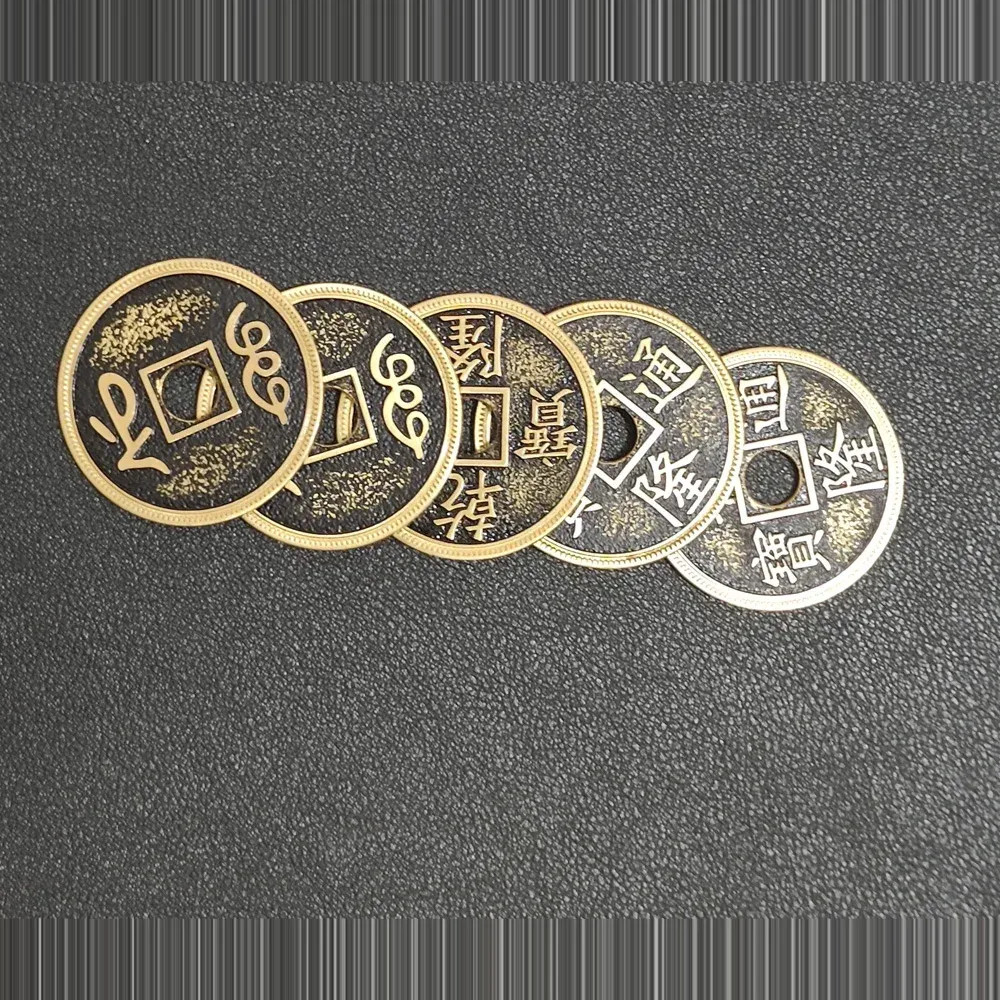
For over two thousand years — from the unification of China under the Qin around 221 BC until the early 20th century — Chinese money was cast as a round coin with a square hole in the middle. In English these are usually called cash coins.
The hole was practical: coins were threaded onto cord, and a long string of them was a standard unit of money. The shape also came to carry meaning. A traditional reading sees the round coin as heaven and the square hole as earth, so the coin holds the two in balance.
The side with four characters is usually treated as the yang, or front, side; in feng shui it is placed facing up.
What the numbers mean
Feng shui traditions vary, but these are the most common:
- Three coins tied with red string — the classic wealth charm. Three is often read as heaven, earth and humankind. Kept in a wallet, a purse or a cash box.
- Five coins — often the "five emperors" coins, from the reigns of five early Qing emperors, a time of prosperity. Kept for protection and steady fortune.
- Eight coins — eight is the luckiest number in Chinese, because 八 (bā) sounds like 發 (fā), "to prosper".
- Nine coins — nine, 九 (jiǔ), sounds like 久, "long-lasting", so nine coins stand for lasting luck.
Why red string
Red is the colour of luck and celebration in Chinese tradition — the colour of New Year envelopes and wedding dresses. Tying lucky coins with red cord or ribbon is said to activate them, and at the very least it makes them a proper charm rather than loose change.
Where people keep feng shui coins
- At the front door — tied to the handle or under the doormat, to welcome prosperity in.
- In a wallet or purse — so money is drawn to money.
- By a cash register or in a business — the oldest use of all.
- On a desk — in the wealth corner of a room, or simply where you work.
Are Chinese coins with holes worth money?
Some are. Genuine old cash coins are collected, and rare ones can be valuable. But most coins sold as feng shui charms, ours included, are modern pieces made for the tradition, not antiques, and are not worth money in themselves. Their value is what they mean.
A lucky coin you can spin
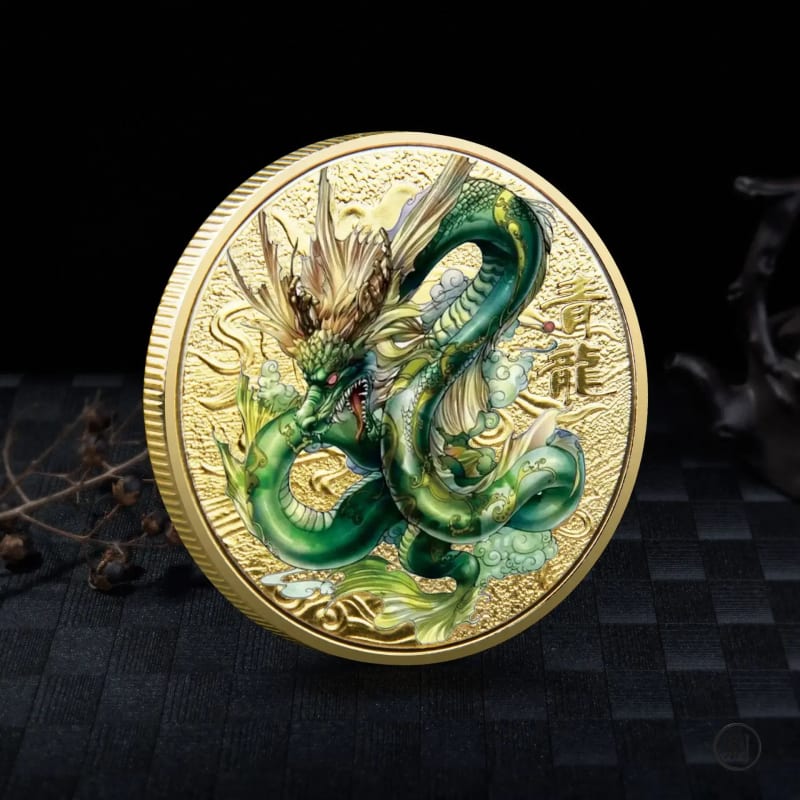
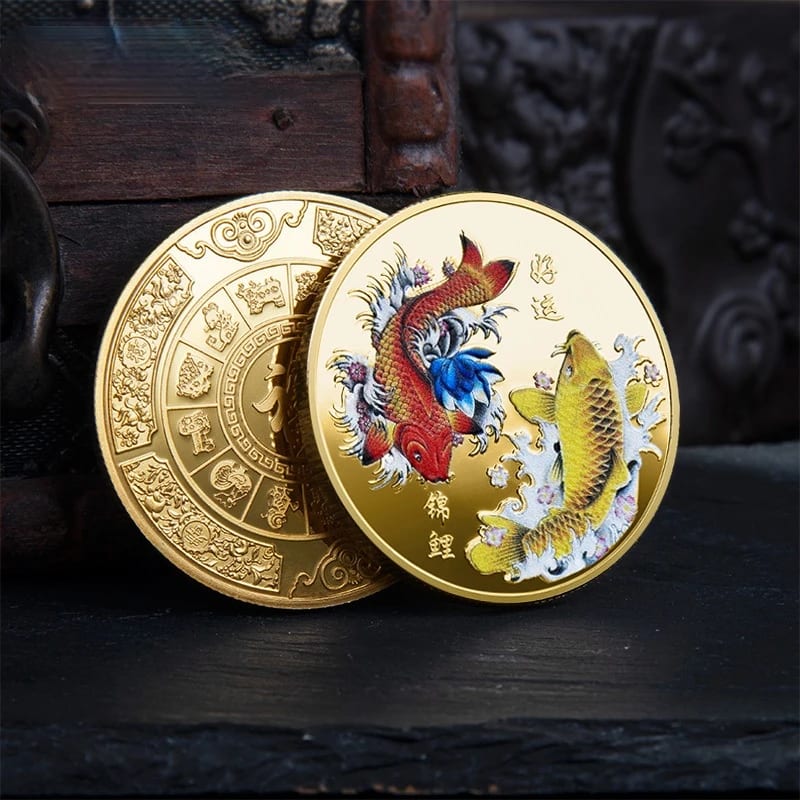
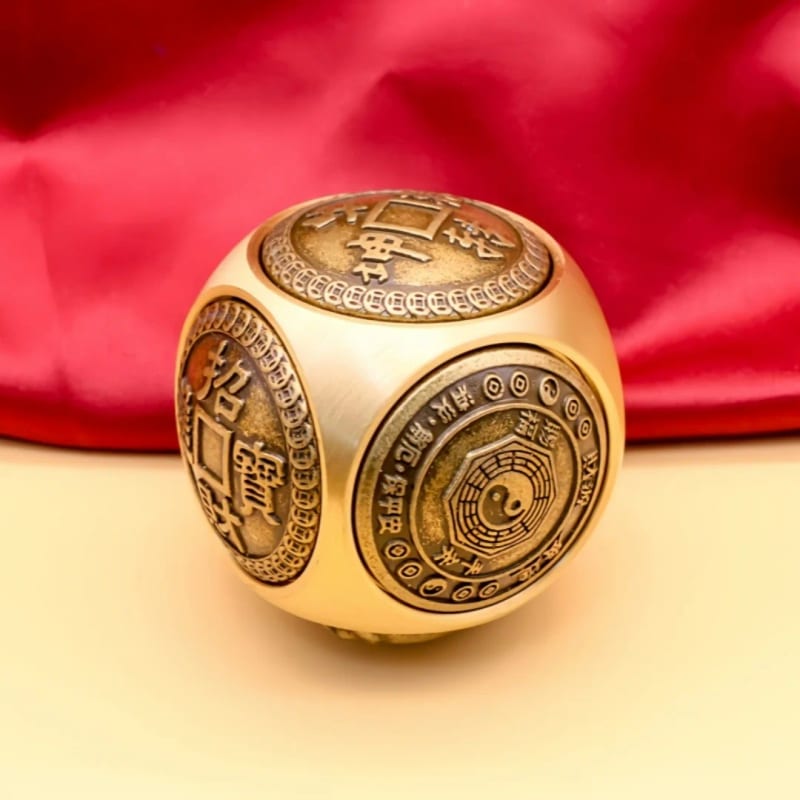
Our six-sided lucky coin spinner sets a square-holed coin into every face of a small metal cube, and each face turns on its own. It is a good-luck charm and a desk toy in one: something to turn over in your hand while you think, with a little fortune built in. For a classic charm, pair it with a dragon or koi coin.