Chess Openings for Beginners: The Best for White and Black
Nov 9, 2026 · The Editors
Chess openings for beginners, with the moves: the opening principles, the Italian Game and London System for white, the best replies for black, and the four-move checkmate trap to avoid.

Beginners often think they need to memorise openings. They do not. What wins games at the start is understanding a few principles — then learning one or two openings that follow them, so the first ten moves feel familiar. Here are both.
Moves are written in standard notation: e4 means a pawn moves to e4, Nf3 a knight to f3, Bc4 a bishop to c4, O-O is castling on the king's side. If you are new to how the pieces move, read how do chess pieces move first.
Five opening principles
- Control the centre. Put a pawn or two on the four middle squares (d4, e4, d5, e5).
- Develop your knights and bishops before moving any piece twice.
- Castle early, usually within the first ten moves, to tuck your king away.
- Do not bring your queen out early. She gets chased around and you lose time.
- Connect your rooks — clear the back rank so they can see each other.
An opening that follows these will usually give you a fair game, even if you do not know its name.
Chess openings for beginners as white
The Italian Game
- e4 e5
- Nf3 Nc6
- Bc4
White develops quickly, aims the bishop at f7 — the weakest square near the black king — and castles next move. It is simple, sound, and played at every level.
The Ruy Lopez
- e4 e5
- Nf3 Nc6
- Bb5
The bishop pressures the knight that defends e5. Richer and more strategic than the Italian; worth learning once the Italian feels comfortable.
The London System
- d4 d5
- Bf4, then e3, Nf3, c3 and Bd3
The London is a set-up rather than a line: white plays roughly the same moves whatever black does. That makes it a favourite with beginners who want to stop thinking about openings and start thinking about the middle game.
The Queen's Gambit
- d4 d5
- c4
White offers a pawn to pull black's centre pawn away. If black takes, white can usually win it back. A classic for players who like a steady positional game.
Chess openings for beginners as black
Against 1. e4:
- 1...e5 — the classical reply, leading to the Italian or Ruy Lopez. Learn this first.
- The Caro-Kann (1...c6, then 2...d5) — solid, hard to attack, and forgiving of small mistakes.
- The Sicilian (1...c5) — the most popular reply at master level and the sharpest. Rewarding, but full of theory.
Against 1. d4:
- 1...d5 — match white's centre pawn. If white plays 2. c4, the steady reply is 2...e6, the Queen's Gambit Declined.
The four-move checkmate to avoid
Every beginner meets this trap, called Scholar's Mate:
- e4 e5
- Bc4 Nc6
- Qh5 Nf6??
- Qxf7 checkmate
The queen and bishop both hit f7. The fix is simple: on move 3, play 3...g6 or 3...Qe7 to block or defend. Then chase the queen with your knight and develop while she retreats — the early queen move becomes white's problem.
How to learn openings
Pick one opening for white and one defence against e4 and d4, and play them for a few months. When you lose, look at the first ten moves and ask which principle you broke. That teaches more than memorising lines.
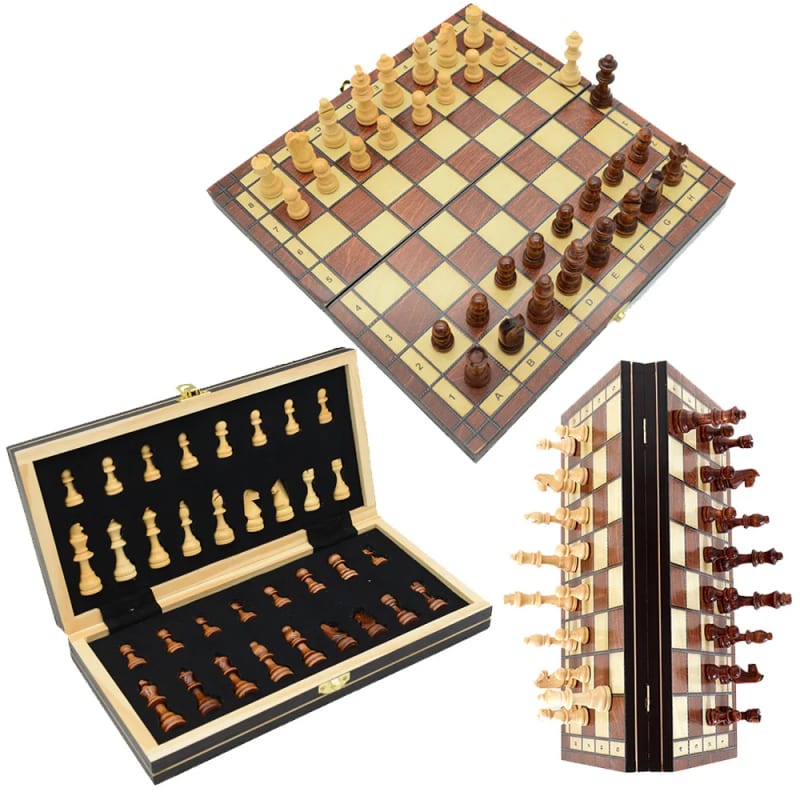
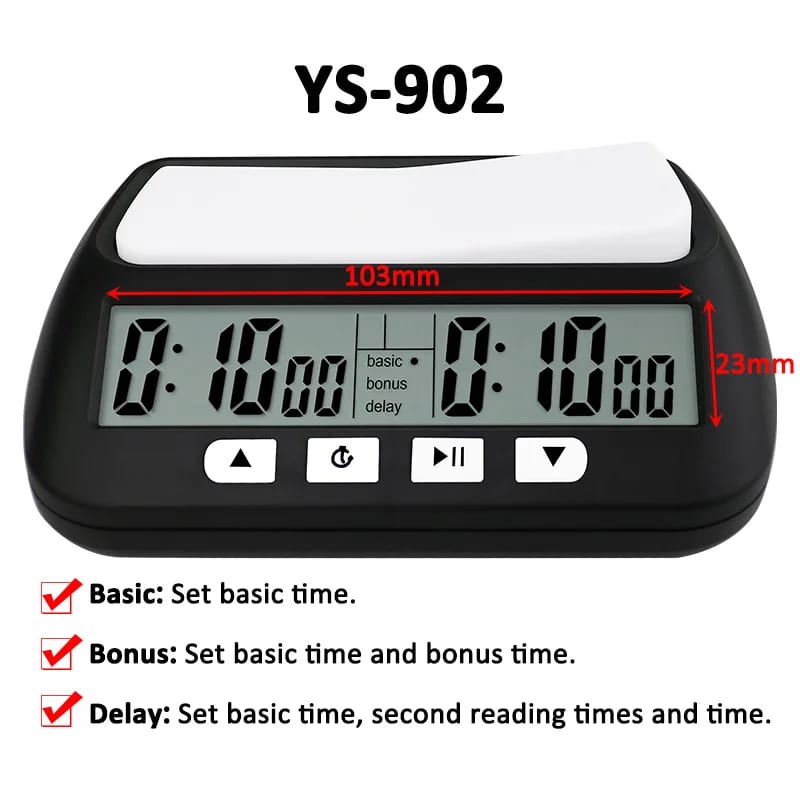
Practise with a real board: a magnetic folding chess set lets you set up a position and leave it on a shelf. Once you know the openings, add a clock — see chess clock rules — and read the full chess rules for beginners if anything above was unfamiliar.