Chess Rules for Beginners: Everything You Need to Play
Nov 7, 2026 · The Editors
Chess rules for beginners in one page: the board, how each piece moves, check and checkmate, castling, en passant, promotion, stalemate and draws — and the touch-move rule.
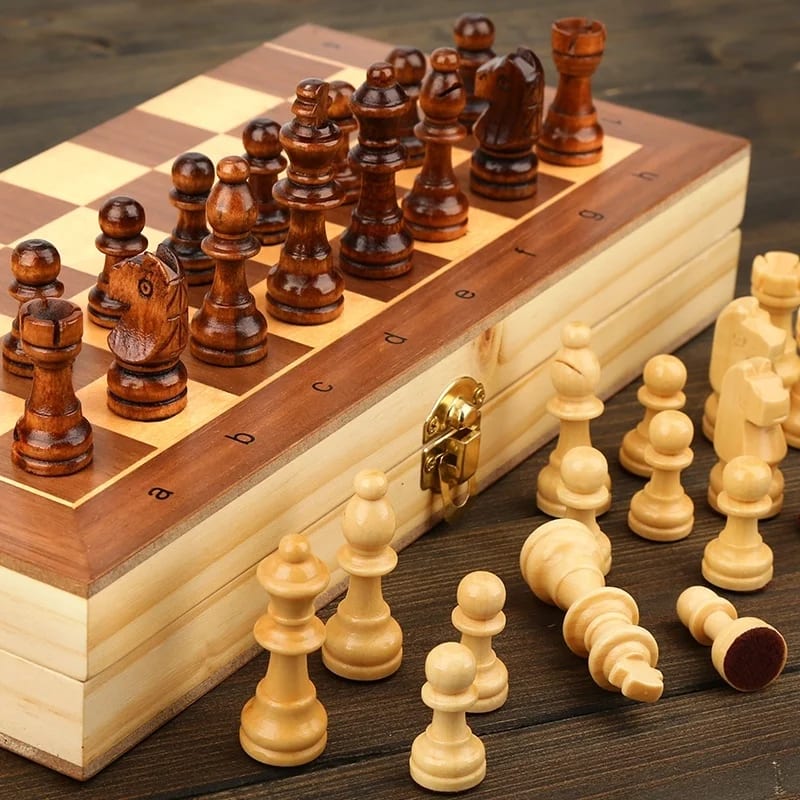
Chess has a reputation for being complicated, but the rules fit on one page. Strategy takes a lifetime; the rules take an afternoon.
The goal
Checkmate your opponent's King: attack it so that it cannot escape. You never actually capture the King — the game ends the moment it is trapped.
The board and pieces
- An 8 × 8 board of 64 squares, with a light square in each player's bottom-right corner.
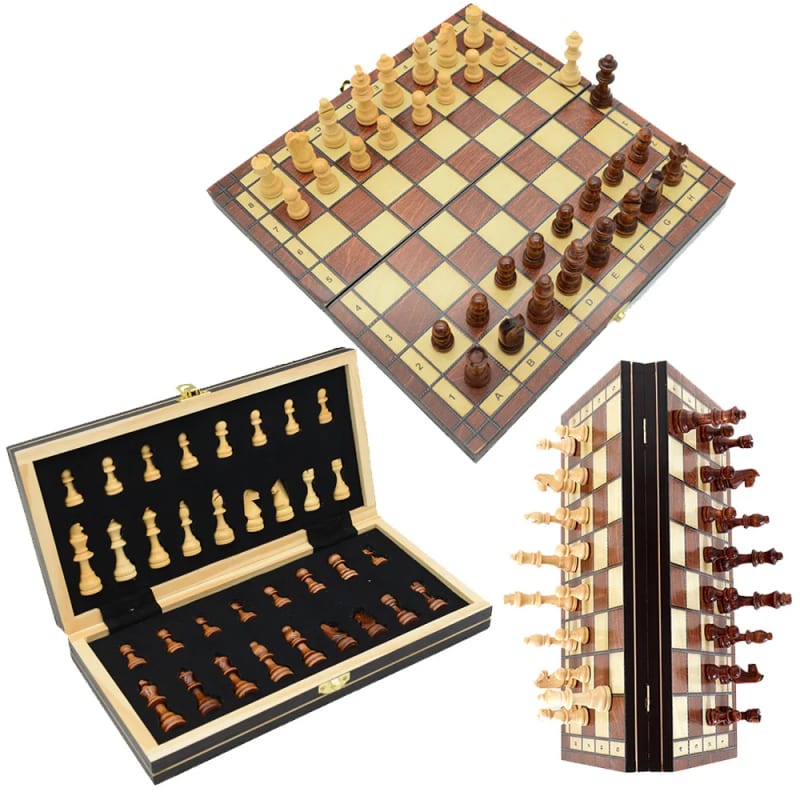
- Each player has 16 pieces: a King, a Queen, two Rooks, two Bishops, two Knights and eight Pawns.
- White moves first. Players then take turns, one move each.
How the pieces move — in brief
- King: one square in any direction.
- Queen: any number of squares in a straight line — across, up, down or diagonally.
- Rook: any number of squares across or up and down.
- Bishop: any number of squares diagonally.
- Knight: an L-shape — two squares one way, then one at right angles. The only piece that jumps over others.
- Pawn: forward one square (two on its first move); captures one square diagonally forward.
Pieces capture by moving onto an enemy piece's square and removing it. Only the Knight can jump; every other piece is blocked by anything in its way. How each chess piece moves, in detail.
Check and checkmate
- A King under attack is in check. The player must get out of check on their next move by moving the King, blocking the attack, or capturing the attacking piece.
- You may never make a move that leaves your own King in check.
- If a King is in check and there is no way out, it is checkmate. The game is over.
The three special moves
Castling. Once per game, the King moves two squares towards a Rook, and the Rook jumps to the square on the King's other side. Allowed only if:
- Neither the King nor that Rook has moved yet.
- No pieces stand between them.
- The King is not in check, does not pass through an attacked square, and does not land in check.
En passant. If a pawn moves two squares forward and lands beside an enemy pawn, the enemy pawn may capture it as if it had moved only one square — but only on the very next move.
Promotion. A pawn that reaches the far side of the board is promoted: replaced with a Queen, Rook, Bishop or Knight of the same colour. Almost always a Queen. You can have more than one Queen.
Draws
A game is drawn by:
- Stalemate — the player to move is not in check but has no legal move. A common beginner's surprise: having a huge material advantage and stalemating the opponent.
- Agreement between the players.
- Threefold repetition — the same position occurs three times.
- The fifty-move rule — fifty moves each with no capture and no pawn move.
- Insufficient material — neither side can possibly checkmate, such as King against King.
Touch-move
In serious play, if you touch a piece, you must move it (if it has a legal move), and if you touch an opponent's piece, you must capture it if you can. To adjust a piece on its square without moving it, say "adjust" first.
Timed games
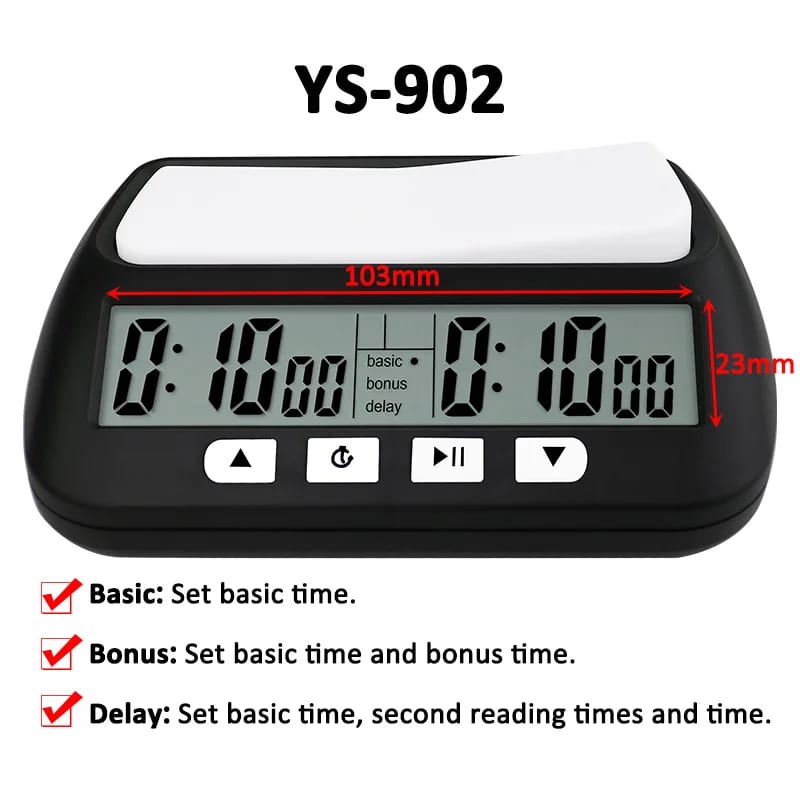
Many games are played with a chess clock: each player has a fixed time for all their moves, and runs out of time to lose. Chess clock rules.
Your first games
Open with a centre pawn, bring out your Knights and Bishops, castle early, and do not move your Queen out too soon. Then play — a lot. A travel set means you can play anywhere.