Chess Opening Traps for Beginners: 4 Classic Traps and How to Avoid Them
Nov 23, 2026 · The Editors
Four classic chess opening traps every beginner meets sooner or later, with the full moves, why they work, and how to avoid falling into them yourself.
A chess opening trap is a sequence where one natural-looking move loses material or the game at once. Four classics every beginner should know are Legal's mate, the Blackburne Shilling Gambit, the Englund Gambit trap and the Elephant trap. Learn them to win quick games, but more importantly to avoid falling into them, because the lesson behind each one (don't grab material without checking what it costs) runs through all of chess.
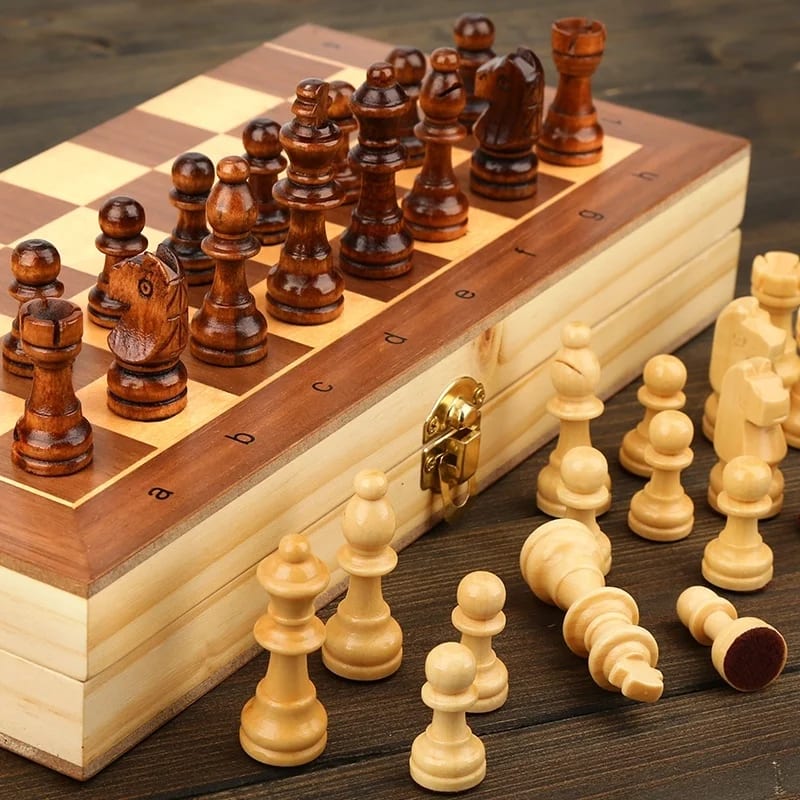
The moves below use chess notation. Set them up on a board as you read.
Legal's mate
Named after the eighteenth-century French player Sire de Legal, this trap sacrifices the queen to deliver mate with minor pieces.
- e4 e5 2. Nf3 d6 3. Bc4 Bg4 4. Nc3 g6? 5. Nxe5! Bxd1?? 6. Bxf7+ Ke7 7. Nd5#
Why it works: Black's bishop pins the knight to the queen, so Black assumes the knight can't move. It can, because the queen capture allows mate. How to avoid it: after 5. Nxe5, Black should play 5...dxe5 and accept losing a pawn, not take the queen.
The Blackburne Shilling Gambit
A cheeky trap for Black, said to be named after the English master Joseph Henry Blackburne, who won shilling stakes with it.
- e4 e5 2. Nf3 Nc6 3. Bc4 Nd4 4. Nxe5? Qg5! 5. Nxf7? Qxg2 6. Rf1 Qxe4+ 7. Be2 Nf3#
Why it works: White grabs a pawn and then a rook, ignoring the threat to g2. How to avoid it: against 3...Nd4, simply castle or play 4. Nxd4 exd4 5. O-O with a fine position. Don't take the e5 pawn with the knight.
The Englund Gambit trap
After 1. d4, Black offers a pawn with 1...e5 and sets a trap on the long diagonal.
- d4 e5 2. dxe5 Nc6 3. Nf3 Qe7 4. Bf4? Qb4+ 5. Bd2 Qxb2 6. Bc3? Bb4! 7. Qd2 Bxc3 8. Qxc3 Qc1#
Why it works: White's natural developing moves leave b2 hanging and the queen's knight blocking its own rook. How to avoid it: after 4...Qb4+, play 5. Qd2 rather than 5. Bd2, or develop with 4. Nc3 instead of 4. Bf4.
The Elephant trap
A trap in the Queen's Gambit Declined that punishes a greedy capture.
- d4 d5 2. c4 e6 3. Nc3 Nf6 4. Bg5 Nbd7 5. cxd5 exd5 6. Nxd5?? Nxd5! 7. Bxd8 Bb4+ 8. Qd2 Bxd2+ 9. Kxd2 Kxd8
Why it works: the knight on f6 looks pinned to the queen, so White takes on d5. But Black gives up the queen, wins it back with check, and ends up a knight ahead. How to avoid it: remember that a pin against the queen is not an absolute pin; the pinned piece can still move if it wins something bigger.
Lessons from opening traps
| Trap | Lesson |
|---|---|
| Legal's mate | A pinned piece against the queen can still move |
| Blackburne Shilling | Check what your opponent threatens before grabbing material |
| Englund trap | Develop pieces that defend your weak squares |
| Elephant trap | Count the whole sequence, not just the first capture |
The quickest checkmates of all, Fool's mate and Scholar's mate, are worth knowing too. Against stronger opponents, traps rarely work; sound development, from our chess openings for beginners, wins more games in the long run.
Practise them
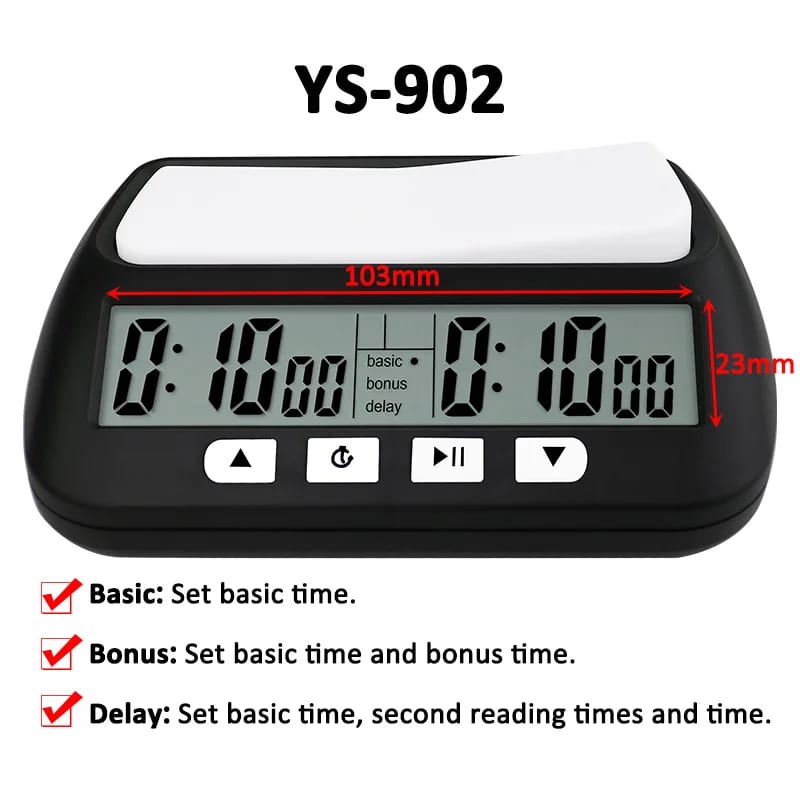
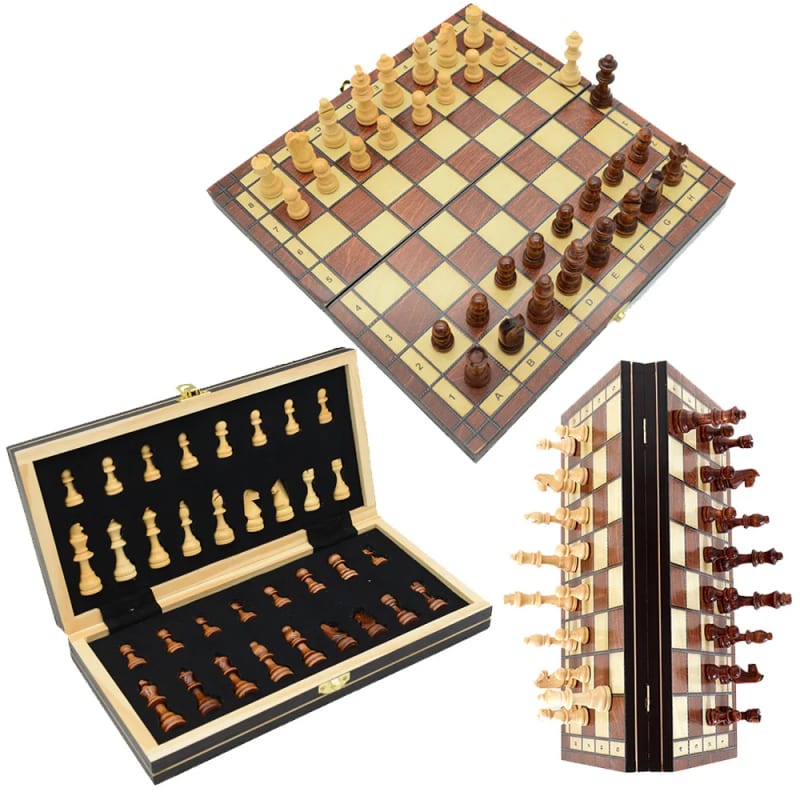
Play through each trap on a real board until the moves feel natural. A magnetic folding chess set holds a position safely if you need to stop halfway, and a digital chess clock adds pressure once you start playing quick games, where traps catch people most.
Frequently asked questions
What is the best chess trap for beginners?
Legal's mate is the best known and teaches the most: a pinned knight can still move if it delivers a bigger threat.
Do chess opening traps work against good players?
Rarely. Experienced players know them. Traps work best in fast games and against beginners.
What is the fastest checkmate in chess?
Fool's mate, in two moves by Black, after White weakens the king with f3 and g4.
Is it bad to play for traps?
Relying on traps can leave you worse off when the opponent sees through them. Learn them mainly so you don't fall into them.