Can You Checkmate With Two Knights? King and Two Knights Explained
Nov 24, 2026 · The Editors
King and two knights cannot force checkmate against a lone king, though a mate is possible if the defender blunders. Why, what the rules say, and which pieces can force mate.
No, not by force. A king and two knights cannot force checkmate against a lone king: with correct defence, the lone king always escapes. But checkmate is possible if the defender makes a mistake, which is why the game is not automatically drawn.
Why two knights cannot force mate
To mate a lone king you have to drive it to the edge and then cover every square around it at the moment you give check. Two knights and a king can build a mating net, but only if the defending king walks into it.
The trouble is timing. Each knight covers squares of one colour per move, and they cannot "lose a move" to wait. When the attacker gets the net almost ready, the defender always has a safe square to step to instead of the one that walks into mate. With accurate play by the defender, the attacker never gets there.
A checkmate with two knights does exist
Here is a real mate position:
| Piece | Square |
|---|---|
| White king | f7 |
| White knight | f6 |
| White knight | g6 |
| Black king | h8 |
The knight on g6 gives check. The knight on f6 covers g8 and h7, and the white king covers g7. Black has no move: checkmate. But Black would only end up here by choosing to move into the corner when a safer square was available.
What the rules say: is it a draw?
Under FIDE rules, a game is drawn automatically only when no sequence of legal moves can lead to checkmate. Because a mate with two knights is possible if the defender blunders, king and two knights vs king is not an automatic draw. In practice players agree a draw, or the 50-move rule ends it.
This is different from king and one knight, or king and one bishop, against a lone king: there no mate is possible at all, so it is insufficient material and drawn immediately.
Online sites and apps apply their own versions of these rules, so a timeout with two knights may be scored differently from site to site.
Two knights against a king and pawn
The strange twist: two knights can sometimes win when the defender still has a pawn. The pawn gives the defender moves they have to make, so they cannot simply shuffle safely, and that lets the knights build the net. This endgame was analysed in depth by the Russian composer Alexei Troitsky in the early twentieth century, and the winning lines can be very long.
Which pieces can force checkmate?
| Material (with a king) | Can force mate against a lone king? |
|---|---|
| Queen | Yes, easily |
| Rook | Yes |
| Two bishops (on opposite colours) | Yes |
| Bishop and knight | Yes, but difficult |
| Two knights | No |
| One bishop or one knight | No, and no mate is possible |
| Two bishops on the same colour | No |
Learn the first two first: checkmate with king and queen and checkmate with king and rook.
Practice endgames at home
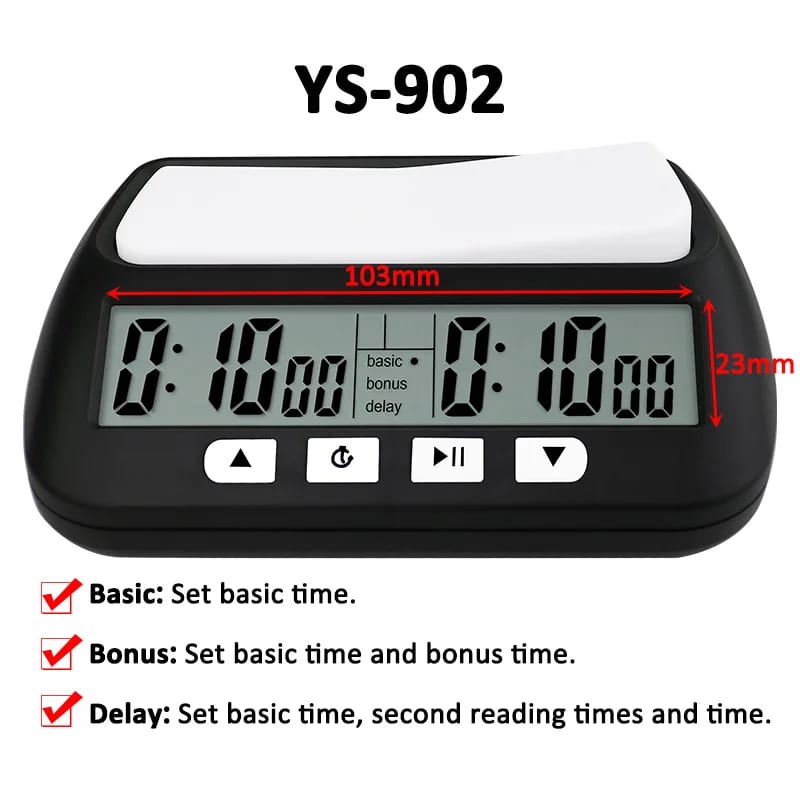
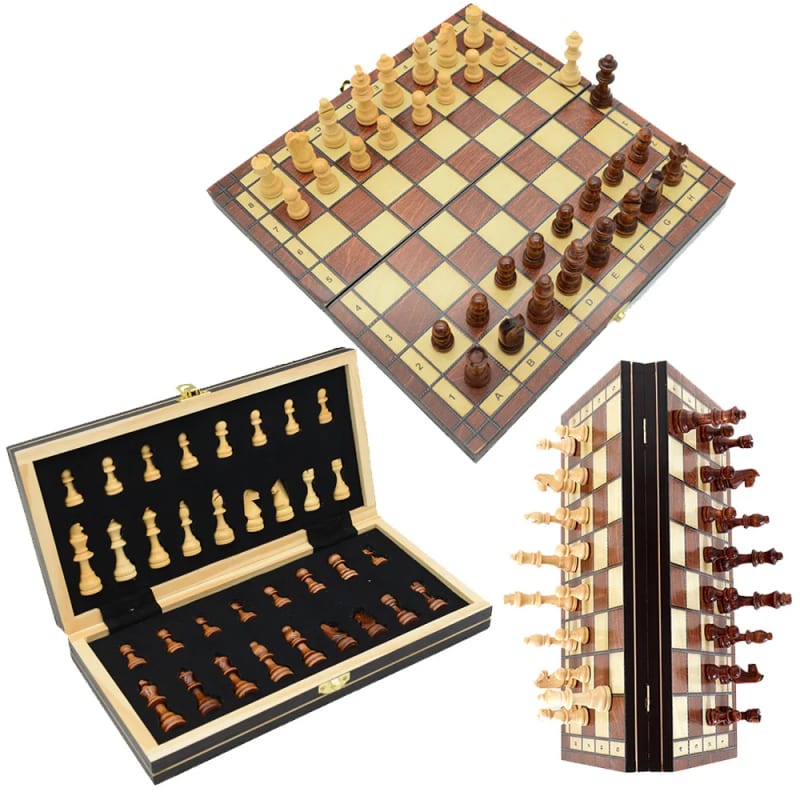
Endgames are best learned on a real board, pushing the pieces until the patterns feel natural. A magnetic folding chess set keeps a position on the table between sessions, and a digital chess clock lets you practise under time pressure, where the 50-move rule really matters. For piece values, see chess piece values.
Frequently asked questions
Can two knights and a king checkmate a king?
Not by force. A mate is possible only if the defending king makes a mistake.
Is two knights vs king a draw?
Not automatically under FIDE rules, because a mate is still possible. In practice it ends in a draw by agreement or the 50-move rule.
Can you checkmate with two bishops?
Yes, if they stand on opposite colours. Two bishops on the same colour cannot force mate.
Can you checkmate with a knight and a bishop?
Yes, it can be forced, but it is one of the hardest basic checkmates to learn.