Bearing Off in Backgammon: The Rules, Exact Numbers and Doubles
Nov 13, 2026 · The Editors
Bearing off in backgammon explained: when you can start, how to bear off with each roll, what happens when there is no checker on the exact point, doubles, being hit, gammons and strategy.
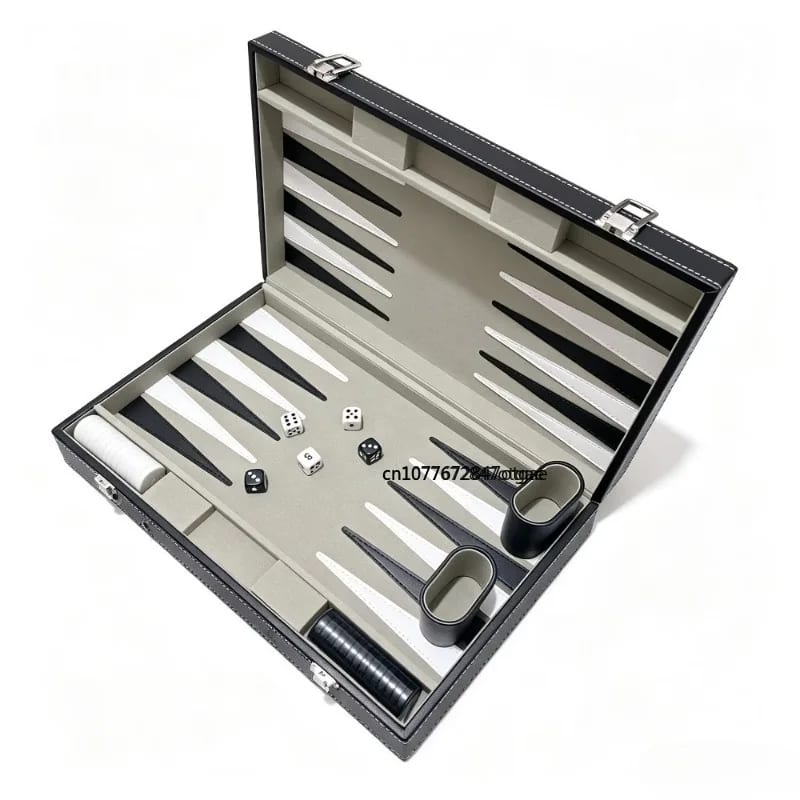
Bearing off is the last stage of backgammon: once all fifteen of your checkers are in your home board, you start removing them, and the first player to bear off every checker wins. Each die lets you remove one checker from the point that matches the number rolled.
When can you start bearing off?
Only when all fifteen of your checkers are in your home board — the six points in the last quarter of your route. If even one checker is outside, you must bring it home first.
If one of your checkers is hit while you are bearing off, it goes to the bar. You must re-enter it and bring it all the way back to your home board before you can bear off again.
How to bear off
Number your home-board points 1 to 6, with the 1-point the last one before the edge of the board. On each roll:
- Exact number: remove a checker from the point that matches the die. A 4 removes a checker from your 4-point.
- Or move inside the board: you may instead move a checker within your home board by that number, for example from the 6-point to the 2-point with a 4.
- No checker on that point: if there is no checker on the point rolled, you must make a legal move with a checker on a higher point.
- No checker on a higher point: if there are no checkers on higher points either, you must remove a checker from the highest occupied point.
So a 6 with your highest checker on the 4-point bears off from the 4-point. You do not need exact numbers once the higher points are empty.
Bearing off with doubles
Doubles work as everywhere else in backgammon: you play the number four times. A roll of 3-3 can bear off four checkers from the 3-point, or combine moves and bear-offs as you choose.
Must you use both dice?
Yes — as in the rest of the game, you must use both dice if any legal way exists, and if only one can be used you must use the larger where possible. You can move inside your home board instead of bearing off, but you cannot simply refuse to play a number.
Gammons and backgammons
How far your opponent has got when you finish decides the size of the win:
| Result | When | Value |
|---|---|---|
| Single game | Loser has borne off at least one checker | 1 point |
| Gammon | Loser has not borne off any checkers | 2 points |
| Backgammon | Loser has borne off none and still has a checker on the bar or in the winner's home board | 3 points |
With a doubling cube in play, multiply by the cube's value.
Bearing off strategy
- Bear off when you can in a pure race; moving inside is usually wasted pips.
- Avoid gaps. Spread checkers evenly across the points so every number bears something off.
- When your opponent still has a checker on the bar or in your home board, play safe: avoid leaving single checkers they could hit, even if it costs a checker off.
- Clear from the back. Empty your highest points first so later rolls can't strand you.
For the full game, see how to play backgammon and backgammon strategy for beginners.
Frequently asked questions
Do you need an exact roll to bear off in backgammon?
Not always. If no checker sits on the point rolled or any higher point, you remove a checker from the highest occupied point.
What happens if you get hit while bearing off?
The checker goes to the bar. You must re-enter it and bring it back to your home board before bearing off again.
How do doubles work when bearing off?
You play the number four times, just as in the rest of the game.
Can you move instead of bearing off?
Yes. You may use a number to move a checker within your home board instead of bearing one off.