Backgammon Doubling Cube Rules: How to Use It and When to Double
Nov 9, 2026 · The Editors
Backgammon doubling cube rules: what the numbers mean, how to offer and accept a double, gammons and backgammons, the Crawford and Jacoby rules, and simple strategy for when to double and take.
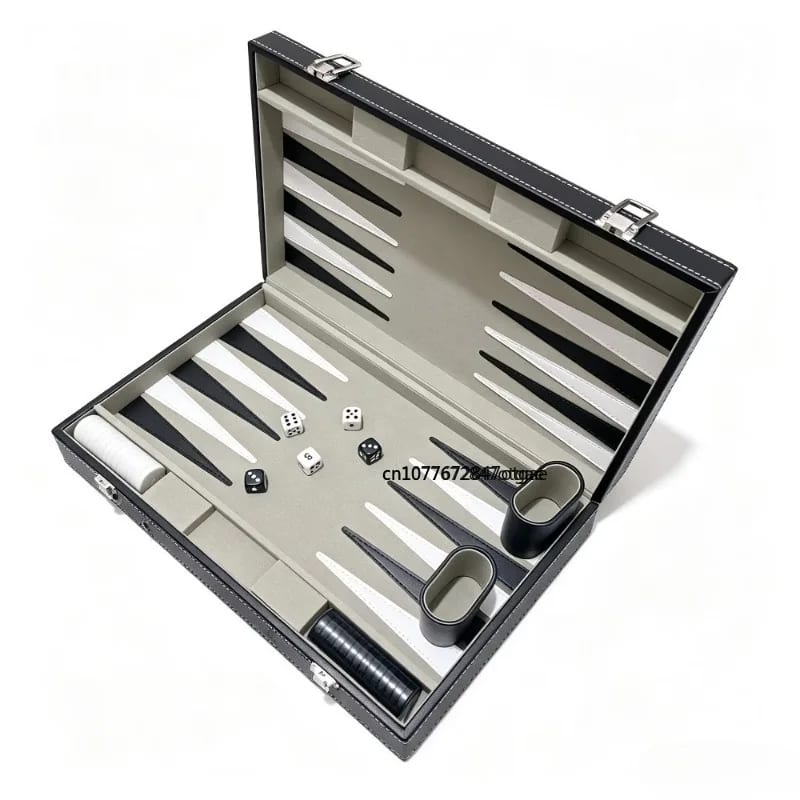
The doubling cube is the large die marked 2, 4, 8, 16, 32 and 64 that comes with most backgammon sets — and that many casual players leave in the box. It was added to the game in the 1920s, and it turned backgammon from a dice race into a game of judgement. This guide covers the rules, then the simple strategy that makes it work.
What the doubling cube does
Every game of backgammon is played for a stake: one point in a match, or an agreed unit in a money game. The cube shows how many times that stake has been multiplied.
At the start of a game the cube sits in the middle of the board with 64 facing up. That means the stake is 1 — the cube has not been used yet. (There is no 1 on the cube, so 64 stands in for it.)
How to offer a double
- Before you roll on your turn, you may offer a double by turning the cube to 2 and pushing it to your opponent.
- Your opponent then chooses:
- Take (accept). The game continues at double the stake. Your opponent now owns the cube and puts it on their side of the board.
- Drop (refuse). Your opponent resigns the game straight away and loses at the stake before the double.
Only the player who owns the cube can offer the next double — a redouble — to 4, then 8, and so on. When they redouble and it is taken, ownership passes back. The stake can climb quickly, which is exactly the point.
Gammons and backgammons
The cube multiplies these too:
| Result | Points |
|---|---|
| Single game | cube value |
| Gammon (loser has borne off no checkers) | 2 × cube value |
| Backgammon (loser has borne off none and still has a checker on the bar or in the winner's home board) | 3 × cube value |
A backgammon with the cube on 4 is worth 12 points.
The Crawford rule in match play
Matches are played to a set number of points, such as 5 or 7. When a player first reaches one point short of winning, the next game is played without the cube. This is the Crawford rule. Without it, the trailing player would always double at once, since they have nothing to lose. After that one game, the cube comes back.
The Jacoby rule in money games
In money play, many players use the Jacoby rule: gammons and backgammons count only as single games unless the cube has been turned at least once. It stops a player who is well ahead from dragging the game out for a gammon instead of doubling. It is optional — agree before you start.
Optional extras
- Beavers. When doubled, a player who thinks they are actually the favourite may immediately redouble while keeping the cube. Common in money games, never in tournaments.
- Automatic doubles. If both opening dice show the same number, the stake doubles and the cube stays in the middle. Many tables limit this to once per game.
When to double and when to take
The cornerstone of cube strategy is the 25% rule: ignoring gammons, you should take a double if you will win at least about one game in four. When you drop, you lose one point for certain. When you take and lose, you lose two — but the times you win at two points pay for it, and you get the cube to use yourself.
That means a double that your opponent should drop is a strong position for you, and a good double comes just before your position gets that strong — before you lose your opponent's chance to take. Experienced players double when they are clear favourites and have a position that could swing sharply on the next roll or two: a strong attack, or a race where they have a clear lead.
Common beginner mistakes:
- Doubling too late. If your opponent will obviously drop, you have waited one roll too long.
- Dropping too often. Most new players refuse doubles they should take.
- Forgetting gammons. If you might lose a gammon, the cube makes it twice as costly.
Backgammon without the doubling cube
Playing without the cube is fine for learning, and it is how most people first play. Count gammons and backgammons as 2 and 3 points, and play to a set total. Once the moves feel natural, bring the cube in — it is where the real game lives. If you are just starting, read how to set up backgammon and how to play backgammon first. Our leatherette backgammon set includes a doubling cube with its dice and checkers.