Backgammon Strategy for Beginners: Opening Moves and Tips
Nov 9, 2026 · The Editors
Backgammon strategy for beginners: the best opening moves for every roll, the points worth making, when to hit and when to run, the odds of being hit, and the main game plans.
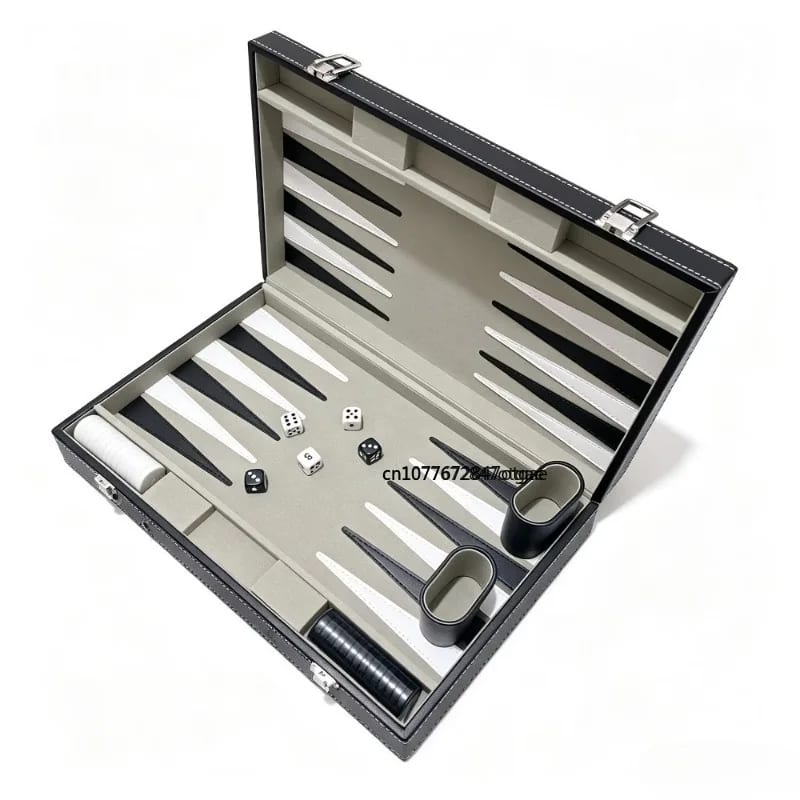
Backgammon is a race with dice, but it is far from pure luck. Good players win far more often than they lose because they make better decisions with the same rolls. A few principles — which points to build, when to leave a single checker exposed, when to race — will improve your game faster than anything else. If you are new to the rules, start with how to play backgammon.
Backgammon strategy opening moves
Your first move is decided by the opening roll, and players have worked out good answers for all fifteen. Points are numbered from your own side: your home board is 1 to 6, your bar point is 7, your mid-point is 13, and your back checkers start on 24.
| Roll | A standard move |
|---|---|
| 3-1 | 8/5 6/5 — makes your 5-point |
| 4-2 | 8/4 6/4 — makes your 4-point |
| 6-1 | 13/7 8/7 — makes your bar point |
| 5-3 | 8/3 6/3 — makes your 3-point |
| 6-5 | 24/13 — runs a back checker to safety |
| 6-4 | 24/14, or 24/18 13/9, or 8/2 6/2 |
| 6-3 | 24/18 13/10 |
| 6-2 | 24/18 13/11 |
| 5-4 | 24/20 13/8, or 13/8 13/9 |
| 5-2 | 13/8 13/11 |
| 5-1 | 13/8 24/23 |
| 4-3 | 24/20 13/10, or 13/9 13/10 |
| 4-1 | 24/23 13/9 |
| 3-2 | 24/21 13/11, or 13/10 13/11 |
| 2-1 | 13/11 6/5, or 13/11 24/23 |
Where two moves are listed, both are respected choices. Doubles cannot be an opening roll, because each player rolls one die to start.
Which points matter most
Your 5-point is the most valuable point on the board: it blocks your opponent's back checkers and is hard for them to get past. Your bar point (7) comes next, because together with the 5- and 6-points it starts a wall. Six points in a row — a prime — cannot be jumped at all.
The odds of being hit
A single checker alone on a point (a blot) can be hit. How likely depends on how far away the enemy checker is:
| Distance | Chance of a hit (no blocking points) |
|---|---|
| 1 | 11 in 36 (31%) |
| 2 | 12 in 36 (33%) |
| 3 | 14 in 36 (39%) |
| 4 | 15 in 36 (42%) |
| 5 | 15 in 36 (42%) |
| 6 | 17 in 36 (47%) |
| 7 | 6 in 36 (17%) |
| 8 | 6 in 36 (17%) |
| 9 | 5 in 36 (14%) |
| 10–12 | 2 or 3 in 36 (6–8%) |
The lesson: a blot 7 or more away is much safer than one within 6. If you must leave a blot, leave it far away.
Backgammon strategy tips for beginners
Count the race. At the start each side needs 167 pips to bear off. When you are well ahead in the count, stop fighting and race home. When you are behind, keep contact and look for a hit.
Hit when it helps. Hitting sends a checker back and costs your opponent pips — usually a good idea early, especially if you hit in your home board. Be cautious if it leaves you with several blots.
Do not stack. Five or six checkers on one point are wasted; spread them to build new points.
Get your back checkers moving. Checkers left on your opponent's 1-point too long can be trapped behind a prime.
Game plans: running, holding, priming
Most games become one of three plans. A running game is a pure race. A holding game keeps an anchor deep in your opponent's board and waits for a shot. A priming game builds a wall to trap an enemy checker. Knowing which plan you are in tells you what each roll is for.
Once you are comfortable, add the doubling cube — it changes strategy more than any other rule. A backgammon set in a leatherette case has everything you need, and our guide to setting up a backgammon board checks you have the checkers in the right places.