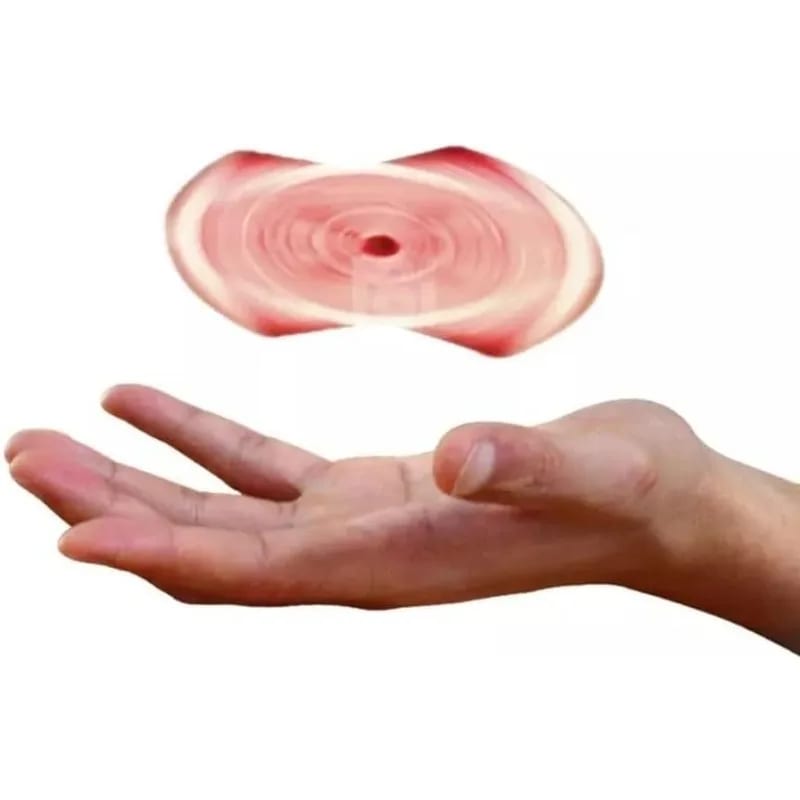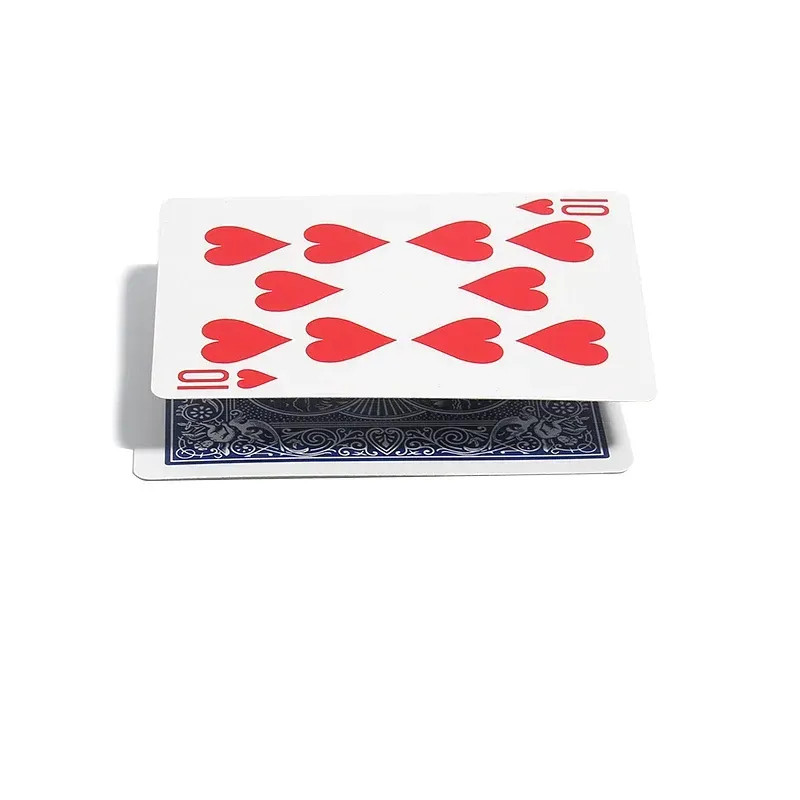
Floating Card Gimmick
$14.99Advanced
A single playing card rises, turns and hovers between the hands — the smallest levitation in magic and the one most often attempted outdoors by mistake.
What they see
A chosen card is placed on the deck and begins to rise out of it on its own. It clears the pack entirely and hangs in the air.
It moves. The card turns over, floats from one hand to the other, passes through a hoop, and settles back onto the deck. The performer's hands stay visibly apart throughout.
The version people remember is the one performed close, in good light, with the card drifting slowly — not the quick rise, which reads as a mechanism, but the hover, which does not read as anything.
Provenance
Card risings are old; floating a card free of the deck is a twentieth-century refinement, and the modern handling belongs to the invisible-thread tradition developed through the middle of the century and popularised heavily in the 1990s.
The canonical version is Finn Jon's and later Jon LeClair's work on thread control, from which most commercial floating effects descend.
Learning it
Deceptively demanding, and the most environment-dependent effect in common use.
The handling takes weeks rather than days, and the real learning is about conditions: light behind you, a breeze, a low ceiling, a spectator at the wrong angle, any of which ends it instantly. Outdoors is usually a mistake.
Budget for setup time before every performance. This is not an effect you can do on request at a dinner table, and performers who try are the reason it has a reputation for going wrong.
What you need
Next
Vanish
A small hinged box that vanishes a signed card, produces one, or changes it for another — a utility prop that ends routines cleanly.
Mind Reading
A deck whose backs quietly say what the faces are — the tool that lets you do things nobody can reconstruct afterwards.
Card Effect
A deck tapered down one edge so a reversed card can be found by touch — the workhorse gaff that does a dozen tricks and asks almost nothing.