Marked Deck — Reader Back
$19.99Beginner
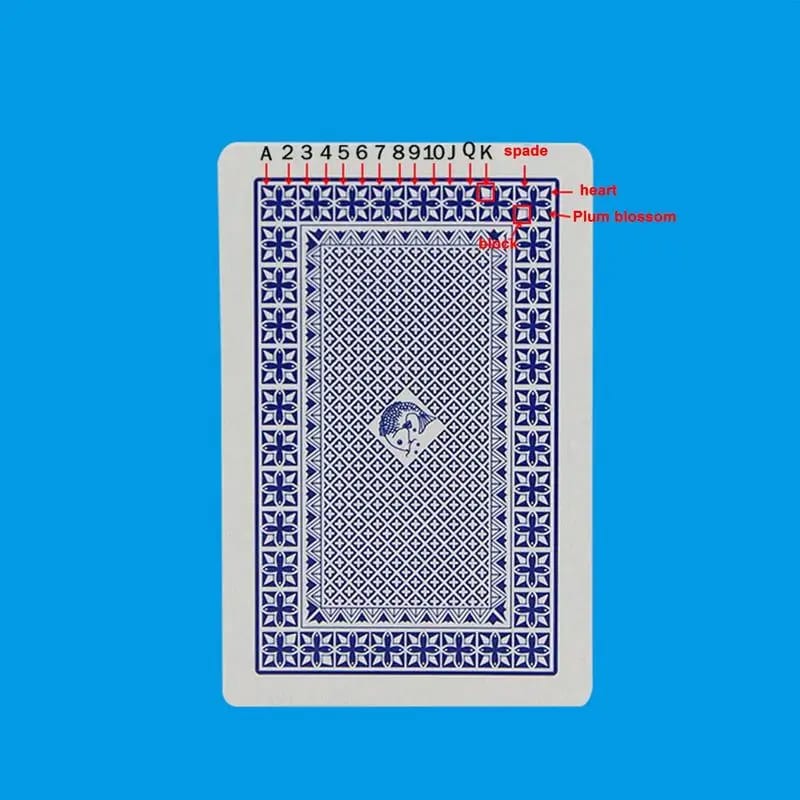
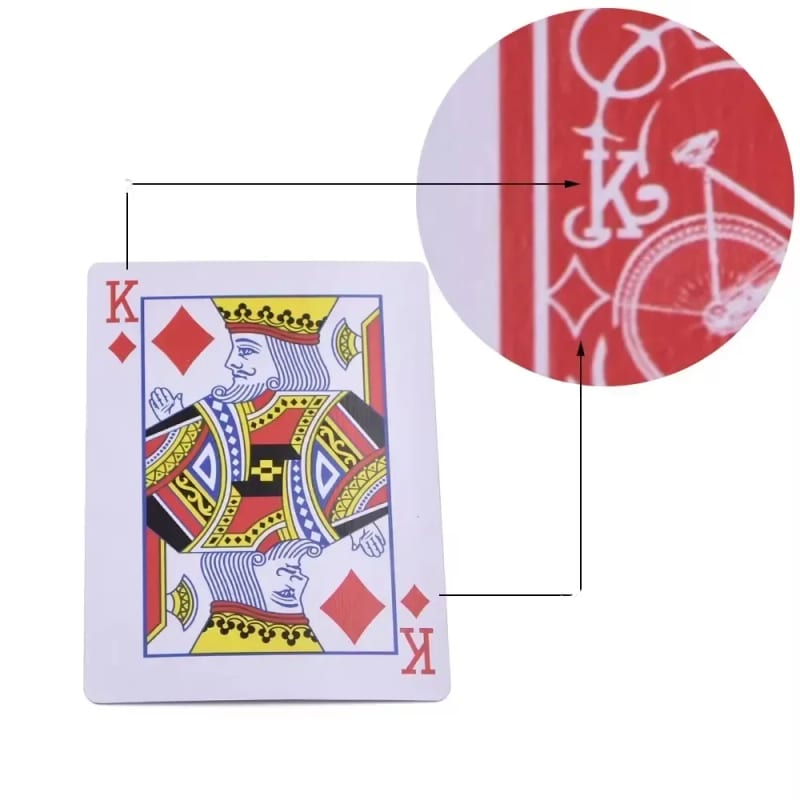
A deck whose backs quietly say what the faces are — the tool that lets you do things nobody can reconstruct afterwards.
What they see
There is nothing to see, which is the point. A spectator takes a card while the performer's back is turned, buries it, shuffles. The card is named.
Or nothing so direct: the performer glances at the deck once, at the start, and spends the next ten minutes appearing to know things they could not know.
The decks themselves are ordinary to look at. Most are printed on familiar backs precisely so that nobody examines them, and a spectator handed one will usually turn it over twice and find nothing.
Provenance
Marked cards are far older than conjuring as a profession, and they arrived in magic from cheating rather than the other way round — reader systems appear in gambling literature well before magic dealers sold them openly.
The modern magic market split into two: the subtle reader back, meant to survive close inspection, and the bolder marking that trades deniability for speed. Both are sold today and performers tend to hold strong views about which is honest work.
Learning it
The reading is the easy half. Any system can be learned in an evening and read fluently within a week.
The hard half is restraint, and it is the same lesson as the svengali deck: a performer who knows every card will be tempted to prove it, and an audience shown three impossible things with the same deck starts looking at the deck.
The strongest use is the one nobody notices — a single piece of information, used once, inside a routine that appears to be about something else.
What you need
Next
Vanish
A small hinged box that vanishes a signed card, produces one, or changes it for another — a utility prop that ends routines cleanly.
Levitation
A single playing card rises, turns and hovers between the hands — the smallest levitation in magic and the one most often attempted outdoors by mistake.
Card Effect
A deck tapered down one edge so a reversed card can be found by touch — the workhorse gaff that does a dozen tricks and asks almost nothing.