What Is a Challenge Coin? History, Use and the Coin Check
Nov 7, 2026 · The Editors
What a challenge coin is: its military origins, what it is used for, how coins are presented, the coin check and its rules, police, fire and corporate challenge coins, and how to display one.
A challenge coin is a medallion carrying the emblem of a unit or organisation, given to its members as a mark of belonging or achievement. It is not money. It is a badge you carry in your pocket — and, by tradition, you had better have it on you.
What a challenge coin looks like
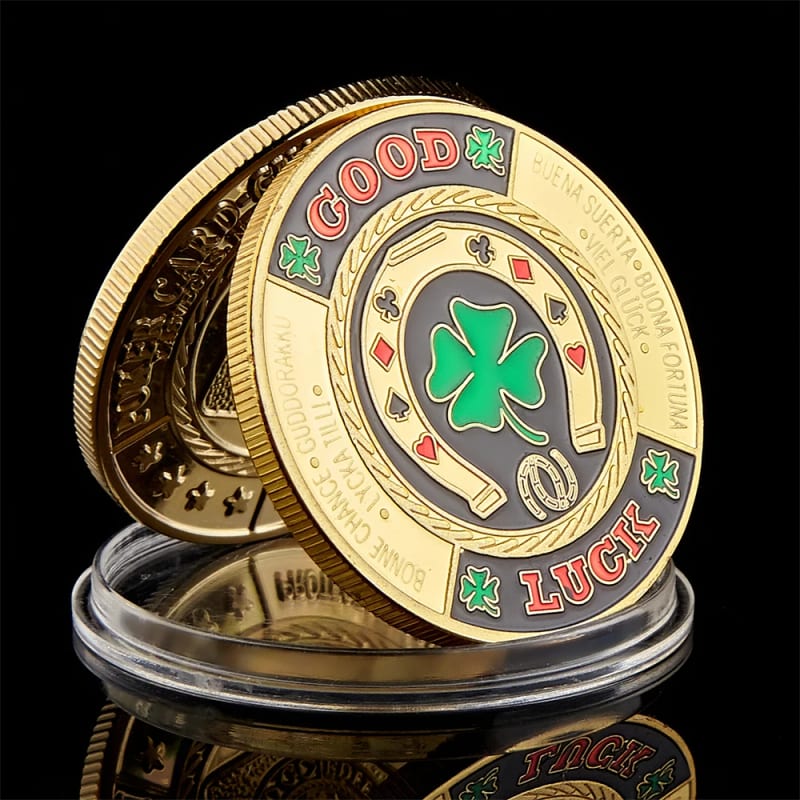
- Usually 1.5 to 2 inches (38–50 mm) across, sometimes larger.
- Heavy metal — brass, bronze or zinc alloy — often plated gold, silver or antique bronze.
- Enamel colours filling the design.
- The unit's insignia, motto and often a date or deployment on one side, and a second design on the back.
Where the tradition came from
The most famous origin story dates to the First World War. An American pilot carried a bronze medallion with his squadron's emblem. Shot down and captured, he escaped to the French lines with no papers — and was nearly executed as a spy, until he produced the medallion and a French soldier recognised the insignia.
The story is hard to verify, and similar traditions — Roman soldiers receiving special coins as rewards — are claimed too. What is certain is that unit coins became common in the US military after the Second World War and spread widely from the 1980s.
What challenge coins are used for
- Membership: proof you served with a unit.
- Recognition: a commander may give a coin for exceptional work — often passed palm to palm in a handshake.
- Commemoration: a deployment, a ship, an anniversary.
- Trade and collection: many people collect coins from other units and services.
The coin check
The "challenge" in challenge coin is the coin check:
- Anyone carrying a coin can start a challenge by drawing it and slapping it on the table (or holding it up).
- Everyone else in the group must produce their own coin.
- Anyone who cannot buys the next round of drinks.
- If everyone can, the challenger buys the round.
Units and clubs have their own rules: how close the coin must be (often within a step), what counts if it is dropped, and what happens if the coin is in another room. A dropped coin can trigger an instant challenge.
Beyond the military
The tradition has spread to police and fire departments, government agencies, sports teams, clubs, companies and charities. Presidents and senior officials have their own coins to give to visitors.
How to display challenge coins
- A coin capsule — a clear plastic case — keeps a single coin safe and shows both sides.
- A display case or rack for a collection.
- In the pocket, of course, for coin checks.
Coins in the same spirit
Not every heavy, enamelled coin is a unit coin. Commemorative coins — memento mori coins, lucky coins, zodiac coins — follow the same format: a weighty medallion with a meaning, carried in a pocket or kept in a case. They make good gifts for veterans and collectors, and for anyone who likes the idea of carrying a reminder. The meaning of memento mori.
Mentioned above
Products in this guide
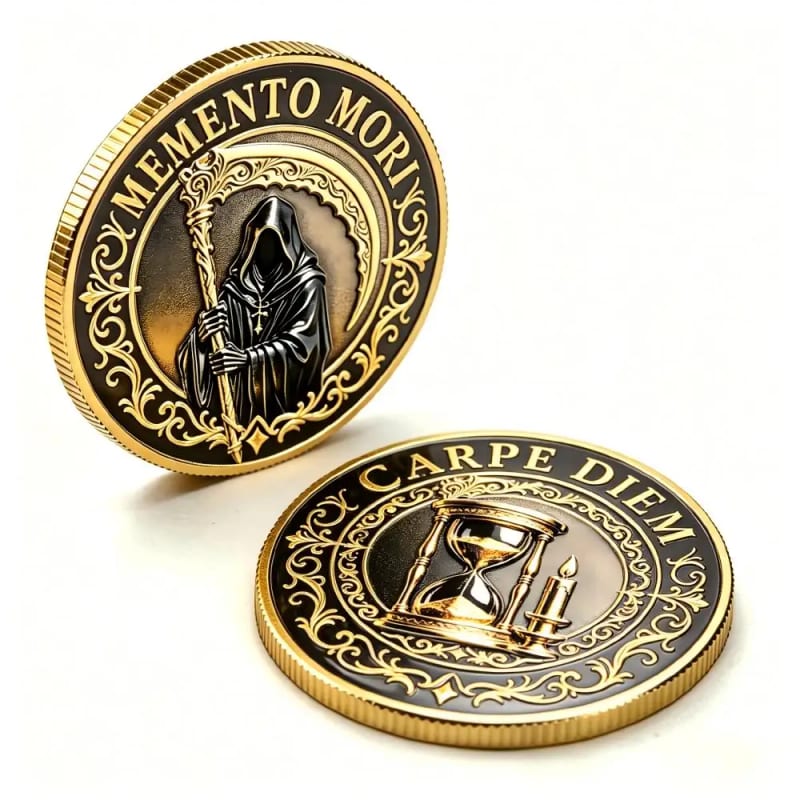
Memento Mori Coin — Grim Reaper, Gold, in Display Case
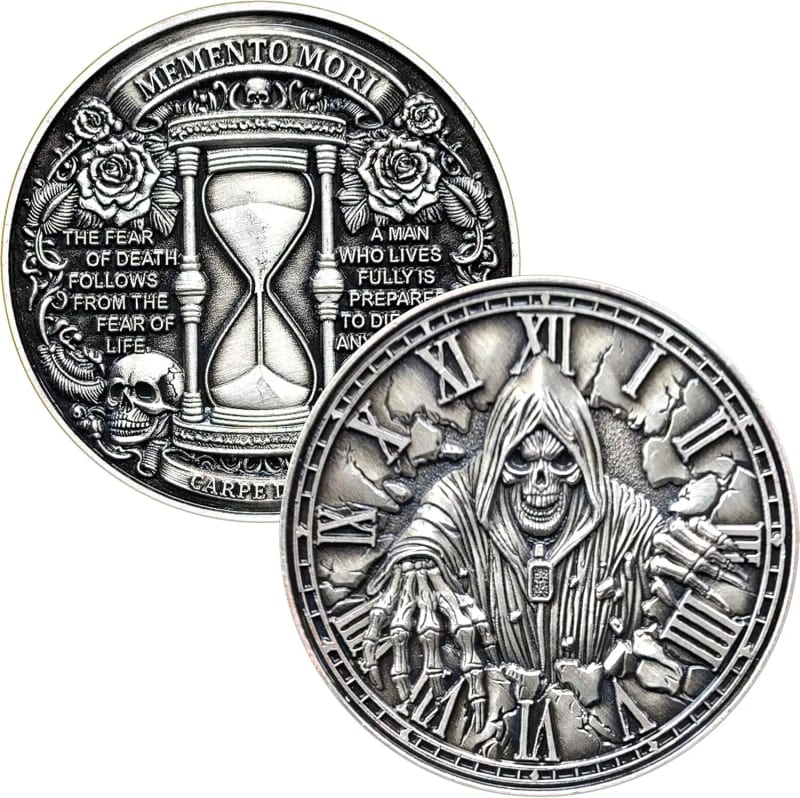
Memento Mori Coin — Hourglass and Reaper, Antique Silver
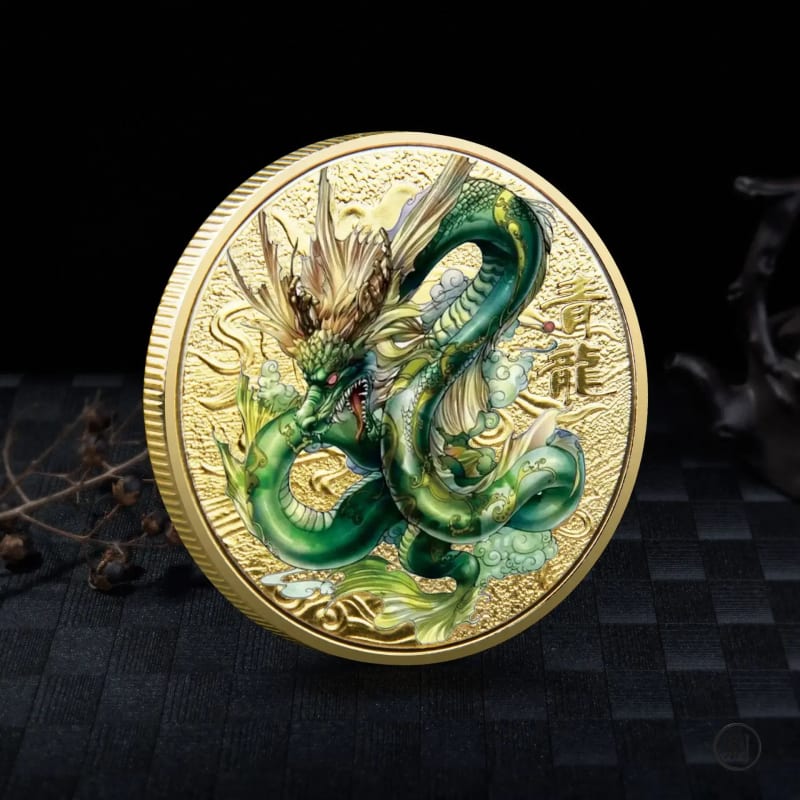
Chinese Dragon Coin — Gold-Tone Good Luck Coin
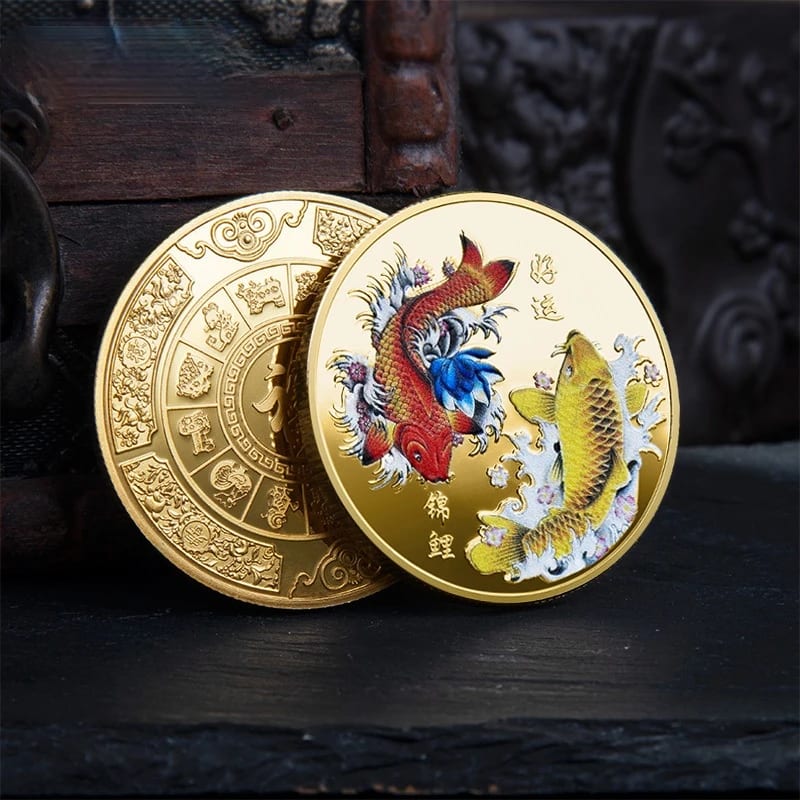
Good Luck Koi Coin — Gold-Tone, Enamelled