Touch Move Rule in Chess: What It Is and When It Applies
Nov 13, 2026 · The Editors
The touch move rule in chess: if you deliberately touch a piece you must move it, and if you touch an opponent's piece you must capture it. The exceptions, 'I adjust', castling, the clock, and why the rule exists.
The touch move rule says that in a serious game of chess, if you deliberately touch one of your own pieces, you must move it, and if you deliberately touch one of your opponent's pieces, you must capture it — as long as there is a legal way to do so. It is part of the official Laws of Chess and is enforced in clubs and tournaments.
The touch move rule in full
Under the FIDE Laws of Chess (the rules used in most tournaments) and US Chess rules, which agree on the essentials:
- Touch your own piece: you must move that piece, if it has a legal move.
- Touch an opponent's piece: you must capture it, if you can.
- Touch several pieces: you must move or capture the first one touched that can legally be moved or taken.
- Let go of a piece on a square: once you have released it on a legal square, the move is made and cannot be changed.
If the piece you touched has no legal move, there is no penalty — you may move any piece.
"I adjust" — the exception
You are allowed to straighten a piece on its square without having to move it, as long as you say so first. Players say "I adjust" or the French "j'adoube" before touching. Adjusting is only allowed on your own turn.
Accidental touches — knocking a piece with your sleeve — do not count. The rule applies to deliberate touching.
Castling and promotion
- Castling: touch the king first. In FIDE rules, if you touch the rook first, you have touched the rook and must move it — you cannot then castle with it. Castling is a king move. See castling rules.
- Promotion: once you have put the new piece on the promotion square, the choice is made. See pawn promotion.
Who enforces it?
In a tournament, your opponent must claim the touch-move violation, and in FIDE rules must do so before touching a piece themselves. If they let it go and play on, the claim is lost. An arbiter can also step in.
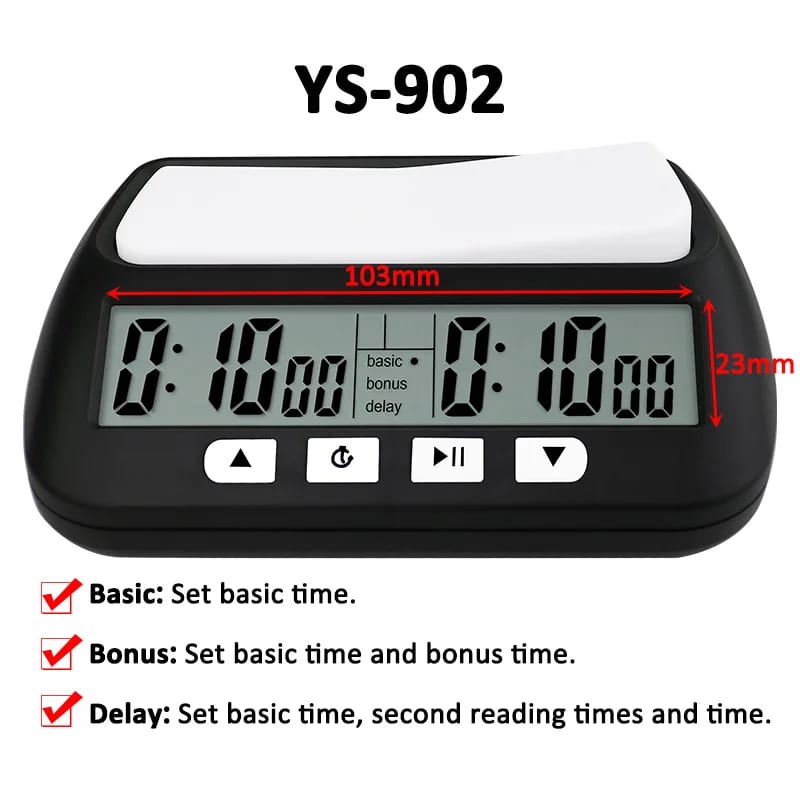
The rule goes with clock etiquette: you are expected to press the clock with the same hand that moved the piece. See chess clock rules.
Is there a touch move rule in casual chess?
Only if you agree to it. In friendly games most people allow take-backs and hovering. But if you hope to play in a club or tournament, playing touch move at home builds the right habit: decide, then touch.
Why does the touch move rule exist?
- It stops indecision — no hovering a piece over every square to see the opponent's face.
- It prevents disputes about whether a move was made.
- It keeps the game fair. Picking up a piece and putting it back can be used to unsettle an opponent or test their reaction.
In short, it makes a move a commitment, which is what turns chess at a table into a real contest.
Frequently asked questions
What is the touch move rule in chess?
If you deliberately touch one of your pieces you must move it, and if you deliberately touch an opponent's piece you must capture it, provided there is a legal way to do so.
What if the touched piece cannot move?
There is no penalty. If the touched piece has no legal move, you may make any other legal move.
How do you adjust a piece without moving it?
Say "I adjust" or "j'adoube" before touching it. You can only do this on your own turn.
Does touch move apply in casual games?
Only if both players agree. It is enforced in clubs and tournaments, where the opponent must claim it.