Tarot Spreads for Beginners: One, Three and Ten Cards
Nov 7, 2026 · The Editors
Easy tarot spreads for beginners: the one-card daily draw, three-card spreads for past–present–future and decisions, a five-card cross, and the Celtic Cross position by position.
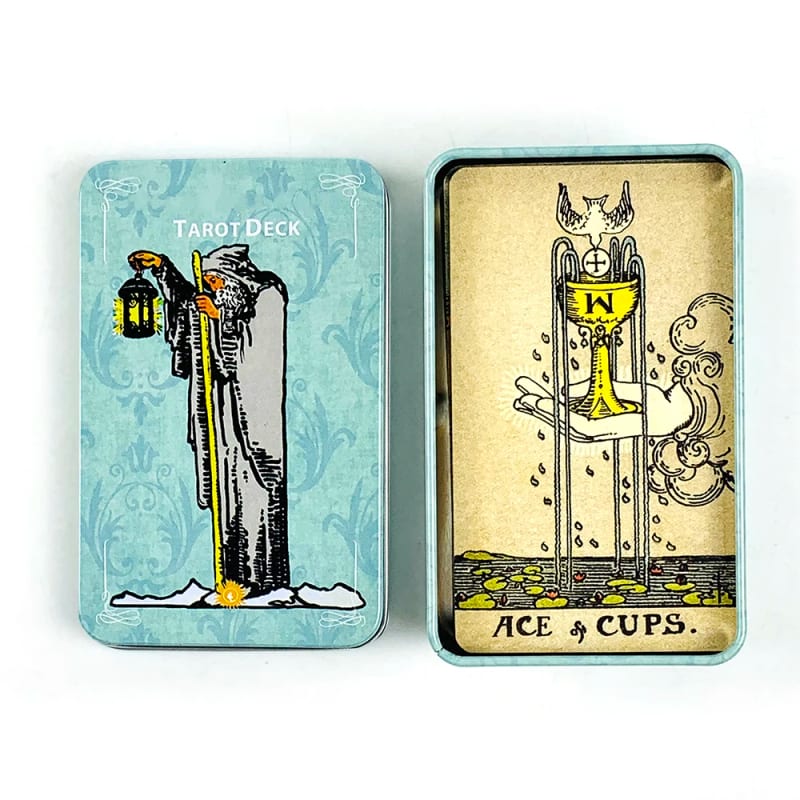
A spread is the layout of cards in a tarot reading. Each position has a meaning, so the same card can say something different depending on where it falls. Start with one card, move to three, and save the ten-card Celtic Cross for when the cards feel familiar.
Before you start
- Shuffle while you think about your question. How to shuffle tarot cards.
- Ask an open question. "What should I focus on at work?" gives a better reading than "Will I get the job?"
- Lay the cards face down, then turn them over one at a time.
- Decide about reversals — upside-down cards — before you start. Many beginners read every card upright for the first few months.
One-card spread: the daily draw
Draw one card each morning and ask: what do I need to notice today? Note it down. In the evening, look at the card again.
This is the best way to learn the 78 cards: one at a time, in the context of a real day.
Three-card spreads
The most useful spread there is. Lay three cards left to right. The same three positions can mean many things:
| Spread | Card 1 | Card 2 | Card 3 |
|---|---|---|---|
| Time | Past | Present | Future |
| Situation | Situation | Action to take | Likely outcome |
| Decision | Option A | Option B | What to consider |
| Self | Mind | Body | Spirit |
| Relationship | You | The other person | The relationship |
Read each card in its position, then read them together as a story.
Five-card cross
- Centre: the present situation.
- Left: the past, or what is behind it.
- Right: the near future.
- Above: what you are aiming for.
- Below: what is underneath — hidden influences.
The Celtic Cross
The classic ten-card spread, described by A. E. Waite in 1910 with the deck most people use today. The cross on the left holds six cards; the staff on the right, four.
- The present — the heart of the matter.
- The challenge — laid across card 1: what crosses you.
- Above — what crowns you: the best you can hope for, or your conscious goal.
- Below — the foundation: the roots of the situation.
- Behind — the recent past, passing away.
- Before — the near future.
- Yourself — your attitude and position. (Bottom of the staff.)
- Your environment — other people, outside influences.
- Hopes and fears.
- The outcome — where things are heading. (Top of the staff.)
Different books number positions 3 to 6 in slightly different orders. Choose one version and stick to it.
Reading tips for beginners
- Look at the picture first. What is happening on the card? What does it make you feel? The Rider–Waite–Smith images were drawn to be read.
- Notice patterns. Lots of Major Arcana cards: big forces at work. Lots of one suit: cups for feelings, swords for conflict and thought, wands for energy and work, pentacles for money and the body.
- Write readings down, and look back in a month.
For the meaning of every card, see tarot card meanings.