Maze Board Game with Walls: How to Play the Race-and-Block Game
Nov 15, 2026 · The Editors
How to play the wooden maze board game with walls: race your pawn to the far side, drop walls to lengthen your opponent's path, the rule you can never break, and tips for 2 and 4 players.
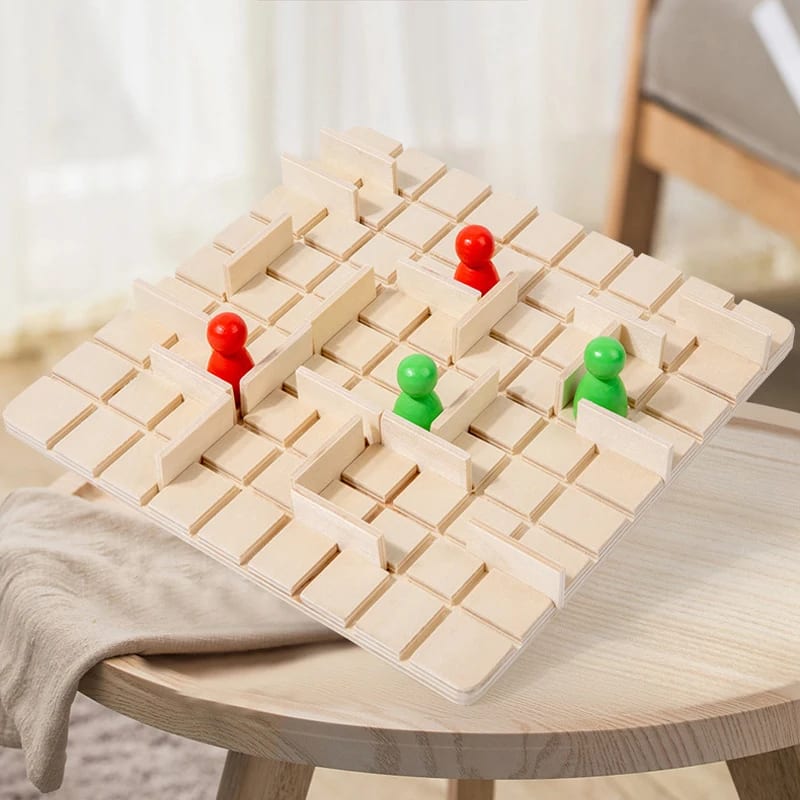
In the maze board game with walls, each player races a pawn to the opposite side of the board; on each turn you either move your pawn one square or place a wall to lengthen someone else's route. The one rule you can never break: a wall may not cut a player off completely — there must always be a path to their goal.
It is a strategy game that teaches in a minute, and the board becomes a maze that the players build as they go. House rules and editions vary slightly, so check the sheet in your box; the rules below are the common ones.
What you need
- A square grid board, usually 9 by 9 squares, with grooves between squares for walls.
- One pawn per player.
- Walls, each two squares long. In the common version, two players have ten walls each; with four players, five each.
Setting up
Each pawn starts in the middle square of its own edge. With two players, you face each other; with four, each takes a side. Your goal is to reach any square on the opposite edge.
How to play
On your turn, do one of these:
- Move your pawn one square up, down, left or right — not diagonally — as long as no wall blocks the way.
- Place a wall in the grooves between squares. A wall covers two squares' length and blocks movement across it. Once placed, walls stay put.
When your walls run out, you can only move.
Jumping
If your pawn is next to another pawn, you may jump over it onto the square beyond. If a wall or the board edge is behind that pawn, you may instead step diagonally to either side of it (where no wall is in the way). Pawns are never captured.
The rule you can never break
You may not place a wall that leaves any player with no route to their goal. You can make their route very long, but never impossible. If a wall would seal someone in, it is illegal — take it back and do something else.
Winning
The first player to reach any square on their goal edge wins.
Strategy tips
- Do not spend walls early. A wall placed too soon is easy to walk round. The middle of the game, when paths are set, is when walls hurt.
- Count paths. Before you move, count your shortest route and your opponent's. If yours is shorter, just run.
- Make long detours, not short blocks. The best walls force a long trip round, ideally in combination with walls already down.
- Keep two walls back. Running out means you cannot respond to a late block.
- Watch for your own walls. It is easy to block yourself.
With 2 players vs 4 players
Two players is a pure duel: every wall is aimed at one opponent, and counting paths decides most games. Four players is more chaotic — fewer walls each, and it pays to let others block the leader. Agree whether walls may be placed to help a player, which some groups allow.
Why it works
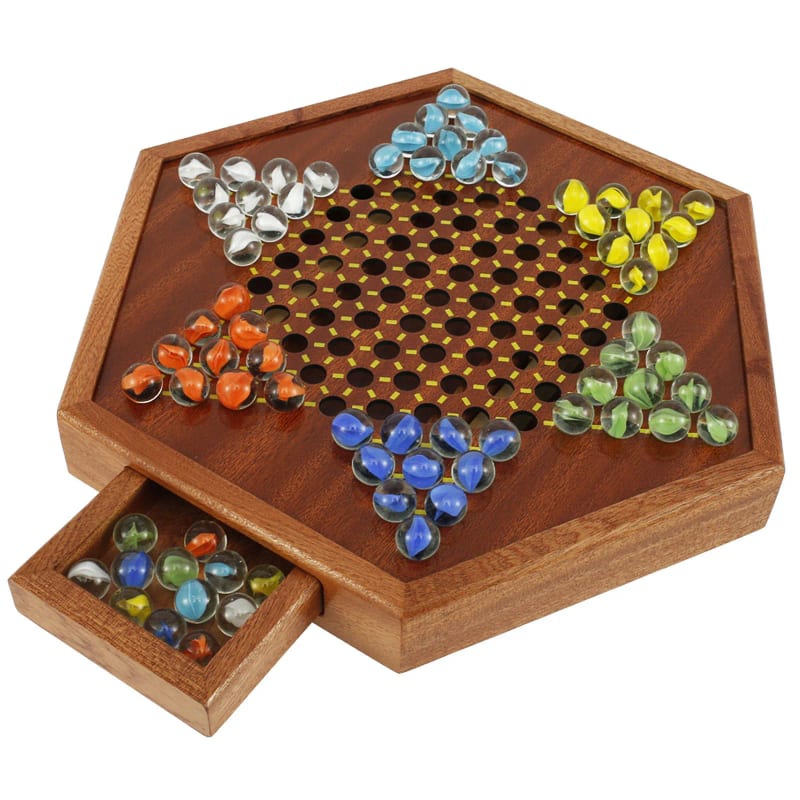
It combines a race with a building puzzle: you are solving the maze and making it at the same time. If you enjoy it, try Chinese checkers, another race to the far side, or go, where walls of stones decide territory.
Our wooden maze strategy game is solid wood, for two to four players, and the walls slot into the board rather than balancing on it. For more two-player boards, see gifts for board game lovers.
Frequently asked questions
How do you play the board game with walls?
Each player races a pawn to the opposite edge. On your turn you either move one square or place a wall to block someone, but you may never cut a player off completely.
How many walls does each player get?
In the common version, ten each with two players and five each with four. Check the rules in your own box.
Can you jump over another pawn?
Yes, if it is next to you; if a wall or the edge is behind it, you may step diagonally around it instead.
Can you block someone completely?
No. Every player must always have at least one path to their goal; a wall that removes it is not allowed.