How Long Can a Spinning Top Spin? What Makes a Top Spin Longer
Nov 23, 2026 · The Editors
How long a spinning top can spin, and why: tip friction, air drag, weight and how it is spread, the surface, and how hard you spin it. Practical ways to make any top spin longer.
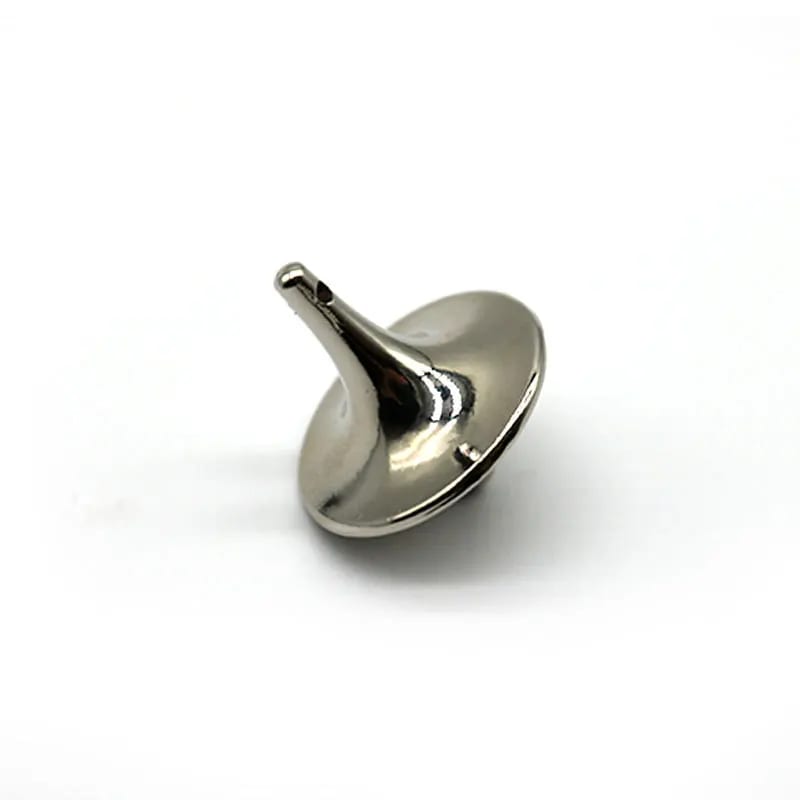
A spinning top keeps spinning until friction at its tip and air drag use up the energy you gave it. A cheap plastic top flicked by hand usually lasts well under a minute; a well-made metal desk top on a hard, smooth surface can run for several minutes. How long depends on four things: how fast you start it, how heavy it is and where the weight sits, how fine and hard its tip is, and the surface underneath.
What decides how long a top spins
| Factor | Longer spin | Shorter spin |
|---|---|---|
| starting speed | a hard, clean flick | a weak or sideways flick |
| weight and its spread | heavy, with mass toward the rim | light, or mass near the axis |
| tip | fine, hard, polished point | blunt, soft or chipped point |
| surface | glass, mirror, glazed ceramic | wood, cloth, textured table |
| air | still air, compact shape | a fan or a draughty room |
Why weight and shape matter
A spinning top stores energy in its rotation. For the same spin speed, a top with more mass, and with that mass farther from the axis, stores more of it. Physicists call this the moment of inertia. So a heavy metal top with a wide body has a bigger store of energy to spend than a light plastic one, and the same friction takes longer to drain it.
Weight low down helps in a different way: it keeps the top steady and upright, which keeps the tip small on the table and the friction low. The precision metal spinning top is built on that principle, with the weight low and the point fine.
Why the tip and the surface matter most
The tip is where almost all the friction happens. A fine, hard point touches the table over a tiny area and loses little energy each turn. A blunt or rough tip drags. The surface matters just as much: a hard, smooth surface such as a glass table, a mirror or a glazed plate lets the point turn with very little resistance, while wood grain or a tablecloth slows it quickly.
Why a top wobbles before it falls
As a top slows, it starts to lean and circle, a motion called precession. While it spins fast, the spin keeps it upright against gravity; as the spin drops, gravity wins a little more each second, the lean grows, the rim touches the table, and it falls. The full physics is in how does a spinning top work.
How to make a top spin longer
- Spin on glass or a mirror. The single biggest improvement for most tops.
- Spin it upright. Start it as close to vertical as you can; a tilted start wastes energy in wobble.
- Flick harder and cleaner. Practise the twist; see how to spin a spinning top.
- Keep the tip clean. Wipe away dust; never spin a precision top on sandpaper-rough surfaces that can blunt it.
- Still the air. Turn off the fan.
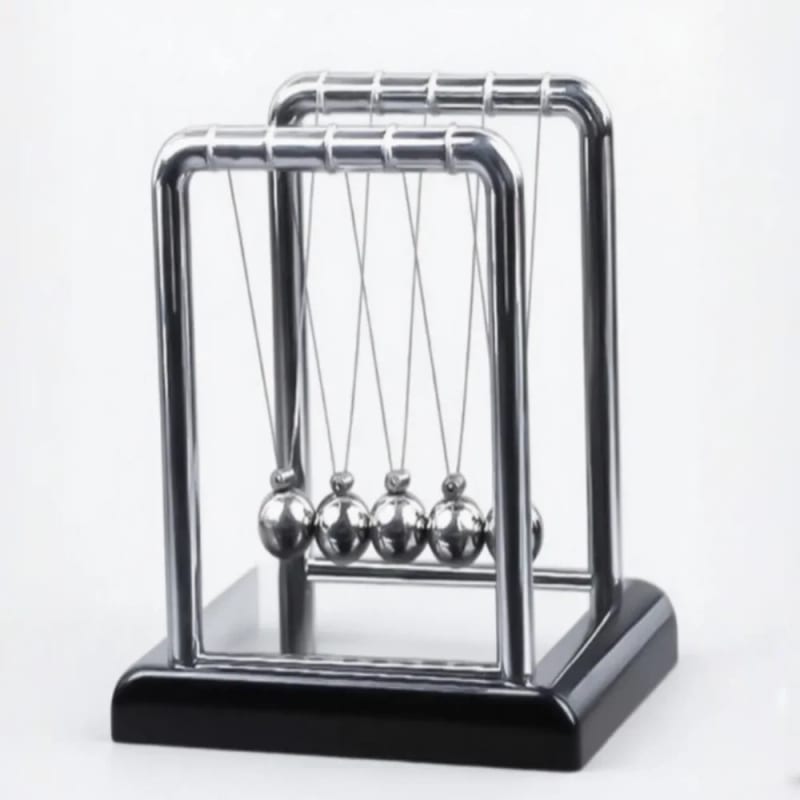
Timing spins is a good desk game in its own right: whoever keeps it going longest wins. If you like watching physics on the desk, a Newton's cradle and a chaos pendulum make good companions; see desk toys for adults.
Frequently asked questions
How long does a spinning top spin?
A cheap plastic top flicked by hand usually spins for under a minute. A good metal desk top on a smooth, hard surface can run for several minutes.
Why does a spinning top eventually stop?
Friction at the tip and air drag slowly take away the energy of the spin. As it slows, it wobbles, leans and finally falls.
What surface is best for a spinning top?
A hard, smooth surface such as glass, a mirror or a glazed ceramic plate. Soft or textured surfaces add friction and shorten the spin.
Do heavier tops spin longer?
Usually, yes, especially if the extra weight is toward the rim, because they store more energy at the same speed.
Mentioned above