How Does a Spinning Top Work? The Physics of Spin
Nov 12, 2026 · The Editors
How a spinning top works: angular momentum, why a spinning top stays up when a still one falls, precession and wobble, why it finally topples, push-down tops, 'forever' tops and the top in the film Inception.
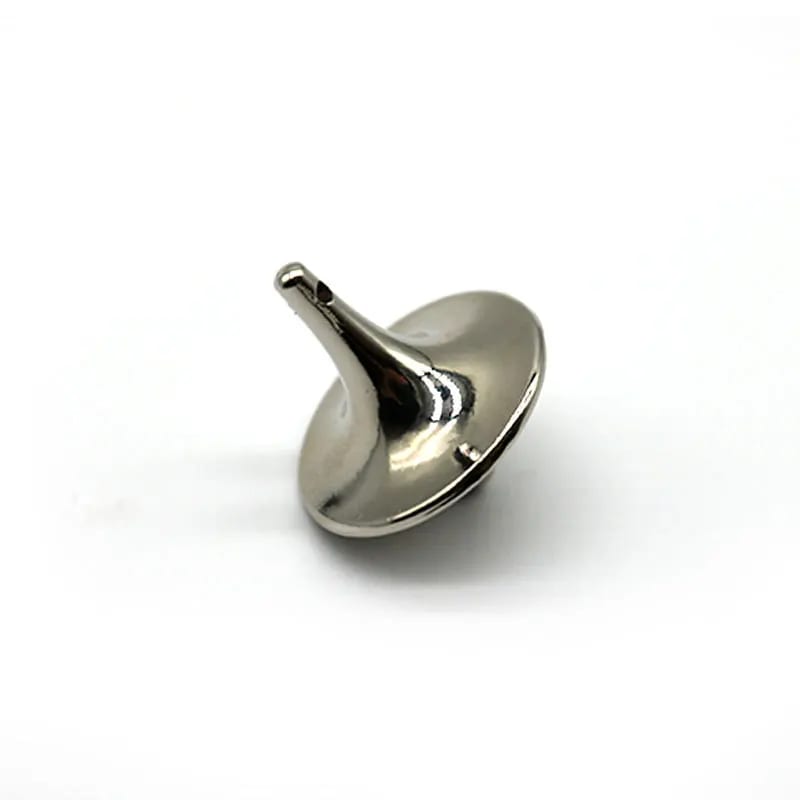
A spinning top stays up because of angular momentum. A fast-spinning object resists any change to the direction of its spin axis, so when gravity tries to tip it over, the top does not fall — instead its axis slowly circles, a motion called precession. Friction gradually slows the spin, the wobble grows, and eventually the top falls.
Why a spinning top doesn't fall over
Stand a top on its point without spinning and it falls immediately: its weight is above a tiny point of support, and gravity pulls it over.
Spin it fast and something different happens. A spinning body carries angular momentum along its axis, and changing the direction of that axis takes a sustained twisting force. Gravity provides a twist, but instead of tipping the top over, the twist turns the axis sideways, a little at a time. The result is that the top leans slightly and its axis traces a slow circle around the vertical. That circling is precession, and the faster the top spins, the slower it precesses.
A gyroscope works the same way, which is why gyroscopes are used to hold direction in navigation instruments.
Why it wobbles at the end
A top loses spin to two kinds of friction:
- At the point, where it rubs against the table.
- In the air, which drags on its surface.
As the spin slows, the precession speeds up, the lean grows, and a nodding wobble called nutation appears. When the spin is too slow to keep the axis steady, the rim touches the table and the top falls.
What makes a top spin longer
| Design choice | Why it helps |
|---|---|
| Weight concentrated low and wide | More angular momentum for the same spin; lower centre of gravity |
| Fine, hard point | Less friction at the contact |
| Smooth, hard surface underneath | Less friction and no digging in |
| Exact balance around the axis | No wobble from the start |
| A strong, clean flick | More starting spin |
Machined metal tops are made for exactly this: heavy, balanced and with a fine tip, which is why a good one keeps going far longer than a wooden toy. For technique, see how to spin a spinning top.
How does a push-down spinning top work?
A push-down top has a spiral rod through its middle. Pushing the handle down drives the spiral through a nut attached to the inner flywheel, which converts the straight push into fast spin — the same idea as an old-fashioned spiral screwdriver. Pumping it several times builds up speed.
How do "forever" spinning tops work?
Tops that keep spinning for hours do not beat friction. They sit on a powered base: an electromagnet underneath gives a tiny push each turn, replacing the energy lost to friction. Without the base, they slow down like any other top.
The spinning top in Inception
In the 2010 film Inception, the main character uses a small metal top as a totem: in the real world it eventually falls, while in a dream it would spin forever. The film ends with the top still spinning and a hint of a wobble, and audiences still argue about it. Physics agrees with the film's rule for the waking world: friction always wins.
A top for the desk
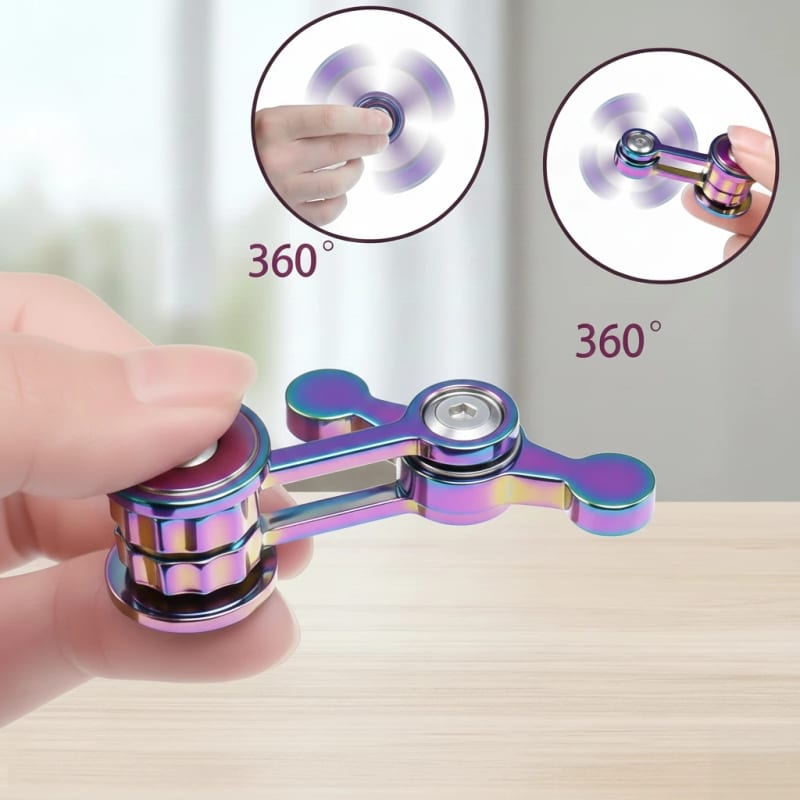
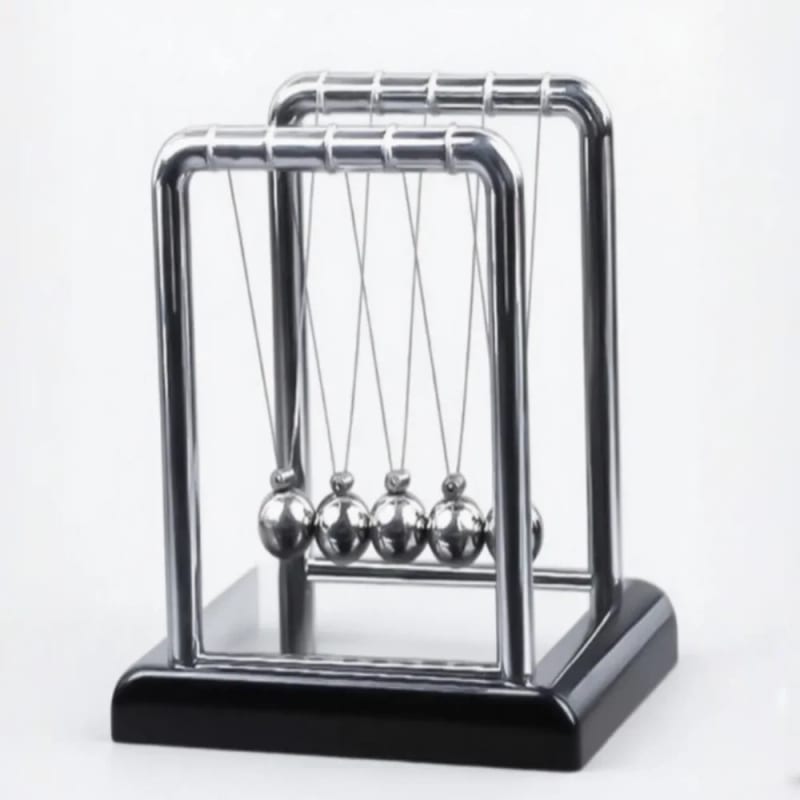
Our precision metal spinning top is made for the desk: weight low, point fine, and long spins from a flick of the fingers. It belongs with the other physics desk toys, the chaos pendulum spinner (see double pendulum) and the Newton's cradle. For more ideas, see executive desk toys.
Frequently asked questions
Why does a spinning top not fall over?
Its angular momentum resists changes to the direction of its axis, so gravity makes the axis circle slowly (precess) instead of tipping it over.
Why does a spinning top eventually stop?
Friction at the point and air resistance slow the spin. As it slows, the wobble grows until the rim touches down and it falls.
What makes a top spin longer?
Weight concentrated low and wide, a fine hard point, exact balance and a smooth hard surface underneath.
How does a push-down spinning top work?
A spiral rod through the middle turns the downward push into spin, much like a spiral screwdriver.
Mentioned above