Go Stones: How Many, What Size, and Slate, Shell, Yunzi or Glass
Nov 23, 2026 · The Editors
Everything about go stones: how many are in a set, standard sizes and why black stones are a touch larger, the main materials from slate and shell to yunzi and glass, and how to care for them.
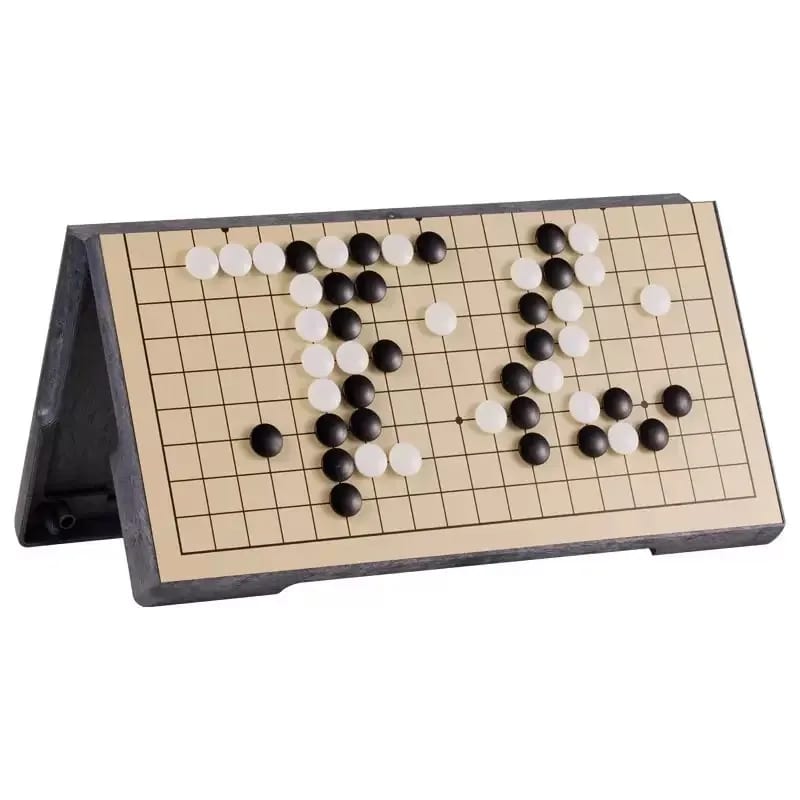
A full set of go stones has 181 black and 180 white, enough to cover all 361 points of a 19×19 board. Stones are usually about 22 mm across, and in traditional Japanese sets the black stones are made very slightly larger than the white, because white stones look bigger to the eye. They are made from slate and shell, a Chinese sintered stone called yunzi, glass or plastic.
How many stones are in a go set?
| Set | Black | White | Notes |
|---|---|---|---|
| Full traditional set | 181 | 180 | covers every point of a 19×19 board |
| Common practical set | about 180 | about 180 | more than any real game needs |
| Small-board sets | fewer | fewer | for 9×9 or 13×13 boards |
Black has one extra because black plays first. In practice, a game rarely uses more than half the stones; captured stones go in the capturing player's lid and are counted at the end in some scoring methods. See go game rules for beginners.
Go stone size
Most stones are around 22 mm in diameter. Thickness varies a lot, from thin glass and plastic stones to thick premium shell stones, and thicker stones are prized for their weight and sound.
Japanese makers have long made black stones slightly larger than white, by a fraction of a millimetre. White looks larger against the board, so the difference makes the two colours look the same size. Chinese yunzi stones are usually flat on one side and domed on the other, while Japanese stones are domed on both sides.
Go stones materials
| Material | Where from | Feel |
|---|---|---|
| Slate and shell | Japan | black slate and white clamshell; the traditional premium set |
| Yunzi | Yunnan, China | sintered stone; matte, with a soft, slightly heavy feel |
| Glass | everywhere | smooth and bright; good value |
| Plastic or melamine | everywhere | light and durable; good for beginners |
Slate and shell. The classic Japanese set pairs black stones cut from slate with white stones cut from clamshell, which shows fine growth lines. Shell stones are graded by thickness and the closeness of their lines.
Yunzi. A stone made in Yunnan province by a traditional sintering process. Yunzi whites often have a faint green or yellow tint, and the blacks look green when held to the light.
Glass. Cheaper, consistent and pleasant to play with, which is why many good beginner sets use it.
Bowls and board
Stones live in two bowls, one per colour, with lids that hold captured stones. A board for full games is 19×19; beginners often start on 9×9 or 13×13. See go board sizes. Our go set with a folding board comes with black and white stones and bowls, so it is ready to play out of the box.
Caring for go stones
- Shell stones can crack if dropped on a hard floor, and dislike long soaking.
- Wipe stones with a soft, dry cloth to remove skin oils; some players give slate stones a very light oil now and then for sheen.
- Keep them out of direct sun for long periods, which can fade some finishes.
Frequently asked questions
How many stones are in a go set?
A full set has 181 black stones and 180 white stones, enough for every point on a 19×19 board.
Why are black go stones bigger than white?
In traditional Japanese sets black is made very slightly larger, because white stones look bigger to the eye. The difference makes them appear the same size.
What are the best go stones?
Slate and shell stones are the traditional premium choice, and yunzi are prized in China. Glass stones are the best value for most players.
What size are go stones?
Usually about 22 mm across, with thickness varying by material and grade.
Mentioned above