Five of Swords Meaning: Upright, Reversed, Love and Yes or No
Nov 23, 2026 · The Editors
The Five of Swords is the card of conflict and the hollow victory: winning at a cost. Its meaning upright and reversed, in love and career, as feelings, and as a yes or no answer.
The Five of Swords means conflict, defeat and the hollow victory: winning an argument but losing something more important in the process. Upright, it warns that someone is fighting dirty, or that a win is not worth its price. Reversed, it points to reconciliation, or to a resentment that will not let go. As a yes or no card it usually means no.
What the Five of Swords shows
In the 1909 Rider–Waite–Smith artwork:
- A man in the foreground gathers up swords: three in his hands, two more lying on the ground. He looks over his shoulder with a faint smile.
- Two figures walk away towards the water, heads down; one seems to be covering his face.
- The sky is broken by jagged clouds, as if a storm has just passed.
The swords on the ground belong to the men walking away. Whether the man with the swords won fairly is not shown, and that ambiguity is the point of the card: he holds the prize, but nobody is left to share it with.
Five of Swords upright meaning
- Conflict. An argument, rivalry or open hostility.
- A hollow victory. Winning, and losing goodwill or friendship along the way.
- Self-interest. Someone putting their own win above everyone else.
- Dishonour. Cutting corners, or being on the receiving end of it.
- Defeat. For the figures walking away, this is a loss to accept.
The question the card asks is: is this worth winning? Sometimes the wise move is to walk away, like the two figures, before the fight costs more.
Five of Swords reversed meaning
Reversed, the battle is over and the aftermath begins:
- Reconciliation. A wish to make peace and put the conflict behind you.
- Regret. Realising a win came at too high a cost.
- Lingering resentment. In a harder reading, a grudge that keeps the conflict alive.
Five of Swords in love and as feelings
In love, the Five of Swords upright points to arguments where someone has to win: point-scoring, old grievances dragged out, or one partner always getting their way. It can also warn of dishonesty. The healthy move is to stop keeping score.
As feelings, it can mean someone feels defeated or humiliated after a fight, or, from the other side, feels they won and does not yet see the damage.
Reversed in love: a wish to apologise and start again, or a couple finally ready to drop an old argument.
Five of Swords in career
At work, it warns of office politics, competition that turns nasty, or a colleague who takes credit. It can also be advice: do not win the meeting and lose the team. Reversed, it suggests clearing the air after a dispute.
Five of Swords yes or no
| Position | Answer |
|---|---|
| upright | no, or a yes that costs more than it is worth |
| reversed | leaning yes, if it means making peace |
Astrology
In the Golden Dawn system, the Five of Swords is Venus in Aquarius, titled "Lord of Defeat". Venus wants harmony; in the detached air sign of Aquarius, it struggles to find it.
Questions to ask when you draw it
- Which fight am I in that I do not actually need to win?
- Have I treated anyone unfairly to get what I wanted?
- What would walking away cost me, and what would it save?
The swords around it
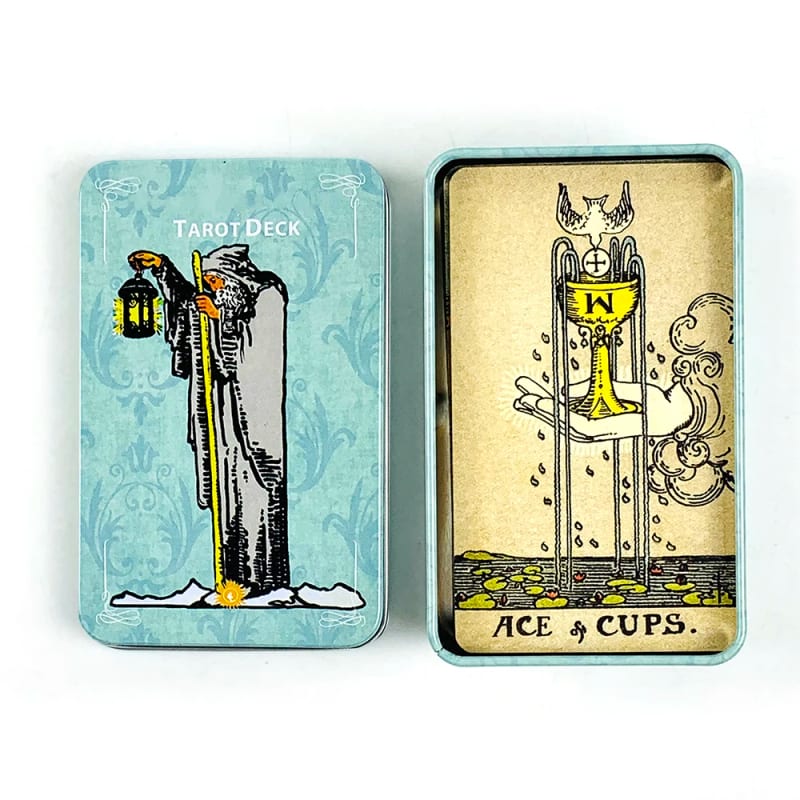
Before it, the Four of Swords is rest; after it, the Six of Swords is the journey to calmer water. For all 78 cards, see tarot card meanings. Our tarot cards in a gilded tin carry the original 1909 artwork, jagged clouds and all.
Frequently asked questions
What does the Five of Swords mean?
Conflict and the hollow victory: winning an argument or a contest at the cost of goodwill, honesty or friendship.
What does the Five of Swords mean reversed?
Reconciliation and regret, a wish to make peace after a fight, or in a harder reading, resentment that keeps the conflict going.
What does the Five of Swords mean in love?
Arguments where someone needs to win, point-scoring, or dishonesty. Reversed, a wish to apologise and start again.
Is the Five of Swords a yes or no card?
Upright, it is usually a no, or a yes that costs more than it is worth. Reversed, it leans towards yes if the goal is peace.