Why Is My Compass Pointing the Wrong Way? Declination and Other Causes
Nov 23, 2026 · The Editors
Why a magnetic compass points the wrong way: magnetic declination, metal and electronics nearby, a reversed needle, or holding it tilted. How to check and fix each.
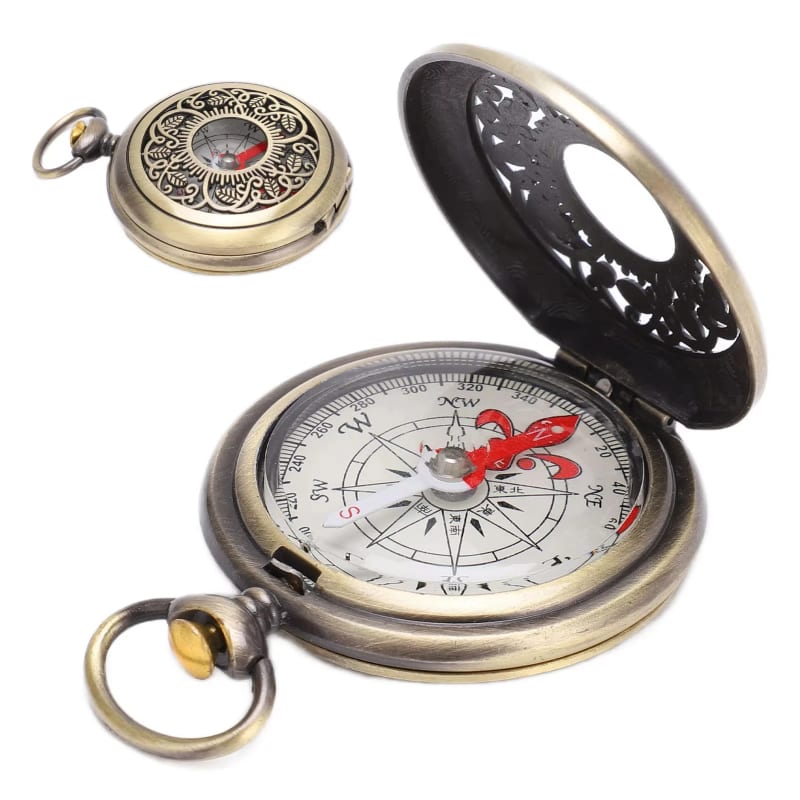
A compass usually "points the wrong way" for one of four reasons: magnetic declination (magnetic north is not true north), metal or electronics nearby, a reversed needle after it was stored near a strong magnet, or holding it tilted so the needle drags. The first is normal and expected; the others can be checked in a minute.
1. Magnetic declination: north is not quite north
A compass points to magnetic north, not to the geographic North Pole. The angle between the two is called magnetic declination, and it depends on where you are.
| Where you are | What you see |
|---|---|
| On the line of zero declination | Compass north and true north agree |
| East of that line | Compass points west of true north |
| West of that line | Compass points east of true north |
In parts of the United States and Europe the difference is small; in others it is around 15 degrees or more, enough to miss a landmark by a long way over a few miles. Declination also changes slowly over the years, so old maps can be out of date. Government geomagnetic services publish free declination calculators where you enter your location.
How to correct for it: look up your local declination, then add or subtract it when you turn a compass bearing into a map bearing. Many hiking maps print the declination in the margin. More in how to use a compass.
2. Metal, magnets and electronics nearby
A compass needle is a small magnet, and anything magnetic close by pulls it off. Common culprits:
- Phones, speakers and laptops, which contain magnets.
- Steel: a car, a metal table, a belt buckle, keys, a knife.
- Power lines and reinforced concrete.
Step away from the car, put the phone in a pocket on the other side, and check again. If the needle swings as you move, metal was the cause.
3. A reversed needle
If your compass points south instead of north, the needle may have been re-magnetised the wrong way, usually by being stored next to a strong magnet. Check it against a known direction, such as the sun at midday or the Pole Star at night. A reversed needle can sometimes be corrected by stroking it with a magnet in the right direction, but a reliable compass for real navigation is worth replacing.
4. Holding it tilted, or the needle sticking
A compass needle must swing freely. If you hold the compass at an angle, the needle can rub on the face or the case and stop short.
- Hold it flat, level in your palm, at waist height.
- Wait a few seconds for the needle to settle.
- Tap it gently if the needle seems stuck.
Compasses are also balanced for the region they are sold in, because the Earth's field dips at different angles in each hemisphere. A compass taken far south can drag. See does a compass work in the southern hemisphere.
What about a phone compass pointing the wrong way?
Phone compasses use an electronic magnetometer and suffer from the same causes: metal cases, magnetic mounts and nearby electronics. Most phones ask you to recalibrate by moving the phone in a figure-of-eight. Phones can also be set to show true north or magnetic north, which is declination again.
A compass worth keeping
For how the needle works in the first place, see how does a compass work. Our pocket compass has an antique bronze finish and a hinged cover, closing like an old watch. Keep it away from phones and magnets in your pocket and it will point true.
Frequently asked questions
Why is my compass pointing the wrong way?
Usually magnetic declination, metal or electronics nearby, a needle reversed by a strong magnet, or holding it tilted.
Does a compass point to true north?
No. It points to magnetic north. The difference, called magnetic declination, depends on where you are.
Why does my compass point south?
The needle may have been reversed by a strong magnet. Check it against the sun or the Pole Star.
Can a phone affect a compass?
Yes. Phones contain magnets and electronics that pull the needle. Keep the phone away while you take a reading.