Chess960 Rules: Setup, Castling and How to Play Fischer Random
Nov 23, 2026 · The Editors
Chess960 rules explained: how the 960 starting positions are made, how to set one up with a die, how castling works, and why players love Fischer Random chess.
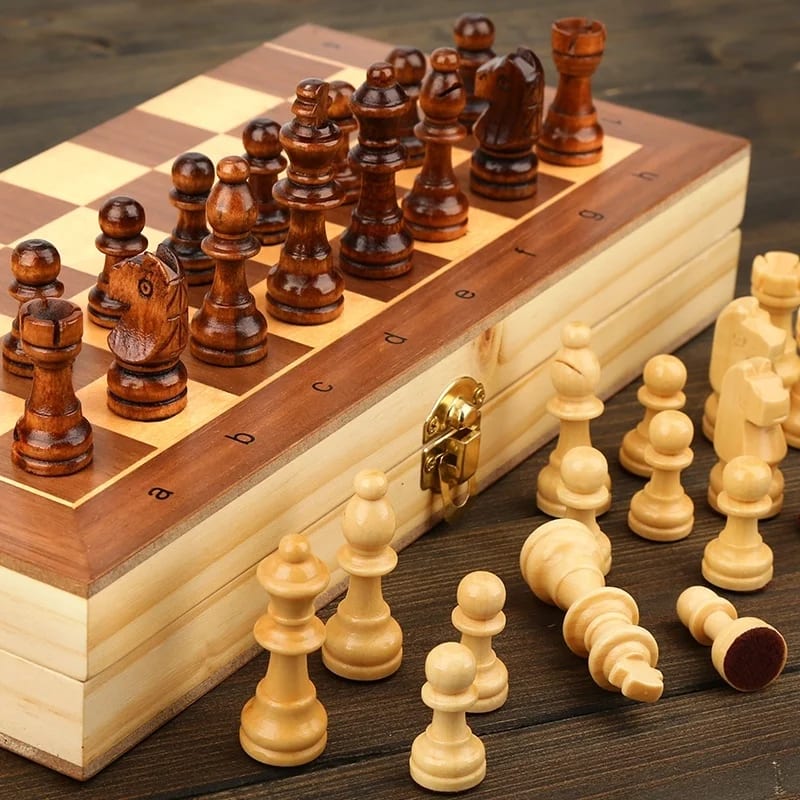
Chess960, also called Fischer Random chess, is ordinary chess with the pieces on the back rank shuffled before the game. The pawns stay where they are, the bishops must stand on opposite colours, the king must sit somewhere between the two rooks, and Black mirrors White exactly. Every other rule is normal chess, except castling, which is adapted.
Why it exists
Chess960 was proposed by the former world champion Bobby Fischer in 1996. His aim was to take opening memorisation out of the game: with the pieces in an unfamiliar position, players have to think from the first move. The name comes from the number of legal starting positions: 960.
FIDE, the world chess federation, includes Chess960 in its Laws of Chess and has held official world championships in the format.
The setup rules
- Pawns go on their usual squares.
- White's back-rank pieces are placed in a random order.
- The two bishops must be on opposite-coloured squares.
- The king must be somewhere between the two rooks.
- Black's pieces mirror White's exactly, file for file.
The standard chess position is one of the 960; in the usual numbering it is position 518.
How to set up a Chess960 position with a die
You can generate a fair position with one ordinary six-sided die. Number the back-rank squares from left to right as you go.
- Light-squared bishop. There are four light squares on the back rank. Roll until you get 1 to 4, and place the bishop on that light square.
- Dark-squared bishop. Do the same for the four dark squares.
- Queen. Six squares remain. Roll and place the queen on that empty square.
- Knights. Five squares remain. Roll to place the first knight (reroll a 6), then roll for the second among the four remaining squares (reroll 5 or 6).
- Rooks and king. Three squares remain. Place rook, king, rook in that order, left to right. This guarantees the king is between the rooks.
That gives 4 × 4 × 6 × 10 = 960 positions. Copy the arrangement onto Black's side.
Chess960 castling rules
Castling is the rule people find confusing. The key idea: after castling, the king and rook end up on the same squares as in normal chess.
| Castling | King ends on | Rook ends on |
|---|---|---|
| Kingside (h-side), "O-O" | g1 (g8 for Black) | f1 (f8) |
| Queenside (a-side), "O-O-O" | c1 (c8 for Black) | d1 (d8) |
Conditions, as in normal chess:
- Neither the king nor that rook has moved.
- The king is not in check, and does not pass through or land on an attacked square.
- All squares between the king's start and finish, and the rook's start and finish, must be empty, apart from the king and the castling rook themselves.
In some positions the king or rook does not move at all when castling, or barely moves. To avoid confusion, it is good practice to say "castling" before you do it, and many players move the king first off the board, then the rook, then place the king.
Tips for your first games
- Look for undefended pawns. In some positions a pawn starts unprotected, and quick attacks are possible.
- Develop quickly and safely, as in normal chess: knights and bishops out, king to safety.
- Check the bishops' long diagonals. A bishop in a corner can be very strong.
If you are new to chess itself, start with our chess rules for beginners and how to set up a chess board. For standard castling, see castling rules.
What you need
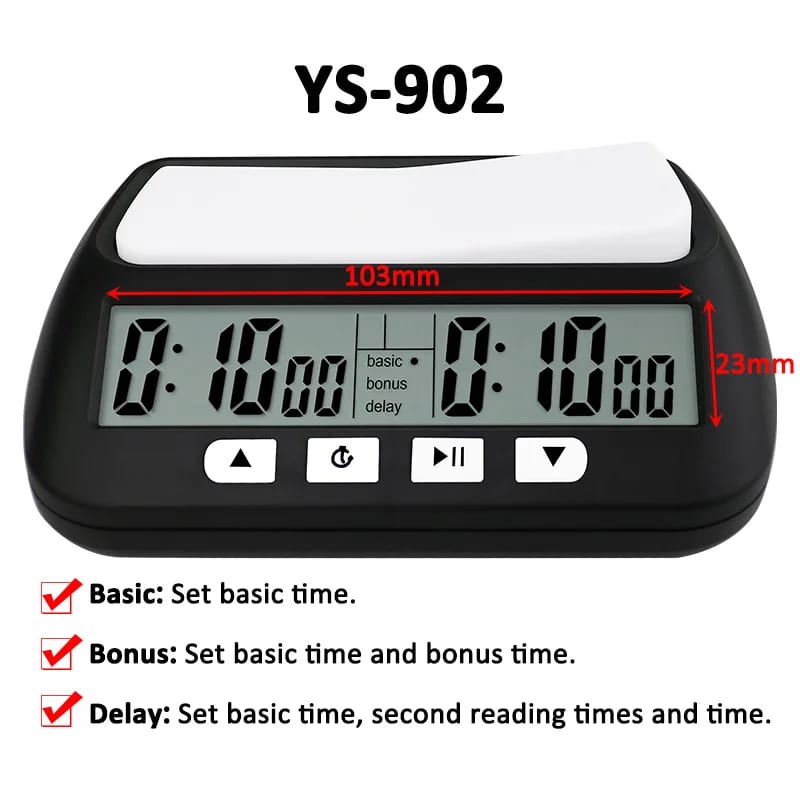
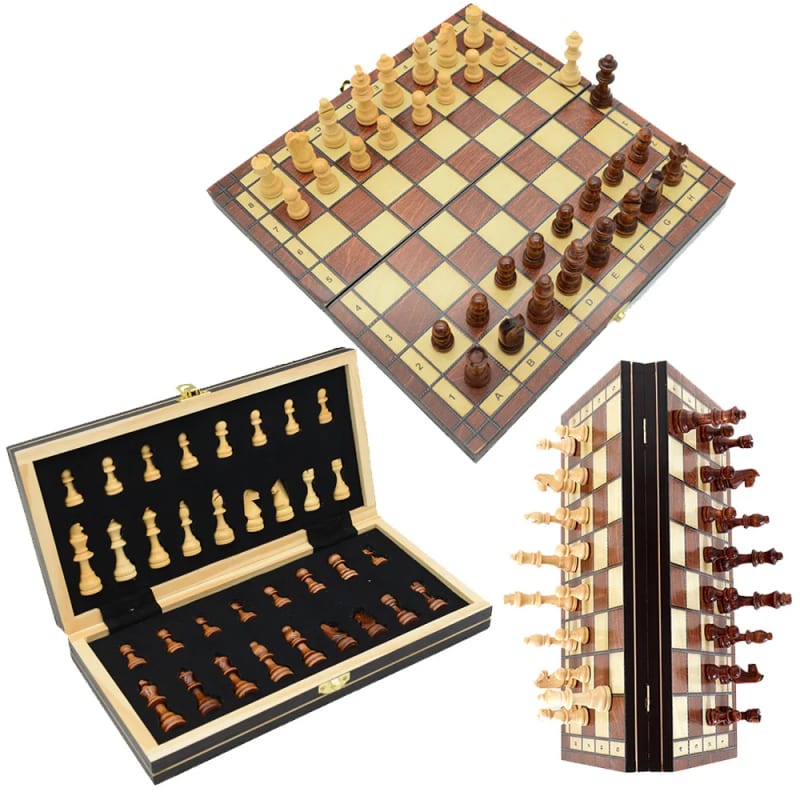
Any chess set works. A magnetic folding chess set keeps the shuffled position in place on the move, and a digital chess clock suits timed games; see chess clock rules.
Frequently asked questions
What are the rules of Chess960?
Normal chess rules, with the back-rank pieces shuffled: bishops on opposite colours, the king between the rooks, and Black mirroring White. Castling is adapted.
How does castling work in Chess960?
After castling, the king and rook end on the same squares as in normal chess: king on g1 and rook on f1 for kingside, king on c1 and rook on d1 for queenside. The squares between must be empty and the king may not be in or pass through check.
Why is it called Chess960?
Because there are 960 legal starting positions under its rules.
Who invented Chess960?
Bobby Fischer, who proposed it in 1996 to reduce the importance of memorised openings.