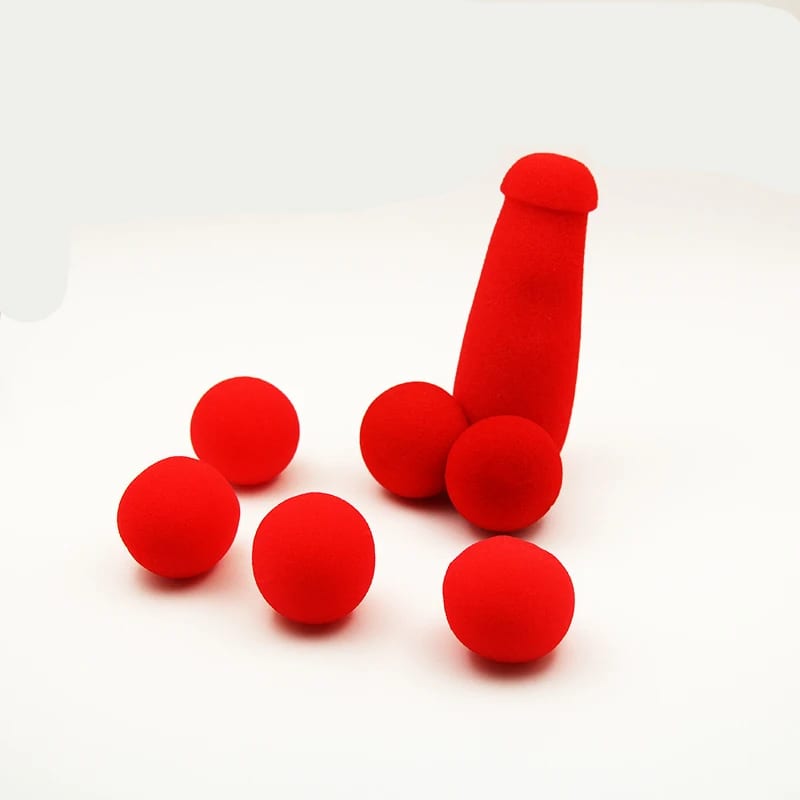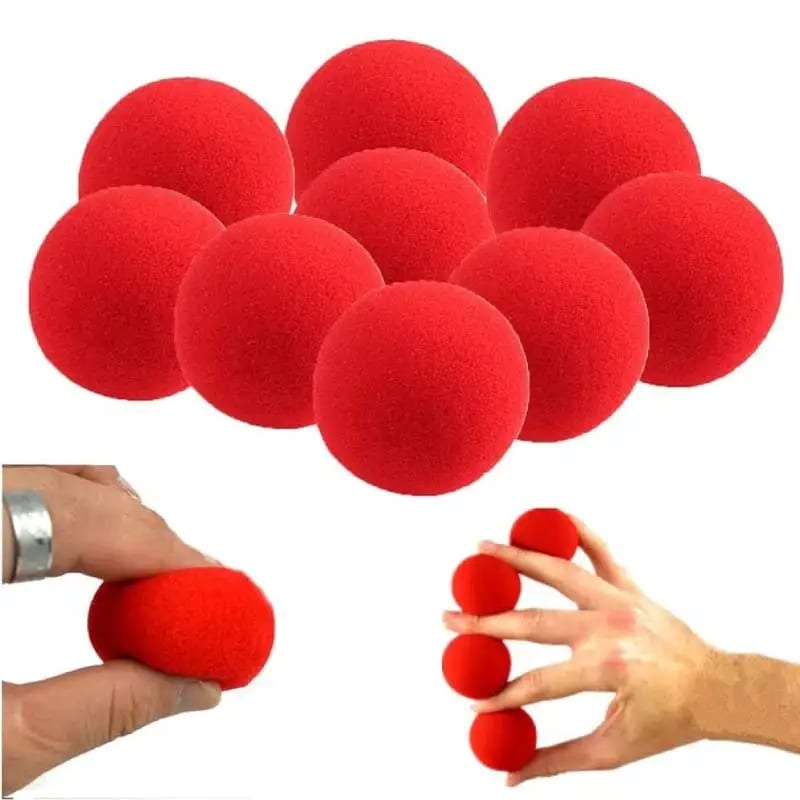
Sponge Balls — Red, Set of Ten
$19.99Beginner
A small red ball is placed in the spectator's own closed fist. When they open it there are two — the effect that happens in someone else's hand rather than yours.
What they see
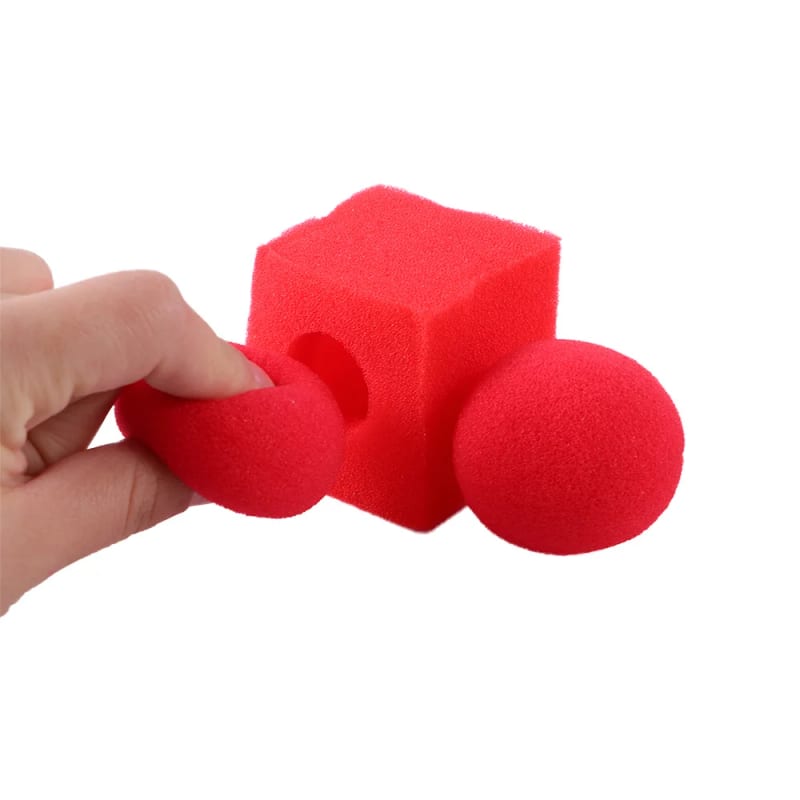
A ball of red foam is squeezed flat between finger and thumb and released, so everyone can see what it is and that it is nothing else. It is placed into a spectator's hand and they close their fist around it.
The performer picks up a second ball, holds it up, and it vanishes. The spectator opens their hand and there are two.
It builds from there. Two become four. Four become a ball too large to have fitted in the hand holding it. The whole routine happens in the spectator's own fist, which is why people remember it — they were not watching it happen, they were holding it.
Provenance
Modern sponge ball work is usually traced to Jesse Lane Russell in the 1920s, and it spread through the American close-up scene over the following two decades — Audley Walsh and Frank Garcia both built reputations on it.
The material is what made it possible. Compressible foam rubber meant a ball could be hidden in a way a solid one never could, and the trick arrived with the manufacturing rather than from a flash of invention. Earlier performers did the same plot with paper balls and cork, less convincingly.
It has been a staple of beginners' sets ever since, which has done nothing for its reputation among magicians and nothing at all to stop it working.
Learning it
Genuinely a beginner's effect, and one of the few that deserves the label.
The basic sequence is learnable in a weekend and plays immediately. The difficulty is entirely in the other person: you are putting props into a stranger's hand and asking them to close it, which means managing someone who may squeeze, peek, or open their fist at the wrong moment. That is a people problem, not a hands problem.
Performers who do this well have worked out what to say while the spectator's hand is closed. Performers who do it badly are silent and hoping. Start with two balls and add the rest when the first phase stops making you nervous.
What you need
Next
Appearance
One cup instead of three. A ball vanishes and returns under it repeatedly, and the finish is something that could never have fitted.
Appearance
A bouquet that was not there a second ago — spring flowers that fill a hand, or a bare stick that blooms along its length.
Appearance
Squares of fine silk produced from nowhere, vanished, knotted, coloured and changed — the material that makes stage production possible.