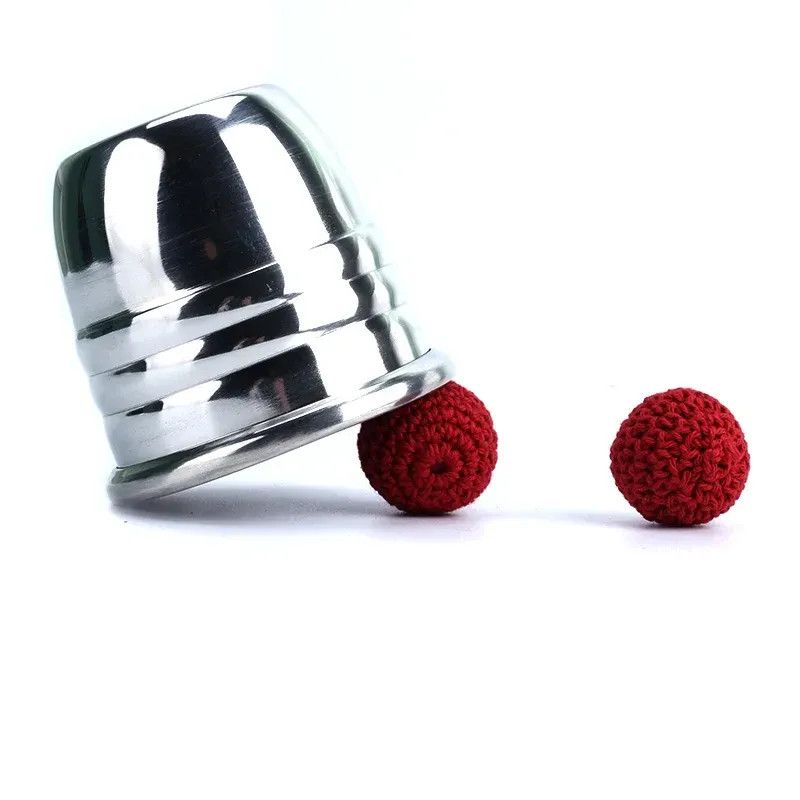
Aluminium Chop Cup
$26.99Intermediate
One cup instead of three. A ball vanishes and returns under it repeatedly, and the finish is something that could never have fitted.
What they see
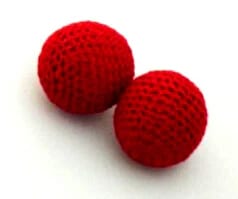
A single cup sits mouth-down. A small ball goes under it and is gone when the cup lifts. It is found in a pocket, placed on the table, covered again, and is back underneath.
The cup is shown empty, tipped, tapped on the table. The ball keeps arriving anyway.
The ending is the same promise the three-cup routine makes: the cup comes up on something far too large for it — a lemon, a ball of wool, an orange — and the small ball everyone has been following is suddenly irrelevant.
Provenance
Invented by Al Wheatley, who performed as Chop Chop, around the 1950s — one of the rare pieces of twentieth-century apparatus with a clear inventor and a date.
It was designed as a solution to a practical problem: the full cups and balls needs table space, a mat, and both hands. One cup can be worked almost anywhere, which is why it became the standard strolling and bar routine while the three-cup version stayed on the close-up mat.
Learning it
The easiest route into cups and balls work and a complete routine in its own right.
The moves are simpler than the three-cup version and the misdirection is more forgiving, because there is only one cup to watch. A performable routine takes a few weeks.
The discipline is the ending. A chop cup routine with no final load is a sequence of vanishes that stops rather than finishes, and audiences feel the difference even when they cannot name it. Work out what comes out of the cup before you work out anything else.
What you need
Next
Appearance
A small red ball is placed in the spectator's own closed fist. When they open it there are two — the effect that happens in someone else's hand rather than yours.
Appearance
A bouquet that was not there a second ago — spring flowers that fill a hand, or a bare stick that blooms along its length.
Appearance
Squares of fine silk produced from nowhere, vanished, knotted, coloured and changed — the material that makes stage production possible.