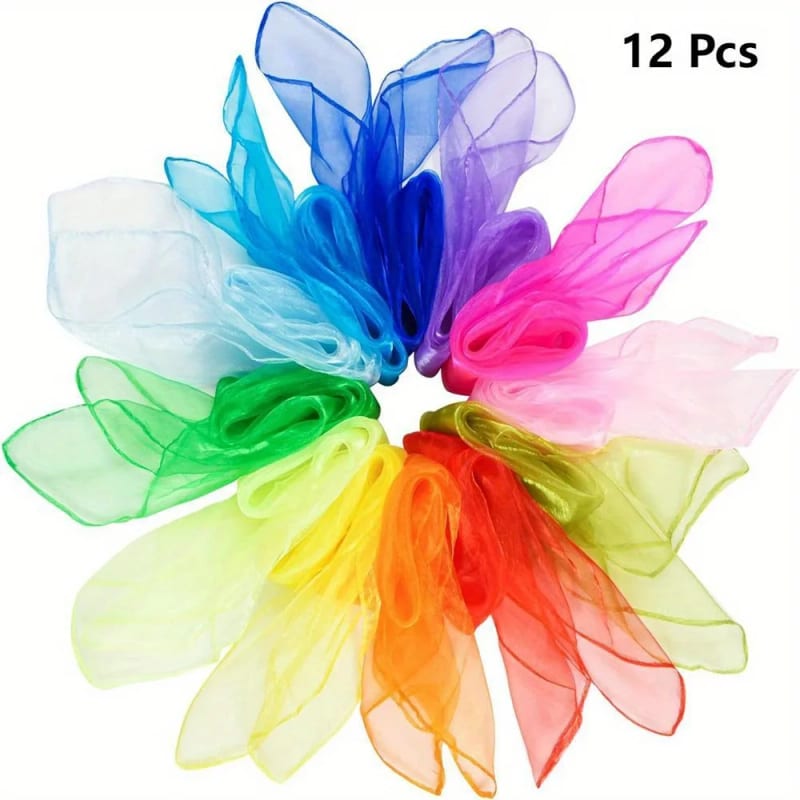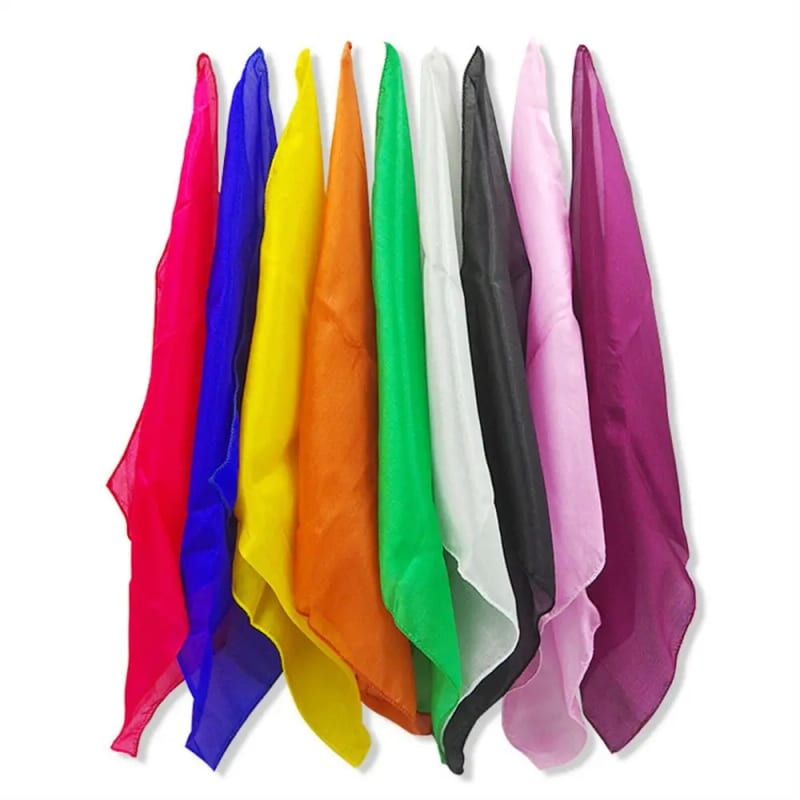
Magic Silk — 30cm Square
$12.99Beginner
Squares of fine silk produced from nowhere, vanished, knotted, coloured and changed — the material that makes stage production possible.
What they see
A hand is shown empty and a silk appears in it. Then a second, a third, a stream of them, then one far longer than anything that could have been concealed.
Silks knot themselves while held at arm's length. Two separate ones tie together in mid-air. A white one pushed into a fist comes out red.
What makes silk work on stage is physical: it compresses to almost nothing and opens to fill a space, so a production reads from the back row and the load reads nowhere. No other material does both.
Provenance
Silk work grew with the Victorian and Edwardian stage, and the fine, closely-woven silk that made it practical was an industrial product before it was a magical one.
The great manipulation acts of the early twentieth century — the dove and silk workers, the Chinese-costumed acts of Ching Ling Foo and Chung Ling Soo among them — built whole routines from production and vanish, and the vocabulary of modern stage manipulation still comes from that period.
Learning it
A broad category rather than one trick, and the range inside it is wide.
A single production from a thumb tip is a beginner's effect learnable in a day. A full manipulation routine — continuous production, colour changes, a streamer finish — is years of work and the stuff of competition acts.
What every level has in common is laundry. Silks crease, hold folds, pick up dirt from hands and pockets, and a creased silk telegraphs where it has been. Performers who use them seriously own far more than they need and iron them.
What you need
Next
Appearance
A bouquet that was not there a second ago — spring flowers that fill a hand, or a bare stick that blooms along its length.
Appearance
A walking cane arrives in an empty hand with a crack like a whip — the fastest production in magic and the standard opener for a century.
Appearance
A pan is shown empty, something is burned in it, the lid goes on — and what comes out is alive, or at least was never going to fit.