Appearing Cane — Metal
$23.99Beginner
A walking cane arrives in an empty hand with a crack like a whip — the fastest production in magic and the standard opener for a century.
What they see
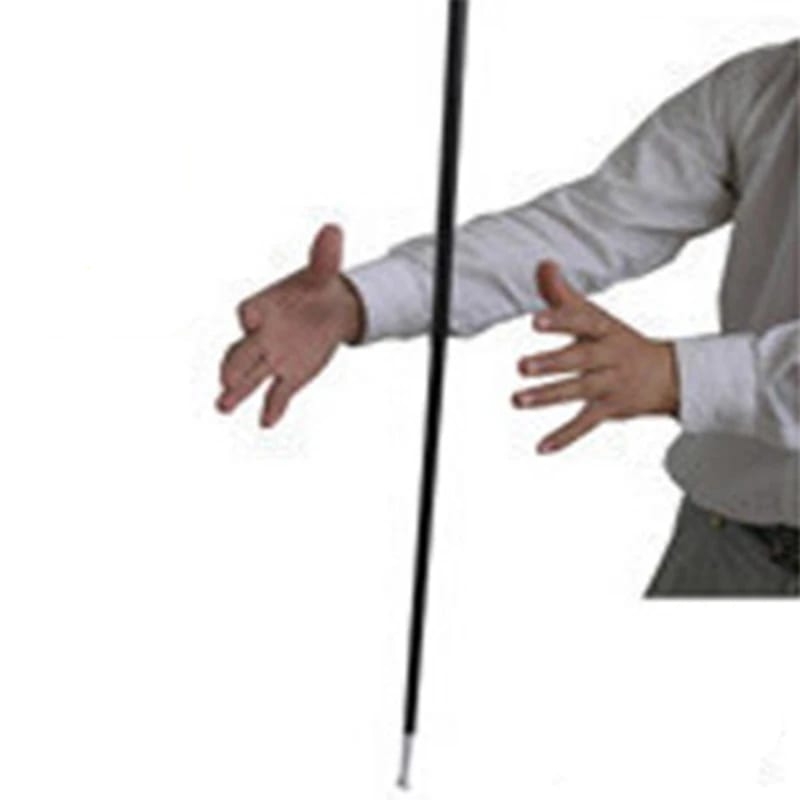
The hands are empty and shown so. A snap of the wrist and a full-length cane is there, rigid, held out at arm's length.
The reverse is just as abrupt: a solid cane folds out of existence in a closed fist, or turns into a bouquet of flowers, or a silk.
It lasts under a second, which is the whole design. This is an opening effect — something has happened before the audience has settled, and the rest of the act is performed by somebody they are now paying attention to.
Provenance
A twentieth-century manufacturing effect rather than an invented sleight. Spring-steel and later aluminium construction made a full-length cane that could be compressed small enough to conceal, and the prop arrived with the material.
It became the stock opener of the silent-act and manipulation tradition — the dove workers, the cane-and-cigarette acts, the competition manipulators — and most of what is performed today still descends from that lineage.
Learning it
The production takes minutes to learn and a long time to make look effortless.
The prop opens with force and the common failure is visible effort — a wind-up, a brace, a flinch — which turns an impossible arrival into a device being operated. The practice is in standing still.
They wear out. Appearing canes are consumables with a performance count, not heirlooms, and a cane that has started to open sluggishly has already told you it is done.
What you need
Next
Appearance
A bouquet that was not there a second ago — spring flowers that fill a hand, or a bare stick that blooms along its length.
Appearance
Squares of fine silk produced from nowhere, vanished, knotted, coloured and changed — the material that makes stage production possible.
Appearance
A pan is shown empty, something is burned in it, the lid goes on — and what comes out is alive, or at least was never going to fit.