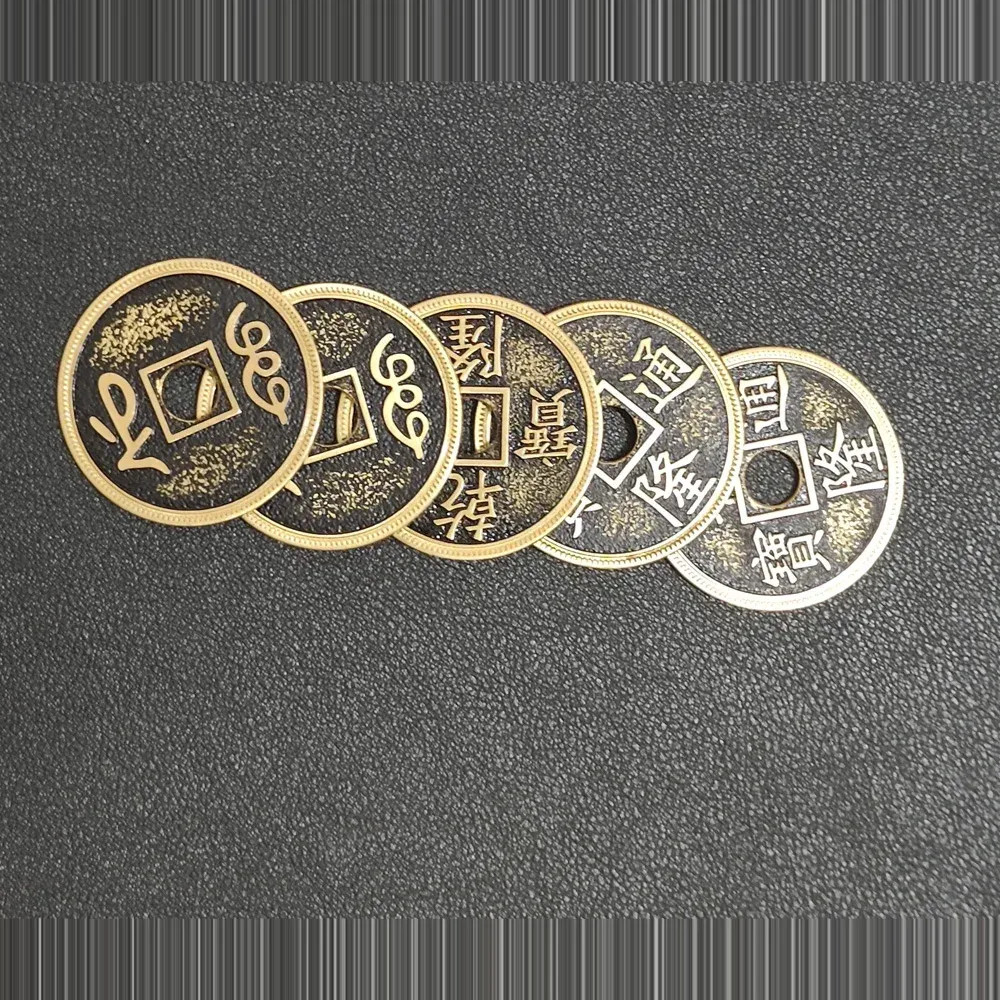
Chinese Palace Coin Set — Four Coins and a Shell
$44.99Intermediate
Four coins travel one at a time from one hand to the other, with both hands otherwise empty and the coins counted out loud at every stage.
What they see
Four coins are counted onto the table and picked up, two in each hand. Both hands close. One hand opens: three coins. The other: one too many.
It repeats. The count is done out loud each time, slowly, and the spectator is invited to call which hand. The coins keep arriving in the wrong one.
The finish is all four in a single hand, the other shown empty front and back. No coin has been covered, pocketed, or put down between phases, which is the whole claim the routine makes and the reason it is hard.
Provenance
A core plot of coin magic for well over a century, and one that has absorbed contributions from most of the serious coin workers. T. Nelson Downs built a vaudeville career on coin manipulation around 1900, and the plot was circulating long before anyone wrote down who first did it.
The version most people have actually seen owes a great deal to David Roth, whose work through the 1970s and 80s — and Expert Coin Magic in 1982 — set the shape of modern coin handling. Saying he invented coins across would be too strong; saying the routine you are likely to learn passes through him is not.
It is the routine coin magicians use to judge each other, in the way the cups and balls serves the close-up fraternity generally — because it has nowhere to hide.
Learning it
One of the genuinely difficult routines in close-up magic, and no amount of apparatus shortens it.
The individual moves take months, not weeks, and most of the work happens before an audience ever sees it: coins are heavy, visible, and loud, and a mistake makes a noise. Expect a year before it is performable for people whose opinion you care about.
Start with three coins rather than four. The standard advice is to learn one good vanish properly and build the routine around it, rather than learning four mediocre ones.
What you need
Next
Transformation
Two balls that look identical. One bounces to the ceiling and the other hits the floor dead — and they swap over in a spectator's hands.
Vanish
Three cups, a few small balls, and the oldest routine in conjuring — balls vanish, travel between cups, and finish under something far too large to have been hidden.
Restoration
A length of rope is cut cleanly in half in front of everyone, the ends are tied, and the rope comes back whole — with the knot removed last.