Pocket Watch Sizes Explained: Size Chart in Inches, mm and Lignes
Nov 25, 2026 · The Editors
What pocket watch sizes like 16s and 18s mean, a size chart in inches and millimetres, Swiss lignes, how to measure a pocket watch, and which size to choose.
Pocket watch sizes such as 16s or 18s describe the size of the movement, not the case. In the American system, size 0 is a movement 1 5/30 inches across, and every size up adds 1/30 of an inch, so an 18-size movement is about 1.77 inches (44.9 mm) across. Swiss movements are measured in lignes instead, where one ligne is about 2.26 mm.
How pocket watch sizes work
American watchmakers in the nineteenth century borrowed an English gauge for movement sizes. The rules:
- Size 0 = a movement 1 5/30 inches across.
- Each size up adds 1/30 inch.
- Sizes smaller than 0 are written 3/0, 6/0 and so on, each one 1/30 inch smaller.
- The measurement is taken across the movement's dial-side plate, not the case.
So the formula is: diameter in inches = 1 5/30 + (size ÷ 30).
Pocket watch size chart
| Size | Inches | Millimetres (approx.) | Typical use |
|---|---|---|---|
| 0s | 1 5/30 (1.17) | 29.6 | small, often ladies' watches |
| 6s | 1 11/30 (1.37) | 34.7 | ladies' and slim dress watches |
| 10s | 1 15/30 (1.50) | 38.1 | slim gentlemen's watches |
| 12s | 1 17/30 (1.57) | 39.8 | slim dress watches |
| 16s | 1 21/30 (1.70) | 43.2 | the most common men's size; later railroad watches |
| 18s | 1 23/30 (1.77) | 44.9 | large men's watches; early railroad watches |
The case is always larger than the movement, often by several millimetres, so an 18-size watch in its case is bigger than the 44.9 mm in the chart.
Pocket watch sizes in lignes
Swiss and European movements are usually measured in lignes, an old French unit equal to a twelfth of a French inch: about 2.2558 mm. To convert, multiply the lignes by 2.2558. A 19-ligne movement, for example, is about 42.9 mm across. Lignes are still used for movements today, including in wristwatches.
How to measure a pocket watch
- Case diameter: measure across the case, not including the crown and bow. This is the number modern sellers give, usually in millimetres.
- Movement size: open the back and measure across the movement's plate, or look up the maker and serial number, which usually identifies the size.
- Thickness: measure the case at its deepest point. Hunter cases, with a lid over the crystal, are thicker than open-face ones.
For opening the case safely, see how to open a pocket watch.
Which pocket watch size should you choose?
- For a waistcoat pocket: 16-size or a modern case of a similar width sits well and is easy to read.
- For a jacket or jeans pocket: larger watches are fine and easier to read at a glance.
- For a slim dress look: 12-size or smaller fits a suit without a bulge.
- For collecting railroad watches: 16 and 18 are the sizes to know; railroad standards favoured large, easy-to-read, open-face watches.
Modern quartz pocket watches are usually described by case diameter in millimetres rather than by a size number.
A pocket watch to carry
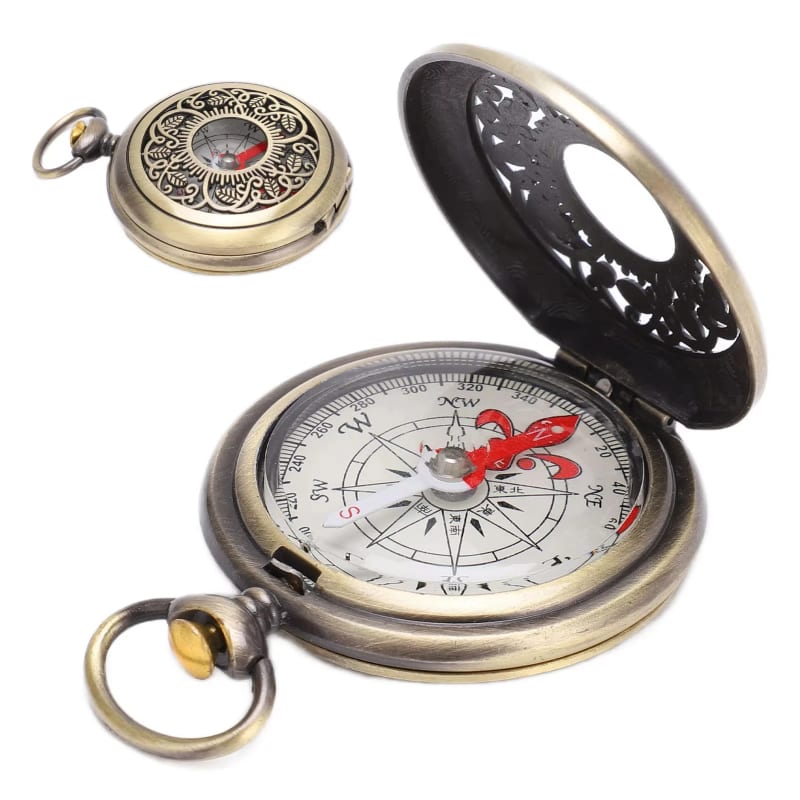
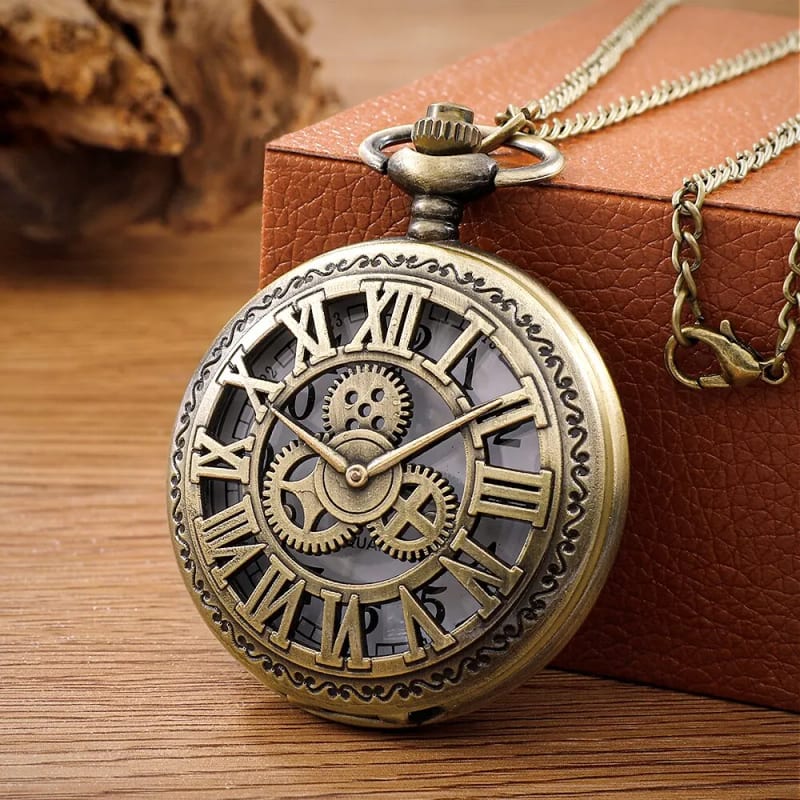
Our steampunk pocket watch has a cut-away cover of gears and Roman numerals over a white dial, in antique bronze on a long chain. It is quartz, so it keeps time without winding. For how to carry one, see how to wear a pocket watch, and for the anatomy, parts of a pocket watch. A matching pocket compass closes the same way.
Frequently asked questions
What size is a 16s pocket watch?
The movement is 1 21/30 inches across, about 43.2 mm. The case is larger.
What does 18s mean on a pocket watch?
18-size: a movement 1 23/30 inches across, about 44.9 mm, in the American sizing system.
What is a ligne in watches?
An old French unit used to measure watch movements, equal to about 2.2558 mm.
What is the most common pocket watch size?
For American men's pocket watches, 16-size and 18-size were the most common, with 16-size becoming the standard later on.
Mentioned above