Mahjong Scoring for Beginners: A Simple Chart and How It Works
Nov 23, 2026 · The Editors
How mahjong scoring works, with a simple Hong Kong style chart for beginners: faan, the minimum to win, who pays, and how American and Japanese scoring differ.
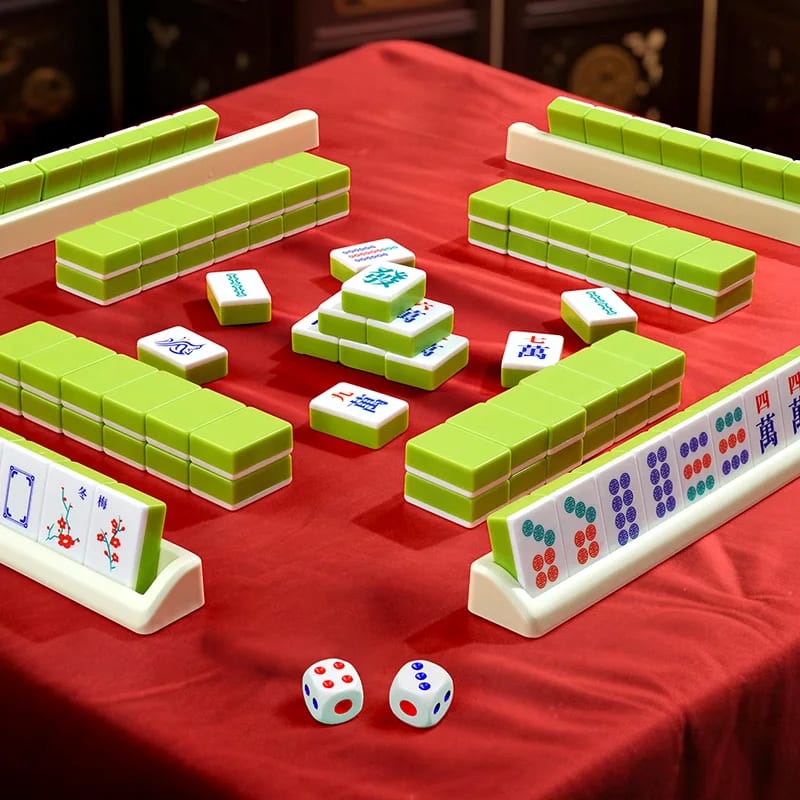
In mahjong, a winning hand is scored by adding up points for its patterns. In the Hong Kong style most beginners learn, these are called faan (or fan): a plain hand of runs is worth little, a hand of all one suit is worth a lot, and the winner is paid according to the total. Scoring is the part of mahjong that varies most from table to table, so agree a chart before you start.
How a mahjong hand is scored
A standard winning hand is four sets and a pair: 14 tiles. Each set is a chow (a run of three in one suit), a pung (three of a kind) or a kong (four of a kind). See how to play mahjong for the basics.
When someone goes out:
- Count the faan for the patterns in the hand.
- Check the minimum. Many tables require at least 3 faan to win; beginners often play with no minimum.
- Settle up. The faan total sets the payment, usually doubling with each extra faan, up to a limit.
Simple mahjong scoring chart (Hong Kong style)
Values below are common in Hong Kong style play. Groups and rule books differ, so treat this as a starting chart.
| Pattern | Faan |
|---|---|
| Common hand: all chows and a pair | 1 |
| Self-drawn win (you drew the winning tile) | 1 |
| Concealed hand (no exposed sets) | 1 |
| No flowers or seasons | 1 |
| Your own flower or season, each | 1 |
| Pung or kong of dragons, each | 1 |
| Pung or kong of your seat wind | 1 |
| Pung or kong of the prevailing wind | 1 |
| All pungs (no chows) | 3 |
| Mixed one suit (one suit plus honours) | 3 |
| All one suit (no honours) | 7 |
| Special hands such as thirteen orphans | The table's limit |
Faan add together. A hand of all pungs, in one suit plus honours, including a dragon pung, would be 3 + 3 + 1 = 7 faan.
Who pays in mahjong
In many Hong Kong style games:
- Won on a discard: the player who discarded the winning tile pays most or all of it.
- Self-drawn win: all three other players pay.
The amount usually doubles with each faan above the minimum, up to a limit the table sets in advance. Groups that do not play for stakes simply keep a running score on paper, or use counters or scoring sticks.
Mahjong scoring for beginners: an easier way
For the first few evenings, many teachers drop faan altogether:
- The winner scores 1 point, or 2 for a self-drawn win.
- A bonus point for a one-suit hand or all pungs.
This lets new players learn the tiles before the arithmetic. The mahjong tiles meaning guide helps with the honour tiles that carry extra faan.
How other styles score
| Style | How it scores |
|---|---|
| Hong Kong / Cantonese | Faan per pattern, doubling payments, a table limit |
| Chinese Official | Points per pattern from a long official list, with a minimum of 8 to win |
| Japanese riichi | Han for patterns plus fu for tile details, combined in a points table |
| American | Each hand on that year's official card has a fixed value |
See American mahjong vs Chinese mahjong for why the American game uses a card, and mahjong for 2 players for scoring a two-handed game.
Our travel mahjong set has the full 144 tiles with flowers and seasons, which Hong Kong scoring uses. A dice tray keeps the opening roll off the tiles.
Frequently asked questions
How do you score in mahjong?
Add up faan (points) for the patterns in the winning hand, such as all pungs, one suit or dragon pungs. The total sets how much the winner is paid.
How many faan do you need to win in mahjong?
It depends on the table. Three faan is a common minimum in Hong Kong style play; beginners often use none.
What is the highest scoring hand in mahjong?
Special hands such as thirteen orphans score the table's limit, the most a hand can be paid.
Who pays when someone wins in mahjong?
On a discard, usually the discarder. On a self-drawn win, all three other players pay.