History of Poker Chips: From Gold Dust to Clay and Ceramic
Nov 23, 2026 · The Editors
Before poker chips, players bet with coins, gold dust and bits of bone. How poker chips were invented, why casinos added inlays and edge spots, and whether old chips are worth anything.
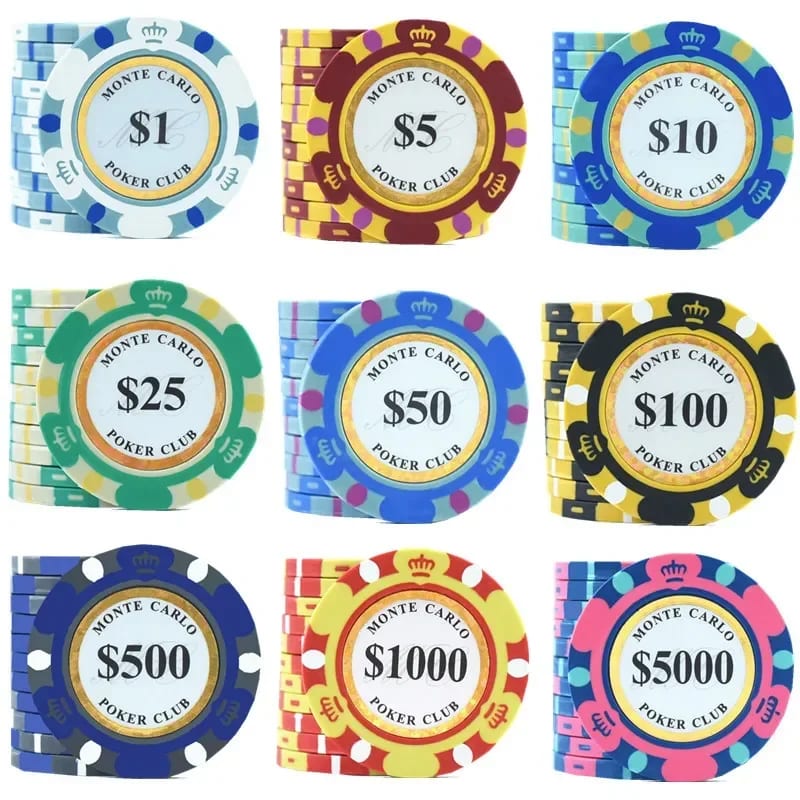
Poker chips grew out of the improvised betting markers of the nineteenth century. Early poker players in America bet with coins, gold dust, nuggets and small objects of ivory, bone or wood. Because these were easy to fake and awkward to count, manufacturers began selling uniform chips made of clay composition by the late 1800s, and that is the ancestor of the chips used in casinos and home games today.
Before chips: betting with whatever was to hand
Poker spread through the United States in the early 1800s, along the Mississippi riverboats and later through the mining camps of the West. Money was a problem: coins were scarce in some places, and miners often had gold dust or nuggets rather than cash. Players bet with whatever they had, and many saloons and gamblers used markers of ivory, bone, wood, paper or clay to stand for money.
The trouble with homemade markers was obvious: anyone could carve another bone counter. Serious games needed something uniform and hard to copy.
The first poker chips
By the late nineteenth century, companies were selling poker chips by catalogue: discs made of a clay composition, often with simple designs pressed into the surface so they were harder to counterfeit. Ivory chips were also sold, to wealthier players. Sets came in matching colours so a table could agree what each was worth.
Why are they called chips? Nobody knows for certain. The most common suggestion is that the word comes from early markers that were literally chips, small flat pieces of wood or bone, but this is not proven.
Casino chips and counterfeiting
As legal casinos grew in the twentieth century, especially after Nevada legalised gambling in 1931, chips became a form of currency inside each casino. That made counterfeiting a real danger, and chip makers responded with:
- Edge spots: coloured inserts around the rim, in patterns unique to each casino.
- Inlays: printed or embossed centre labels carrying the casino's name and the value.
- Custom moulds with unique textures.
- More recently, some casinos have embedded RFID chips in high-value chips so they can be tracked.
In European casinos, large values were often played with rectangular plaques rather than round chips, a tradition still seen today.
Clay, ceramic and plastic
Modern chips come in three main materials. True clay chips in the old style are rare and expensive; most chips sold as "clay" today are a clay composite, often with a metal insert for weight. Ceramic chips take full-colour printing edge to edge. Plastic chips are the cheapest. The differences are explained in clay vs ceramic poker chips, and what a chip should weigh in poker chip weight.
Chip colours through history
There has never been a single law about chip colours, but American casinos settled on common conventions: white or blue for 1, red for 5, green for 25, black for 100 and purple for 500 are widespread. Home games use whatever suits their stakes. Our poker chip values and colours guide covers the usual schemes.
Are old poker chips worth anything?
Some are. Collectors look for:
- Chips from closed casinos, especially old Las Vegas casinos.
- Early ivory or clay chips in good condition.
- Unusual designs and short production runs.
Most old home-game chips are worth little beyond their charm. If you think you have something special, compare it against collectors' guides before deciding, and do not clean it with anything harsh.
A set with history in it
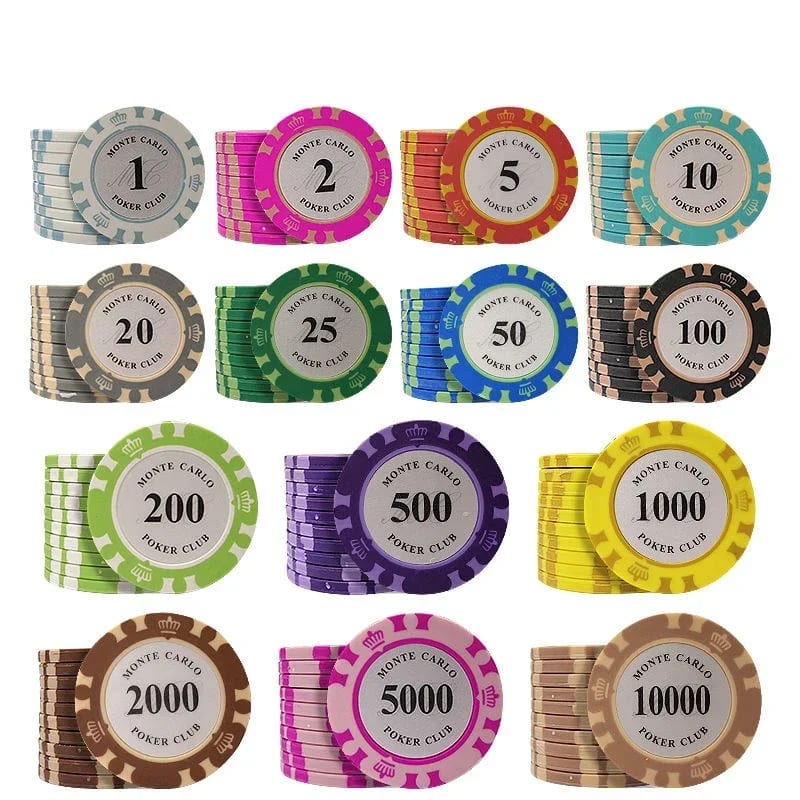
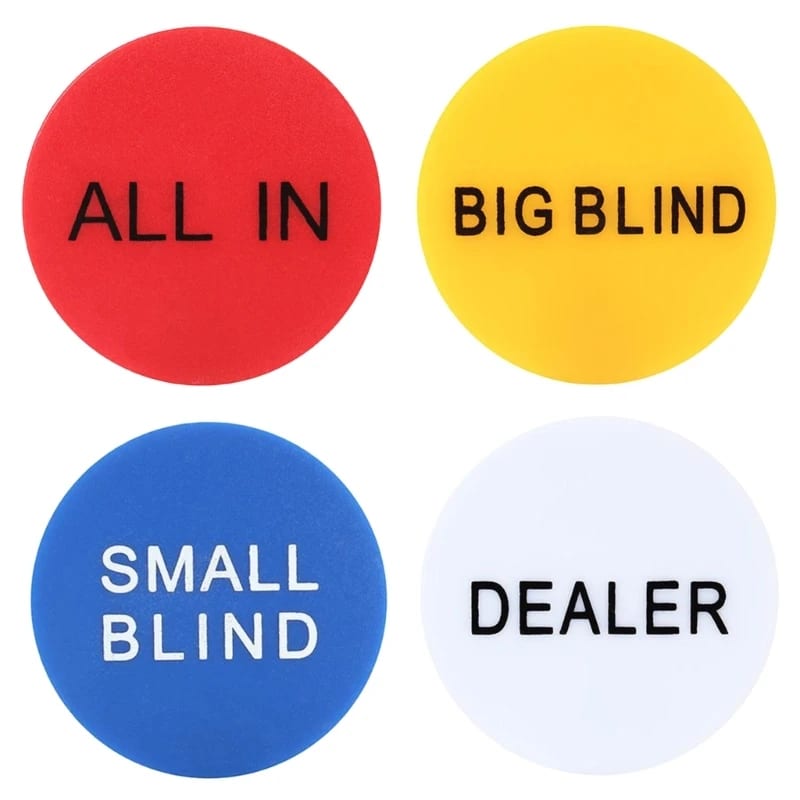
Our Monte Carlo chips take their name and look from the European casino tradition: casino-weight clay with a gold metal insert. For a plainer set, clay poker chips are proper 40mm chips with a metal core, sold in tens so you can build the denominations you need. Add a dealer and blind button set and you have a table; how many poker chips per player tells you how many to buy.
Frequently asked questions
When were poker chips invented?
Uniform poker chips appeared in America in the nineteenth century, and by the late 1800s companies were selling clay composition chips by catalogue.
What did people use before poker chips?
Coins, gold dust and nuggets, and markers made of ivory, bone, wood or clay.
Why are they called poker chips?
The origin is uncertain. A common suggestion is that early markers were small chips of wood or bone.
What were old poker chips made of?
Clay composition and ivory were common in the nineteenth century. Today's "clay" chips are usually a clay composite, often with a metal insert.